Trilobites
Trilobites were a group of amazing creatures that lived in the oceans during the Paleozic. In terms of classification, they belong to the class Trilobita of the phylum Arthropoda. Their closest relative today is the horseshoe crab, which is referred to as a living fossil. Trilobites first appeared during the early Cambrian period 540 million years ago and the number of species reached a peak from the late Cambrian to the early Ordivician period. Following the Ordivician period, there was a dramatic decrease in the number of trilobite species, however their numbers were still high. Then, in the late Permian period they became extinct. In summary, trilobites lived for nearly 300 million years during the Paleozoic.
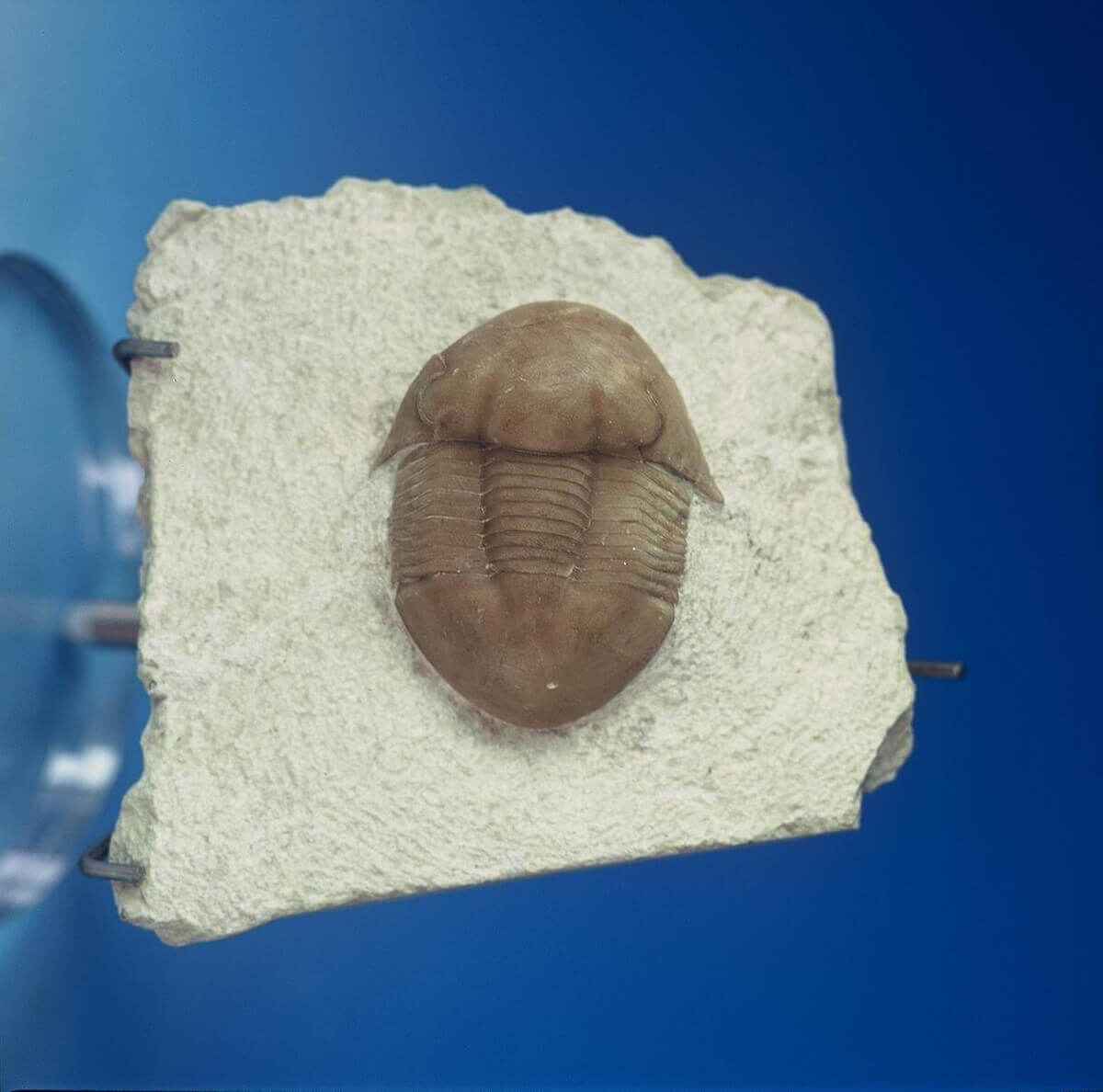
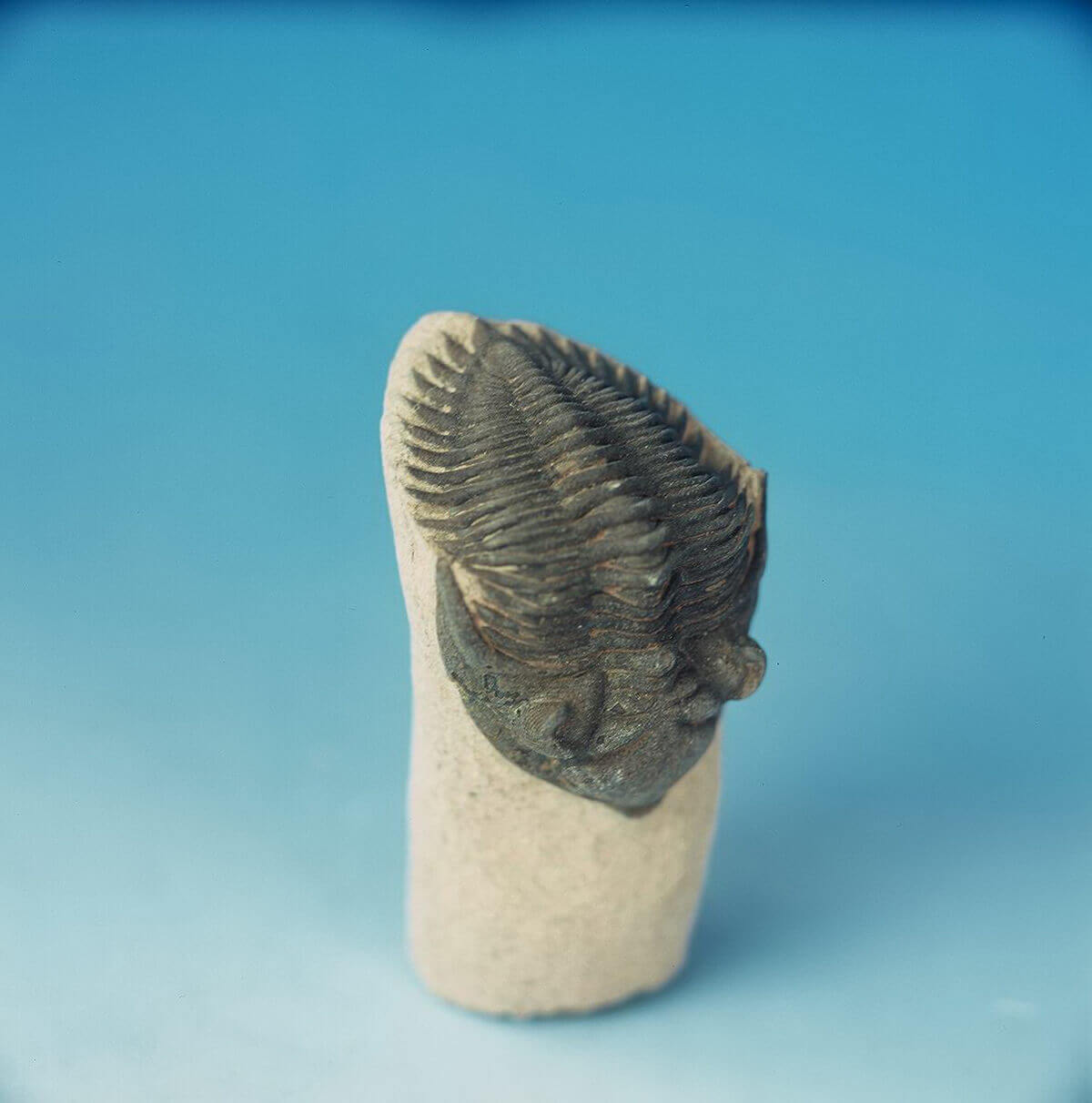
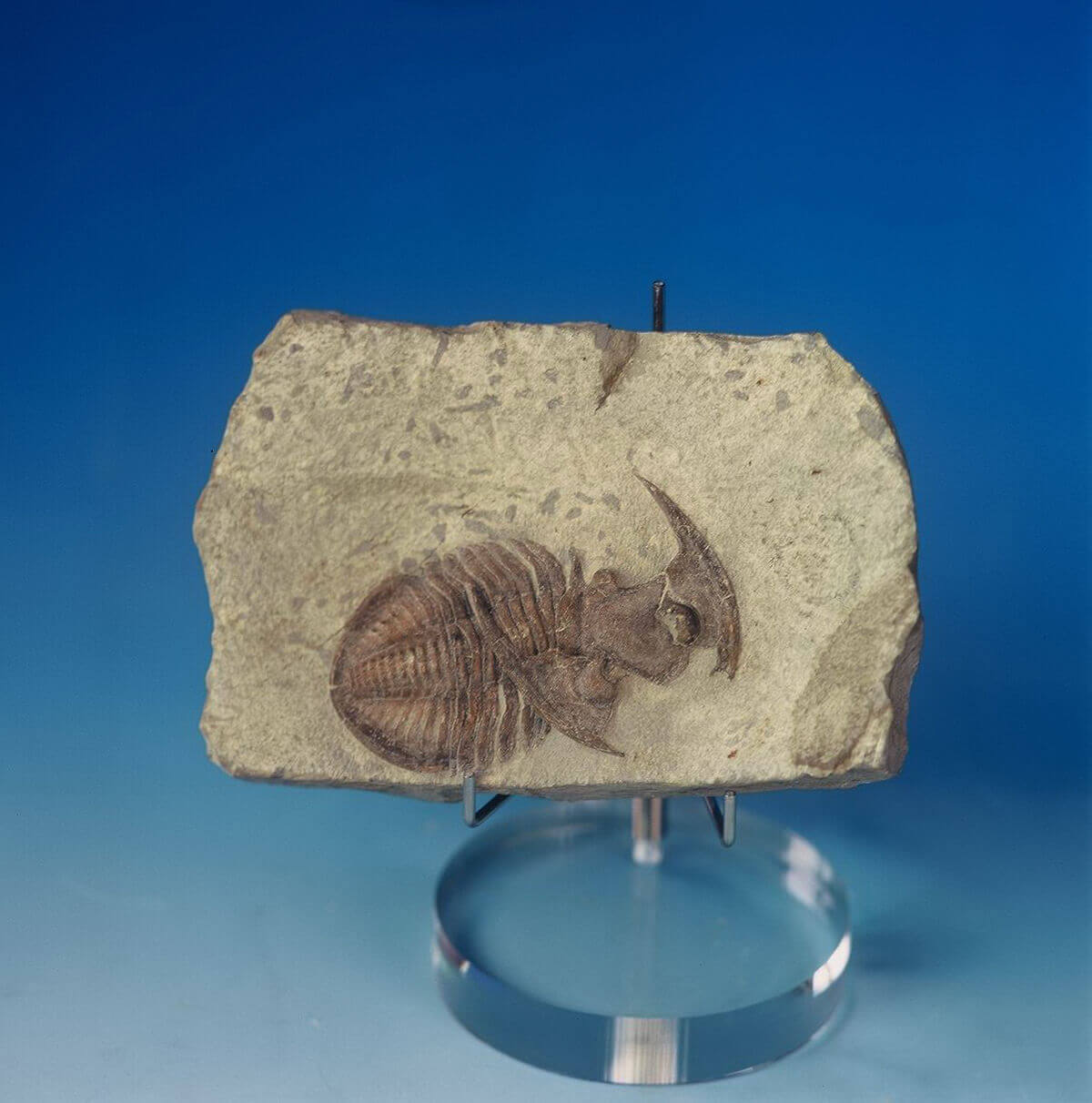
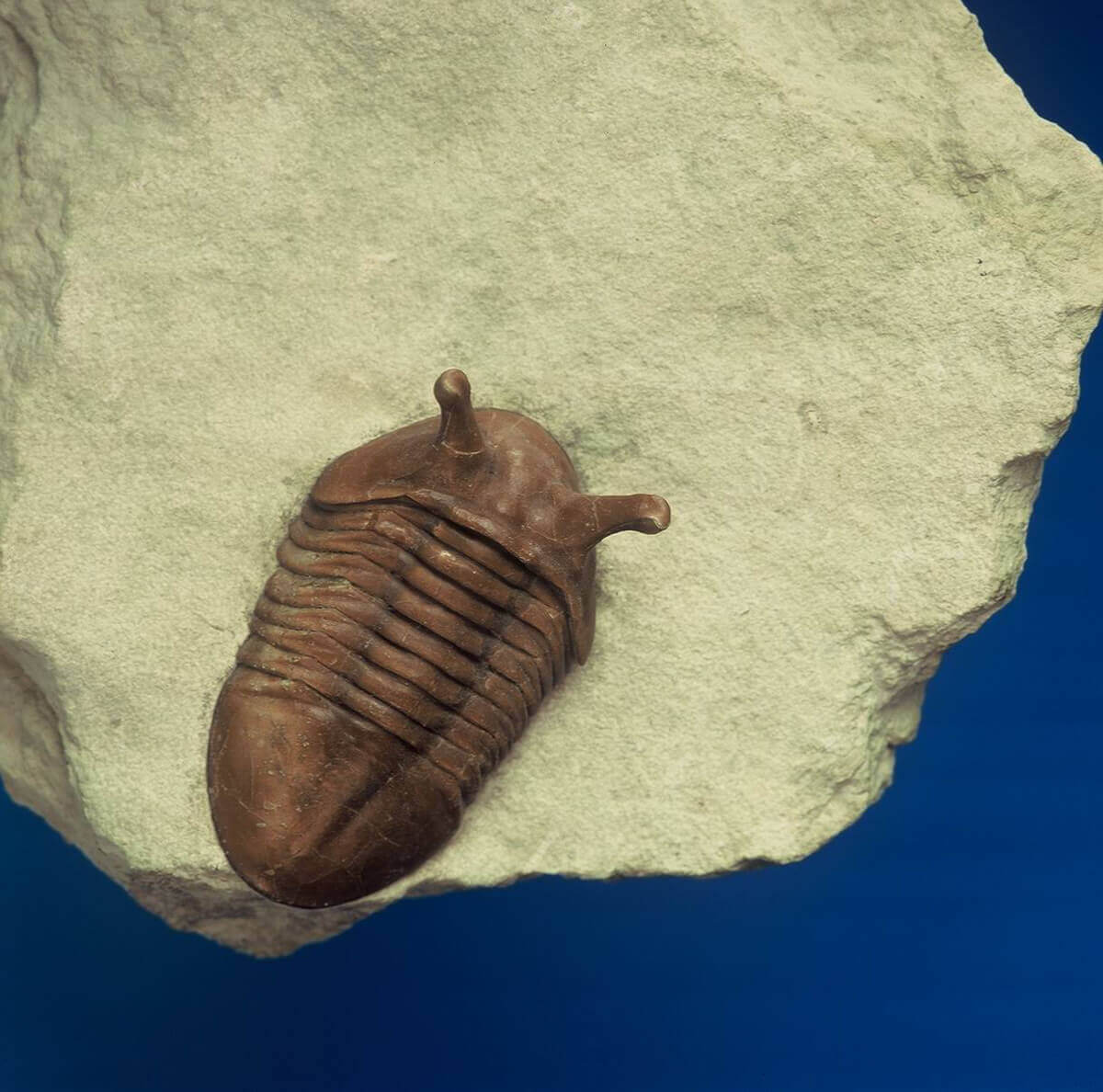
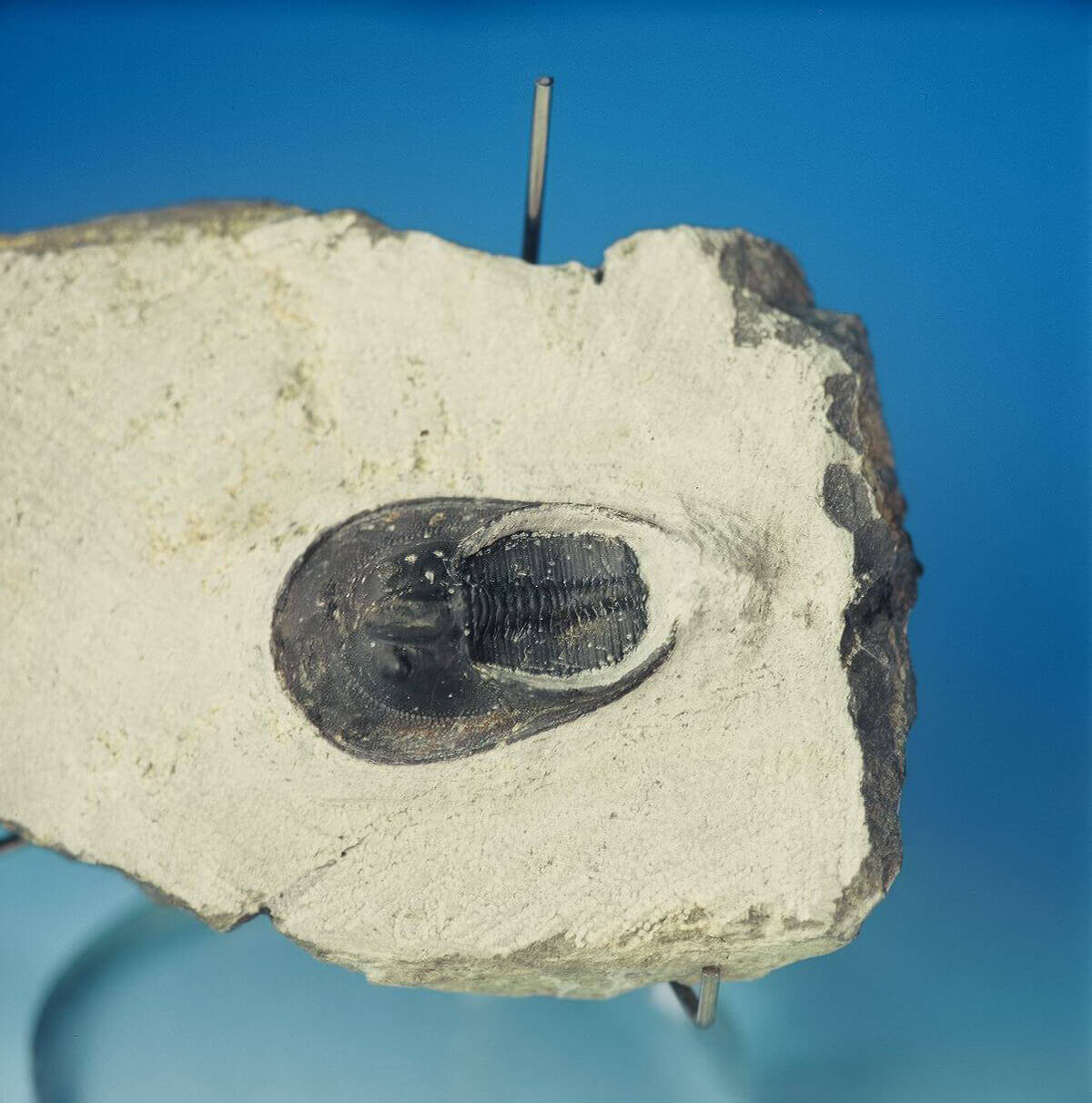
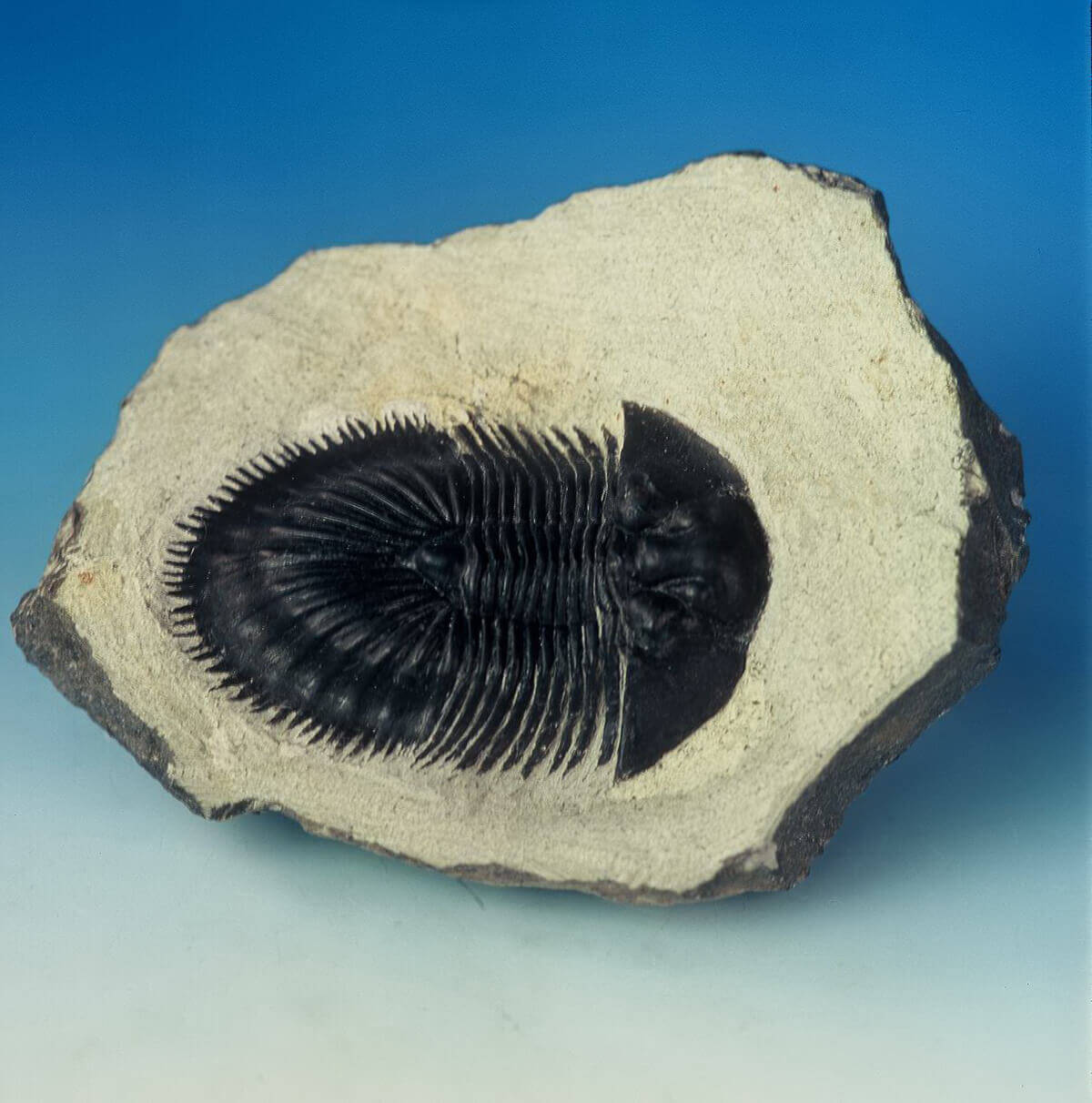
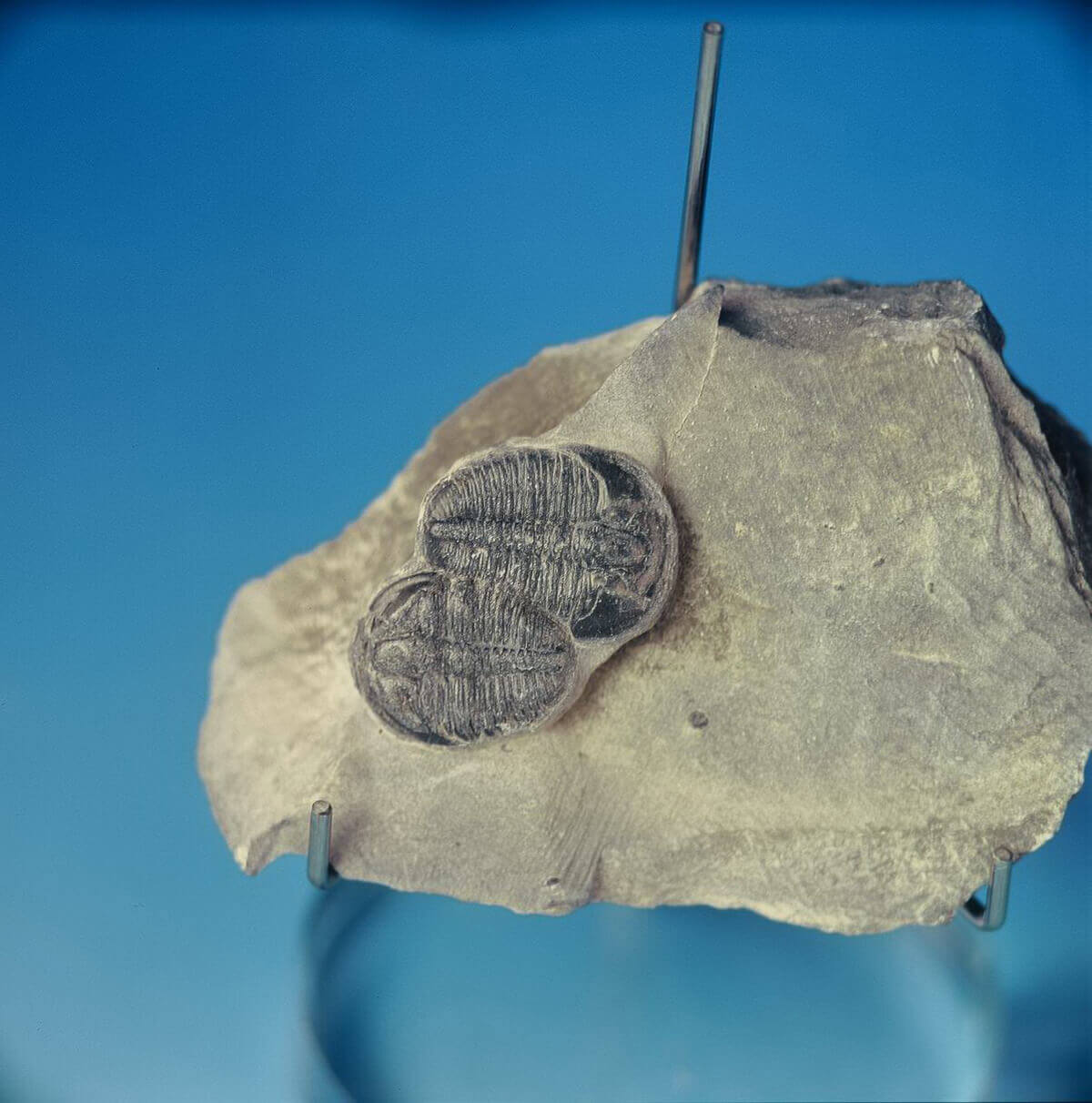
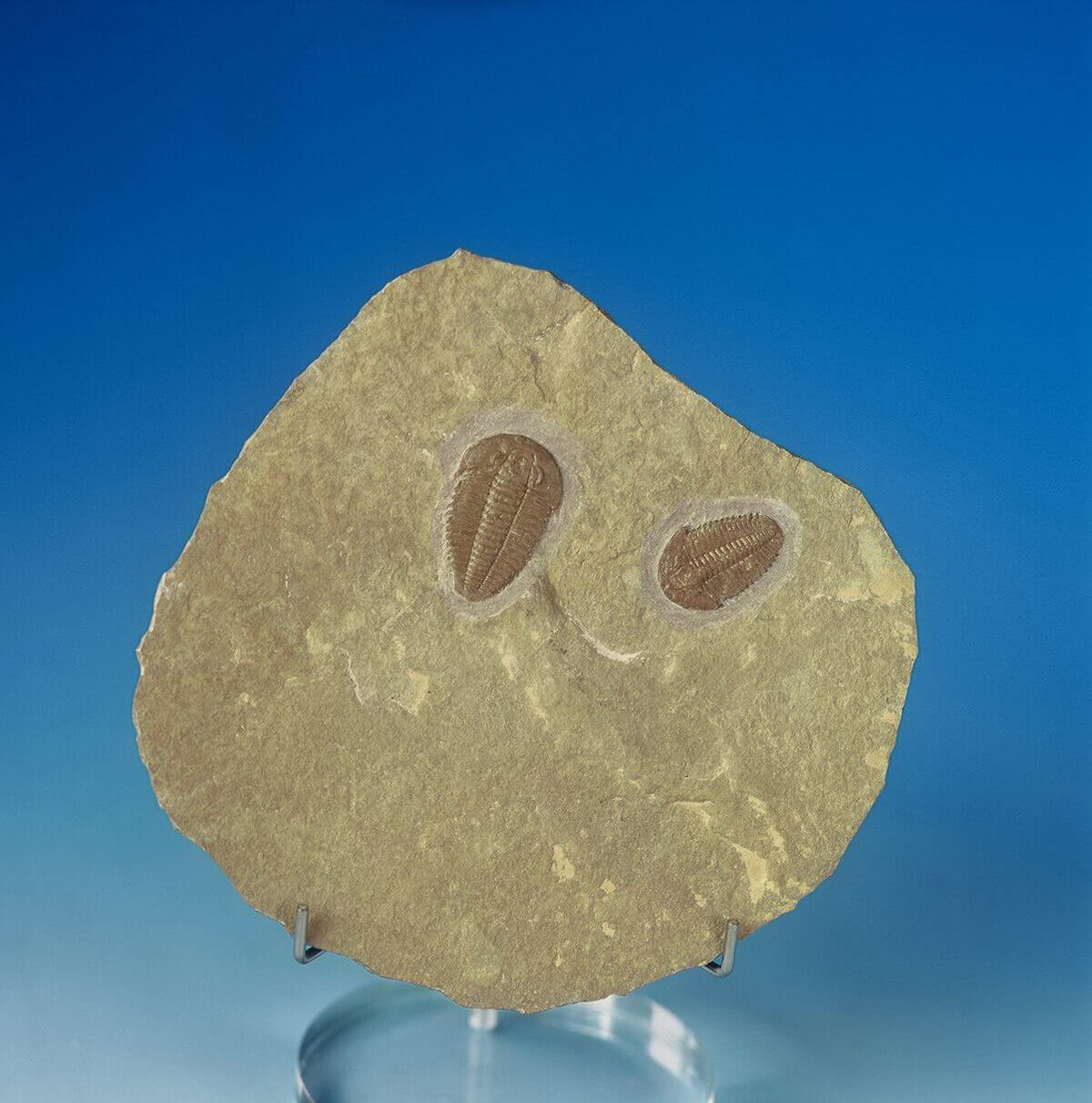
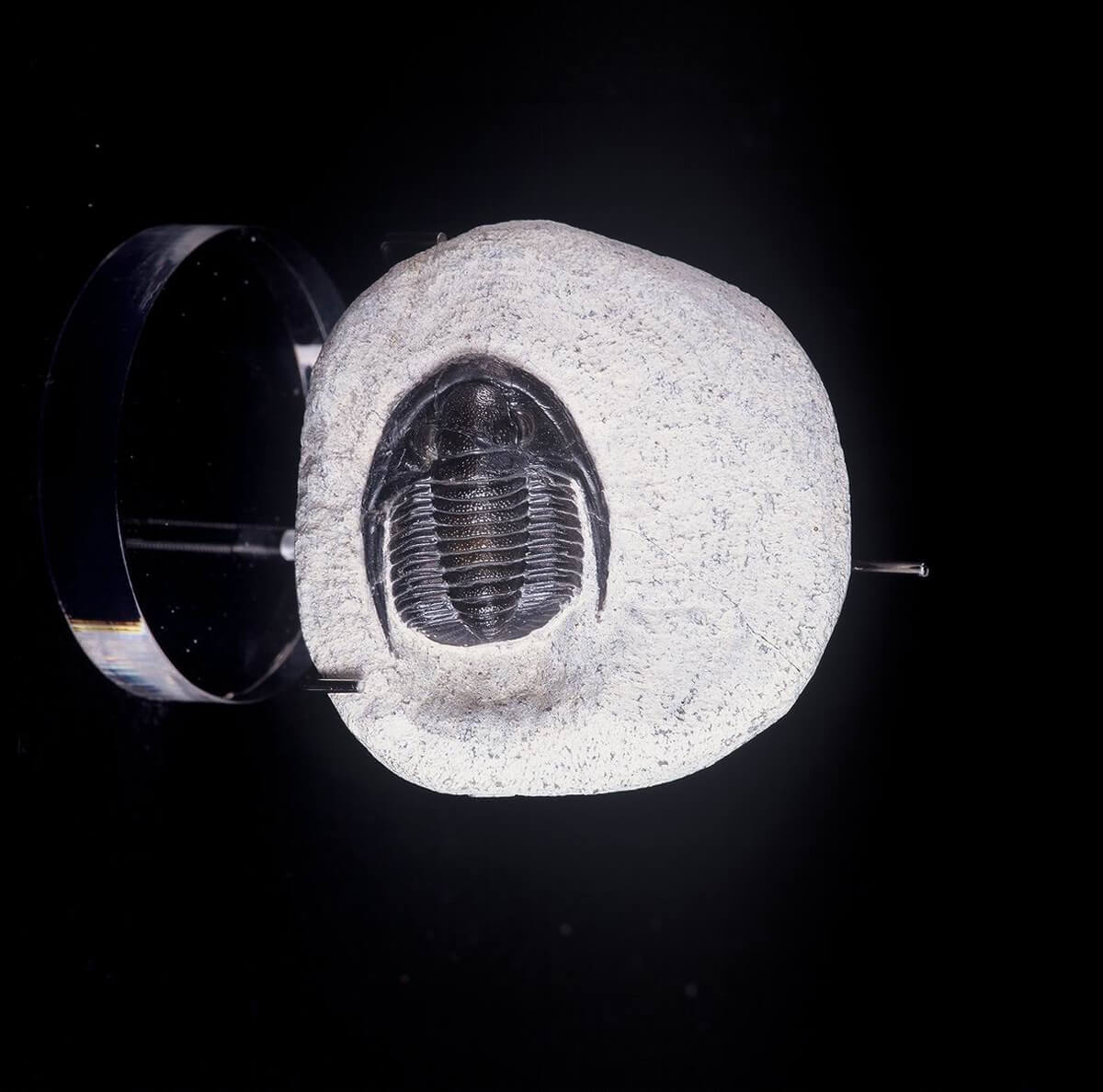
Trilobites secreted a calcium carbonate carapace, which made it easy for them to be preserved as fossils. Therefore, most trilobite fossils we see are of this part. The name trilobite comes from the distinctive three-fold longitudinal division of the carapace into a central axis and two lateral (pleural) areas. Between the central axis and pleural areas is a concave axis groove. Trilobites can also be divided into three parts from top to bottom: head (cephalon), thorax, and tail (pygidium). The head is not segmented. However, facial sutures divided the head into the cranidium with free cheeks on either side. Molting at the head began at the facial sutures. The raised area in the center of the cranidium is called the glabella and the flatter areas on both sides are called the fixed cheeks. The glabella is part of the central axis and one of the important characteristics used for classification. Most trilobites had a pair of compound eyes, located in the midsection of the suture lines, at the junctions of the free cheeks and cranidium. The thorax was composed of thoracic segments. Many segments can also be seen along the tail, but with no movable joints between them. Rather, they were fused to form the pygidium.
The ventral side of the trilobite was mostly soft. Except for the doublure and hypostome, there were no particularly hard structures that could be easily preserved. Only under very rare circumstances have the ventral structures of trilobites been preserved and fossilized. Based on these precious clues, we know that in addition to the mouth and anus, there were many delicate limbs. There were four pairs of limbs under the head. Except for the most anterior pair, which were specialized unsegmented antennae, the remaining were legs. Under each segment of the thorax was a pair of legs. In the tail section, in addition to legs, there was a pair of antenna-like unsegmented cerci.
Most trilobites were benthic, crawling along seabed or coral reefs. Some were predators and some were scavengers. Moreover, some ate seaweed, corals, sponges, or bryozoans or were filter feeders.
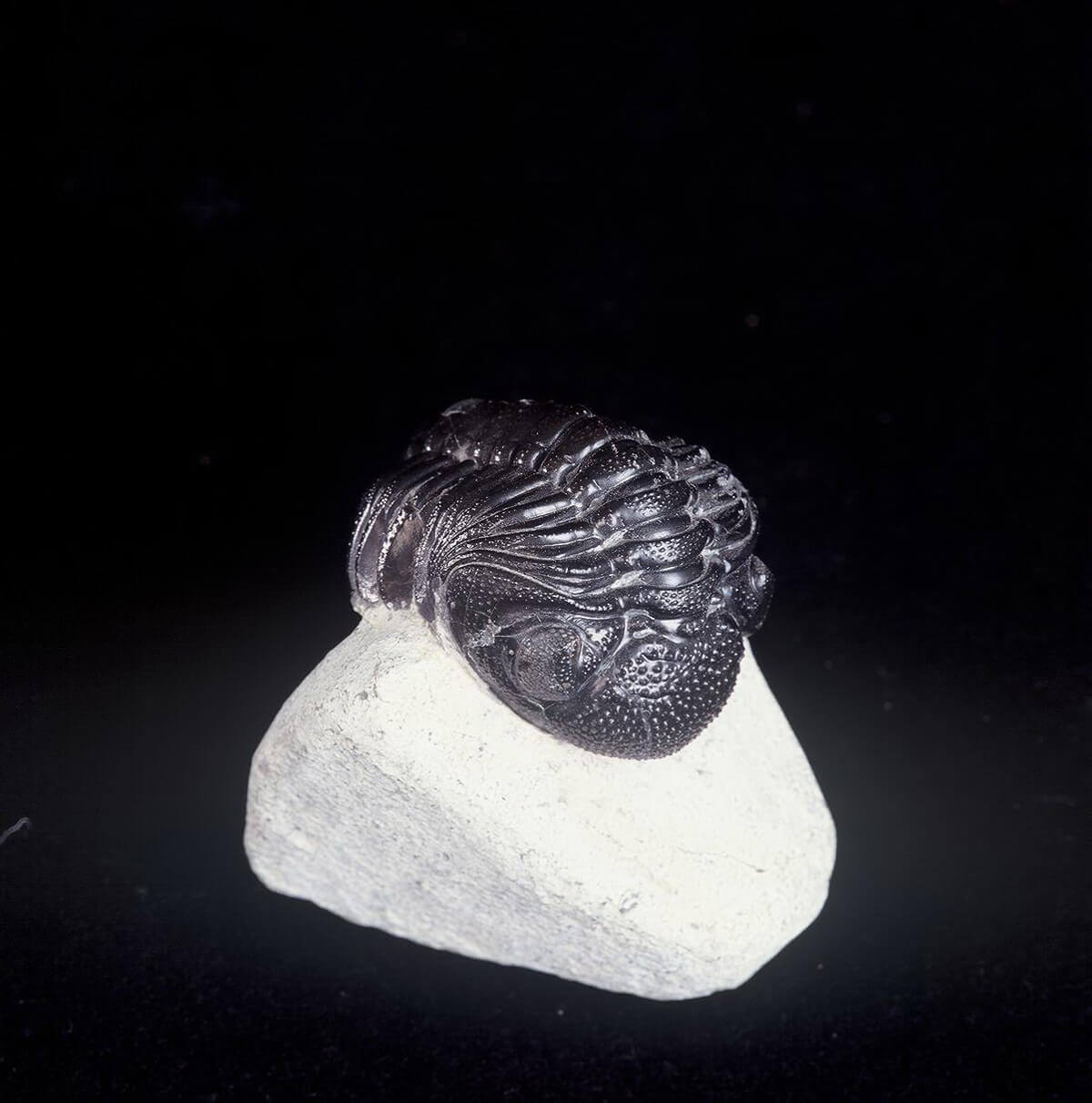
When a trilobite encountered danger, it curled into a ball, with its soft abdomen inside and only its hard carapace exposed. The spines on some trilobites may have been part of their defense strategy. They sometimes burrowed into sediment to escape external threats.
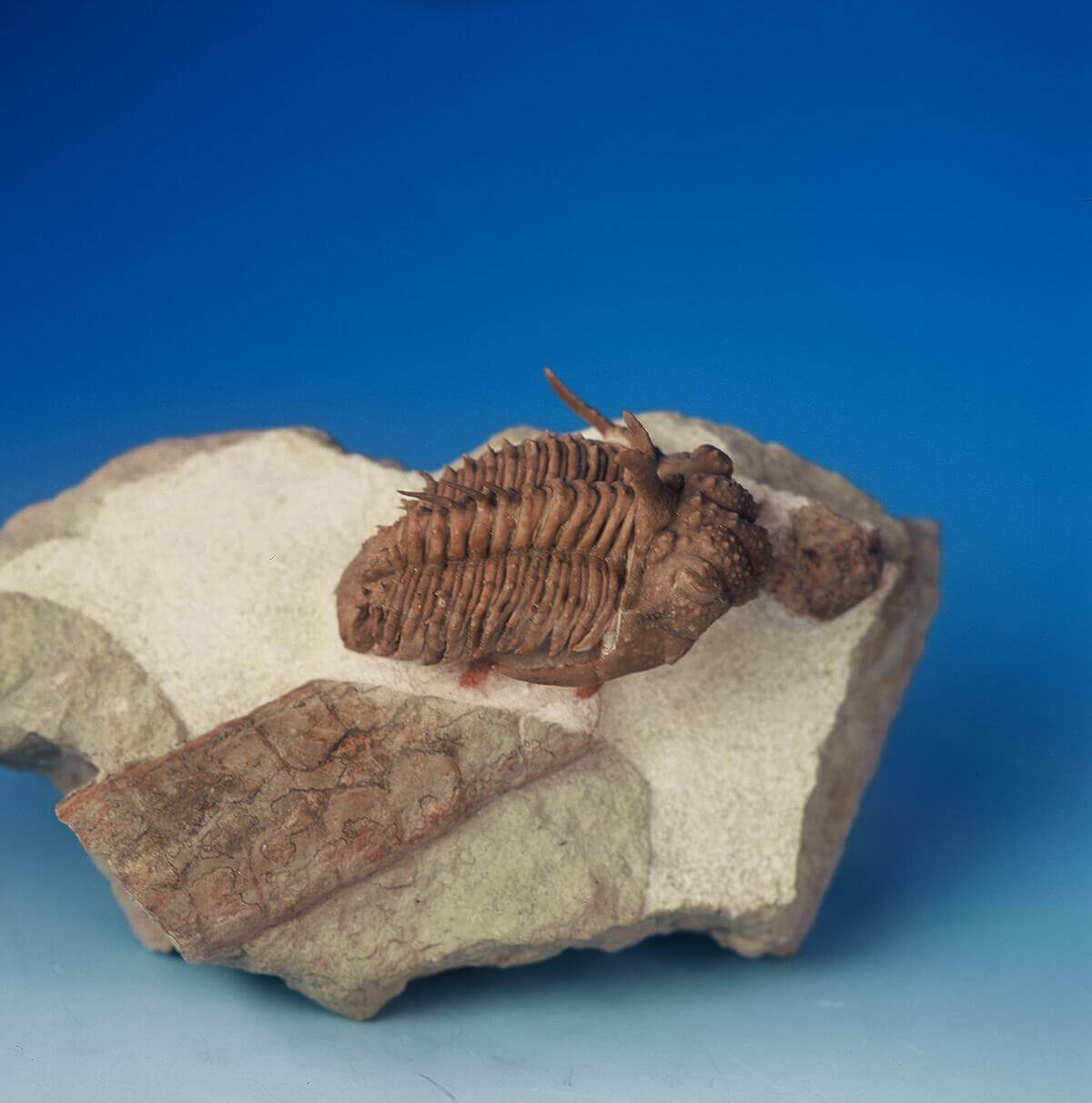
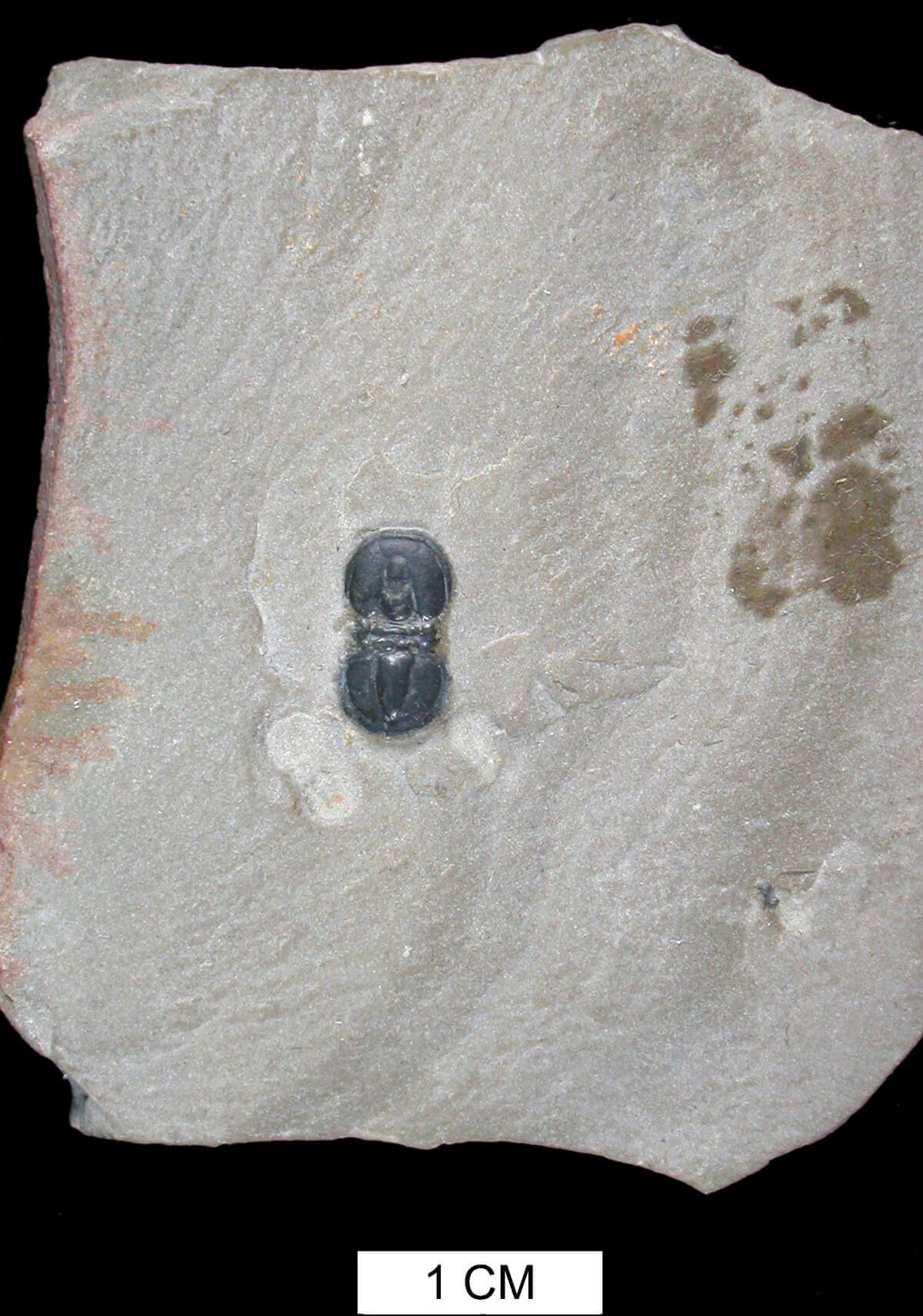
There is extreme variation in trilobite morphology, with some less than one centimeter in size and some nearly one meter long. Some are covered in bumps and spines, while others have a smooth exterior. Some have very large eyes, while others have no eyes at all. Their rich diversity is comparable to that of today’s insect world.
To date, thousands of genera of trilobites have been discovered. They can be divided into the following 10 orders: Agnostida, Redlichiida, Corynexochida, Phacopida, Asaphida, Proetida, Lichida, Ptychopariida, Odontopleurida, and Harpetida.