Grass Swimmers - Introduction to Takydromus Species
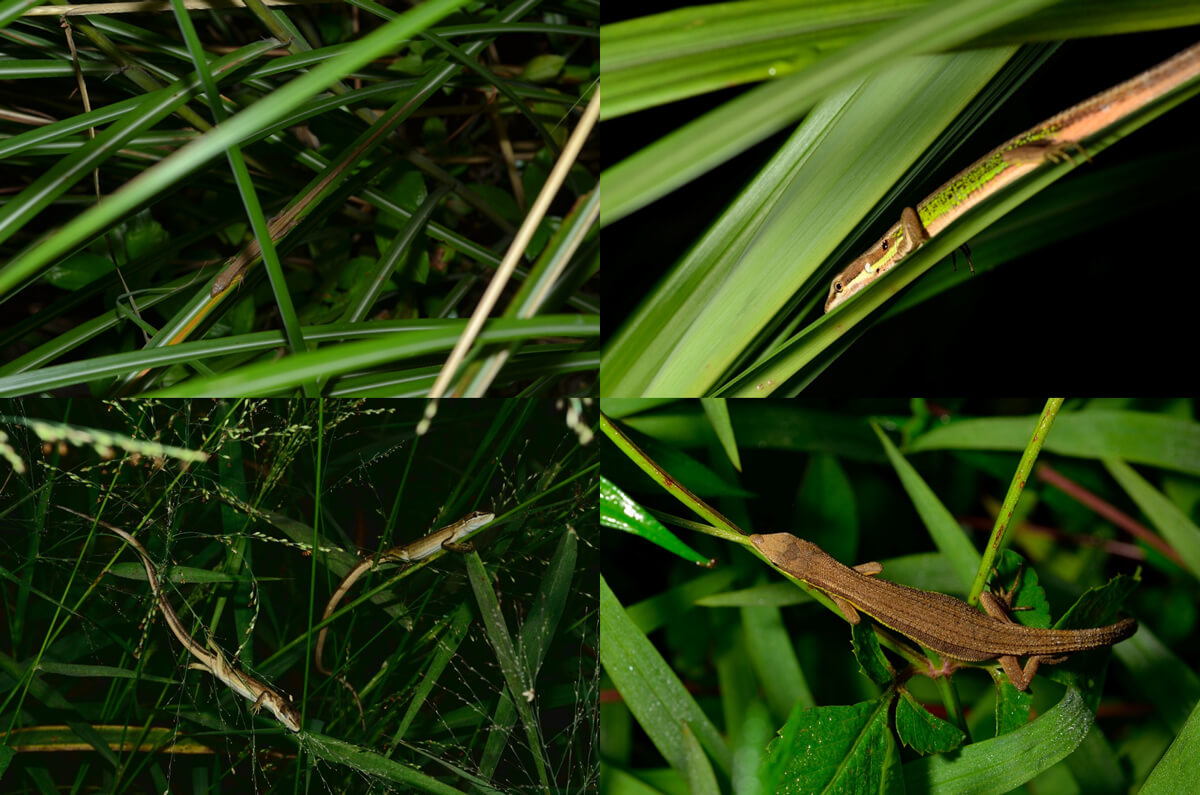
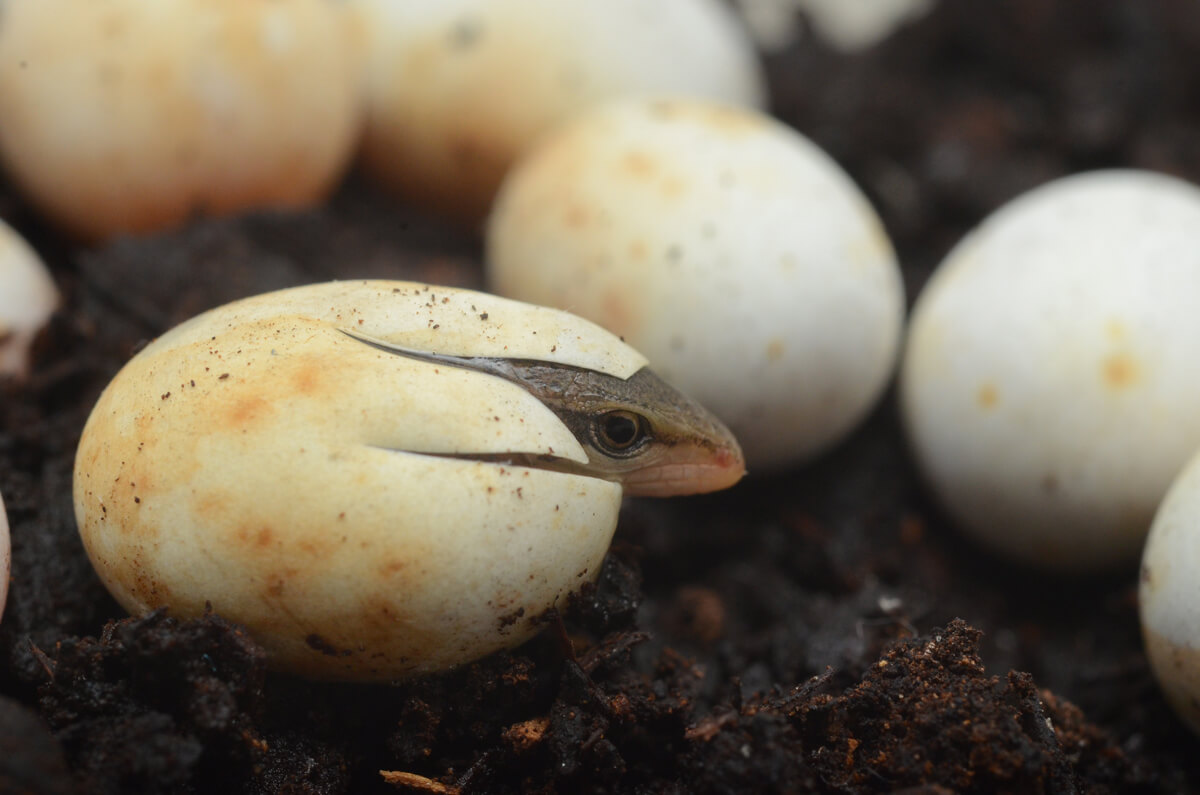
Do you know what grass lizards are? As their name suggests, these are lizards that prefer to live in areas covered in grass. In terms of their classification, they belong to the genus Takydromus in the family Lacertidae, order Squamata, and class Reptilia, and are among the most common lizards in Taiwan. It is easy to see these lizards when on an outing or cleaning gravesites. As they are small and fast, usually you only catch a glimpse of them as they quickly burrow into the grass and it is difficult to observe their appearance in detail. In this exhibition, we will take a closer look at these little lizards in the grass.
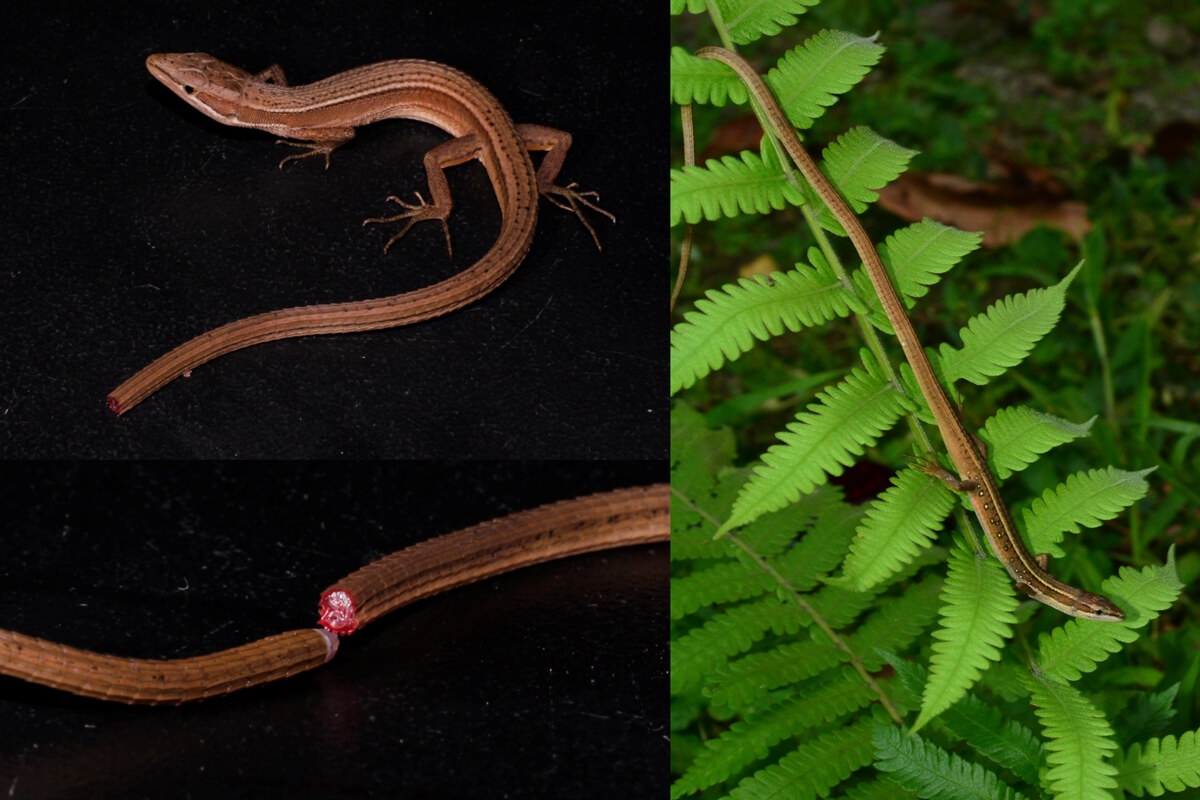
Members of the genus Takydromus are small lizards that are widely distributed in the eastern Palearctic region and the Indomalayan realm (Oriental region). Their distribution range is from the Russian Far East and Japan in the north to the many islands of the Philippines and Indonesia in the south, extending to central and southern China, Mainland Southeast Asia (formerly Indochina), and eastern India in the west. It is one of the most common lizard groups in East Asia. Grass lizards are petite. Smaller species have a body length of only 4-5 cm and a weight of only around 2 grams, while larger species measure only 7-8 cm. The common characteristics of this group are fusiform head, extremely elongated body, and a super long tail that is about 3-4 times the length of the body. With their short limbs, they resemble small snakes with four legs. So, many people refer to them as four-legged snakes or “snake aunts.” Their special elongated body and extremely light weight are probably the evolutionary result of their adaptation to grassy environments. They are able to easily shuttle among the grass, which is why some herpetologists refer to them as “grass swimmers.”
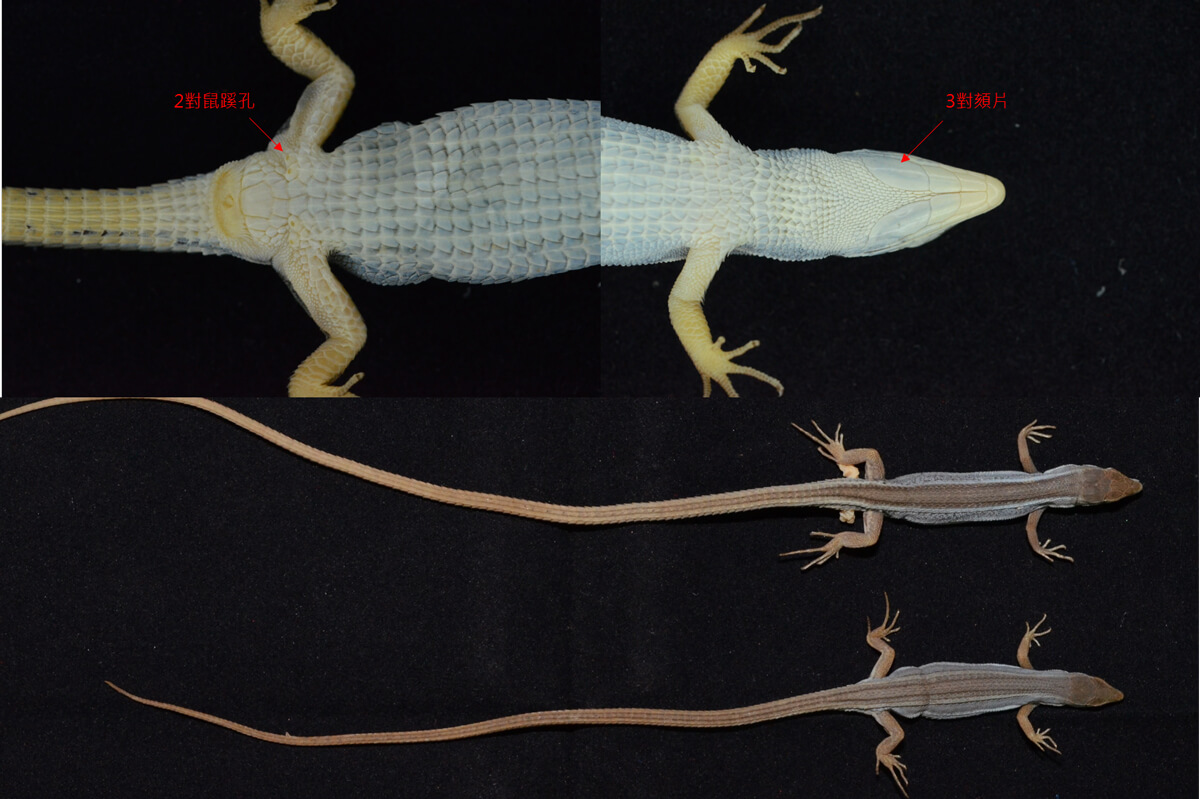
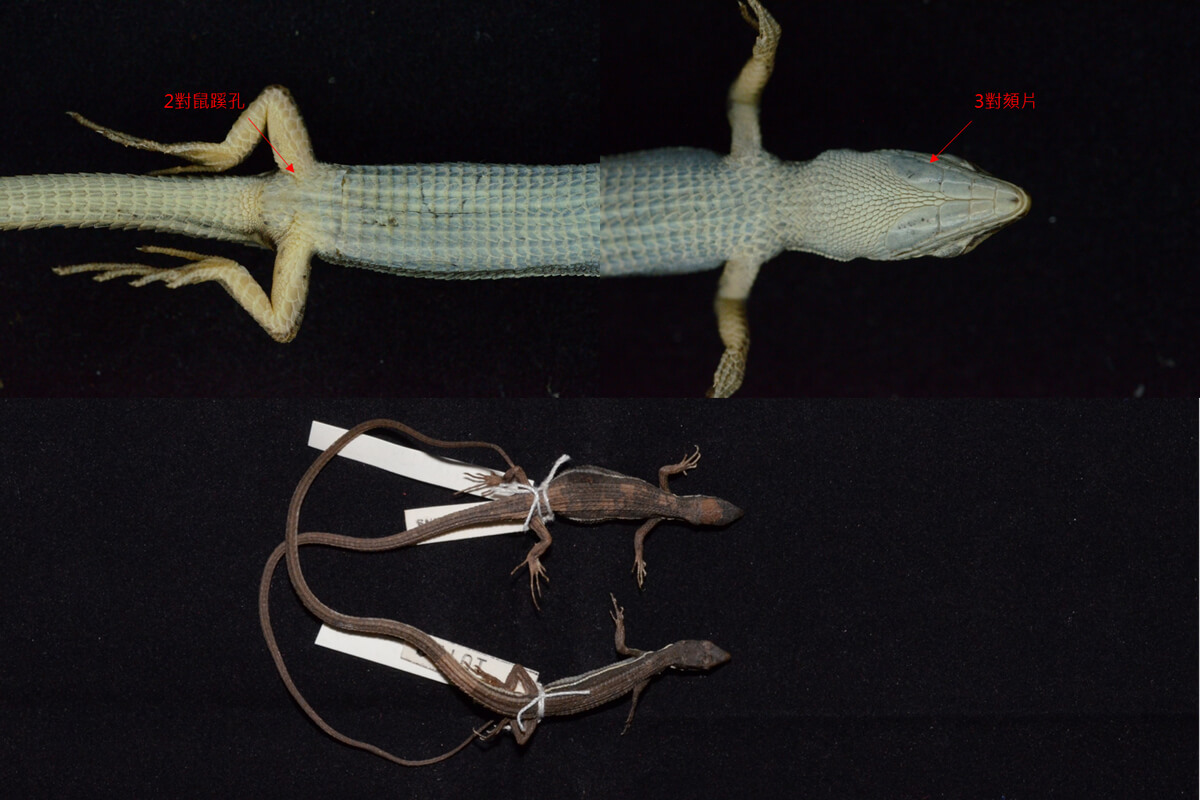
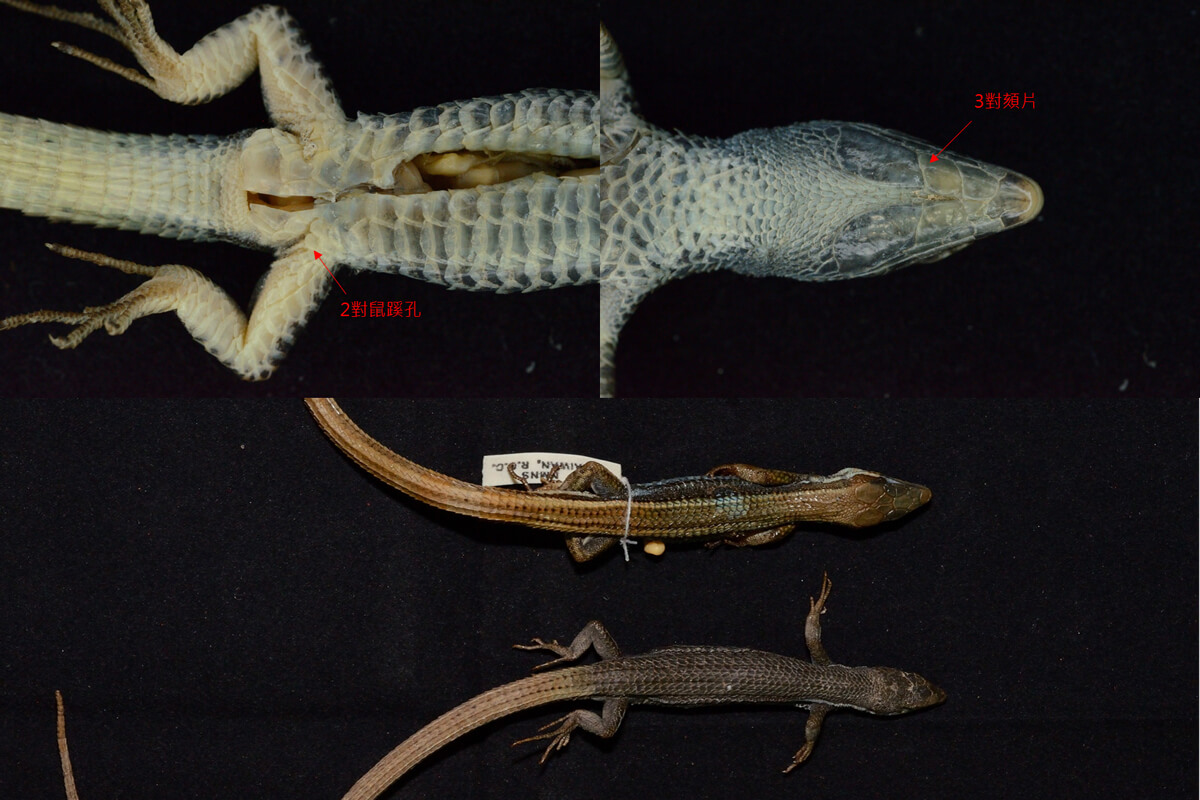
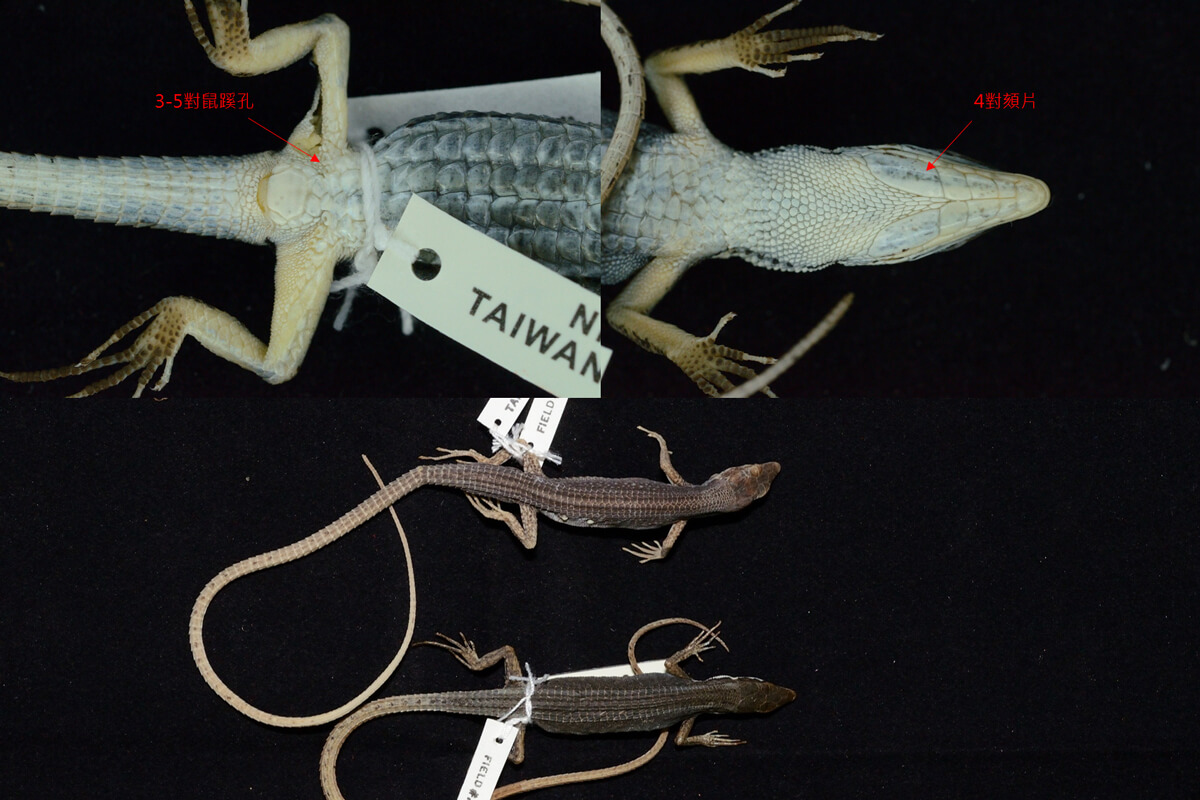
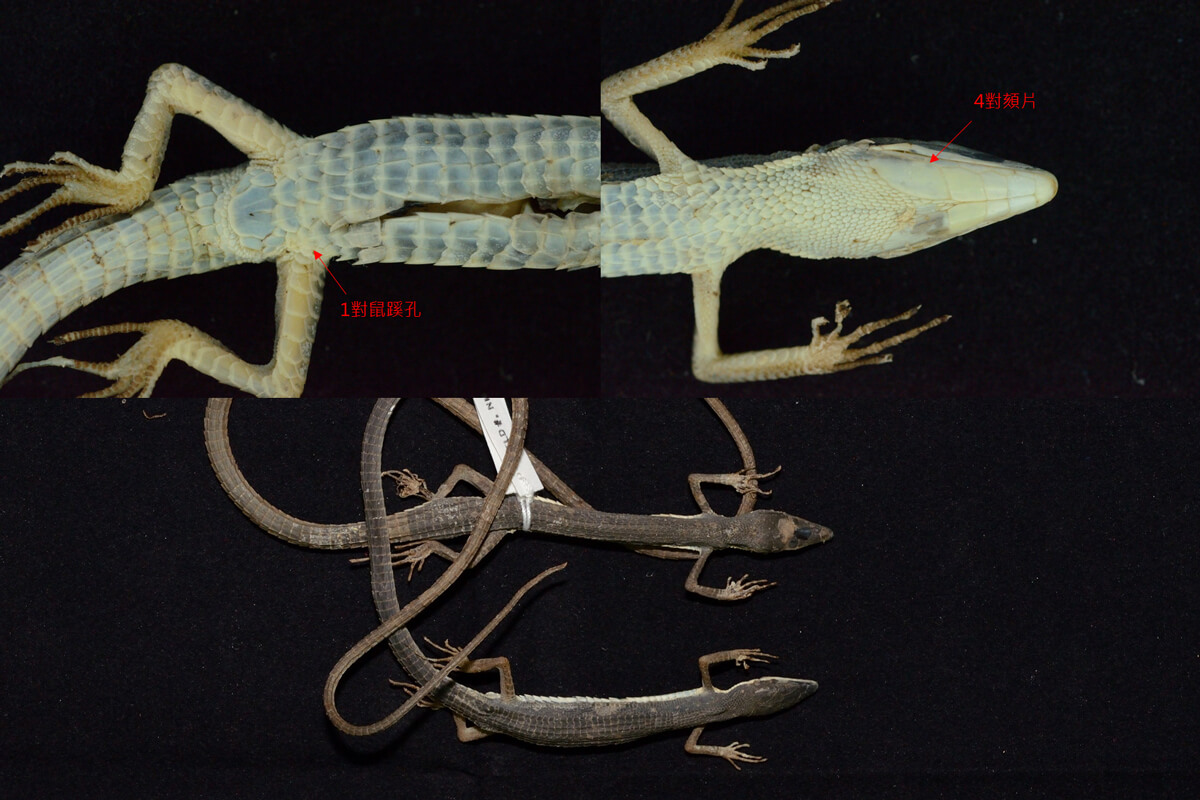
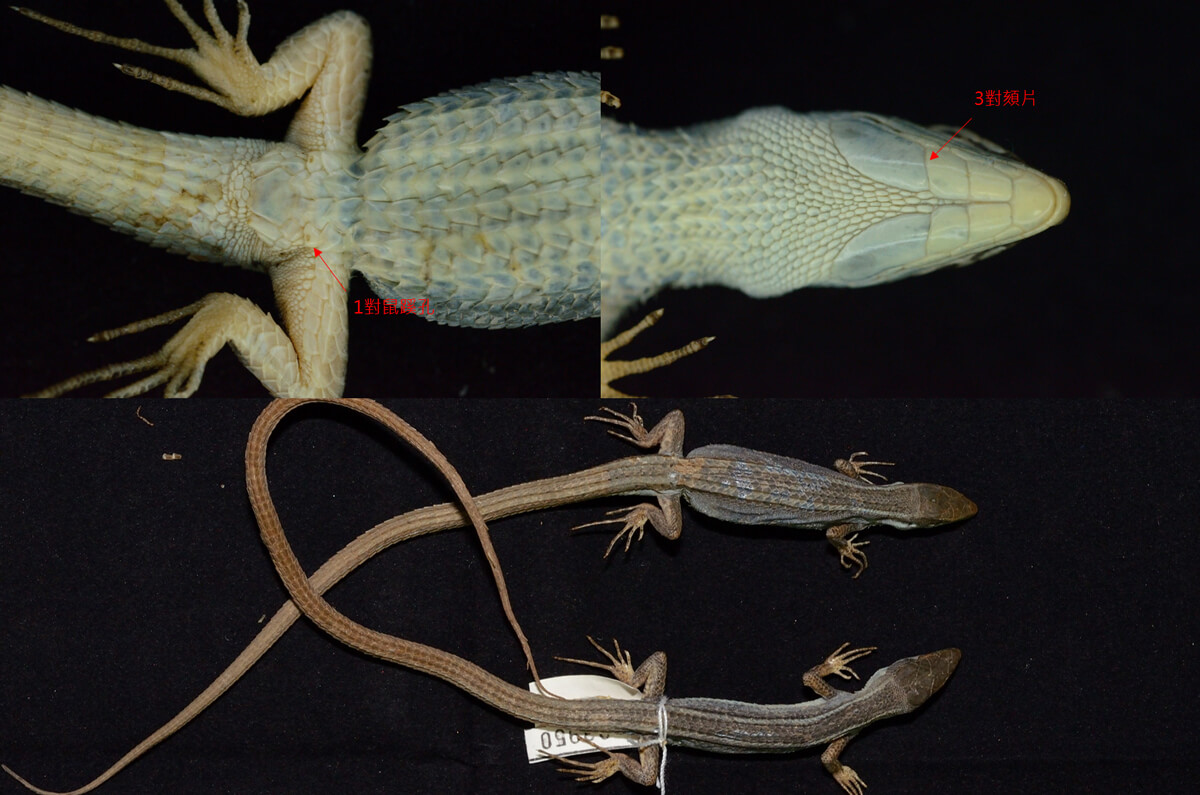
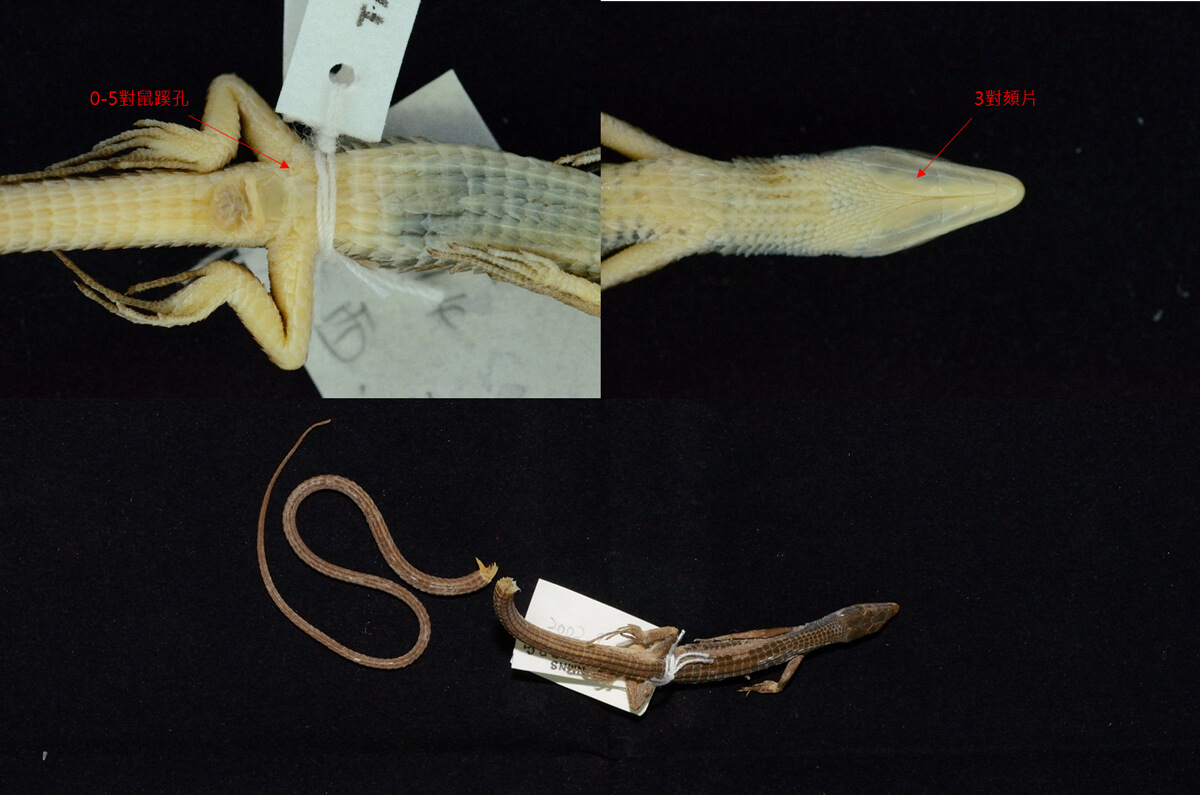
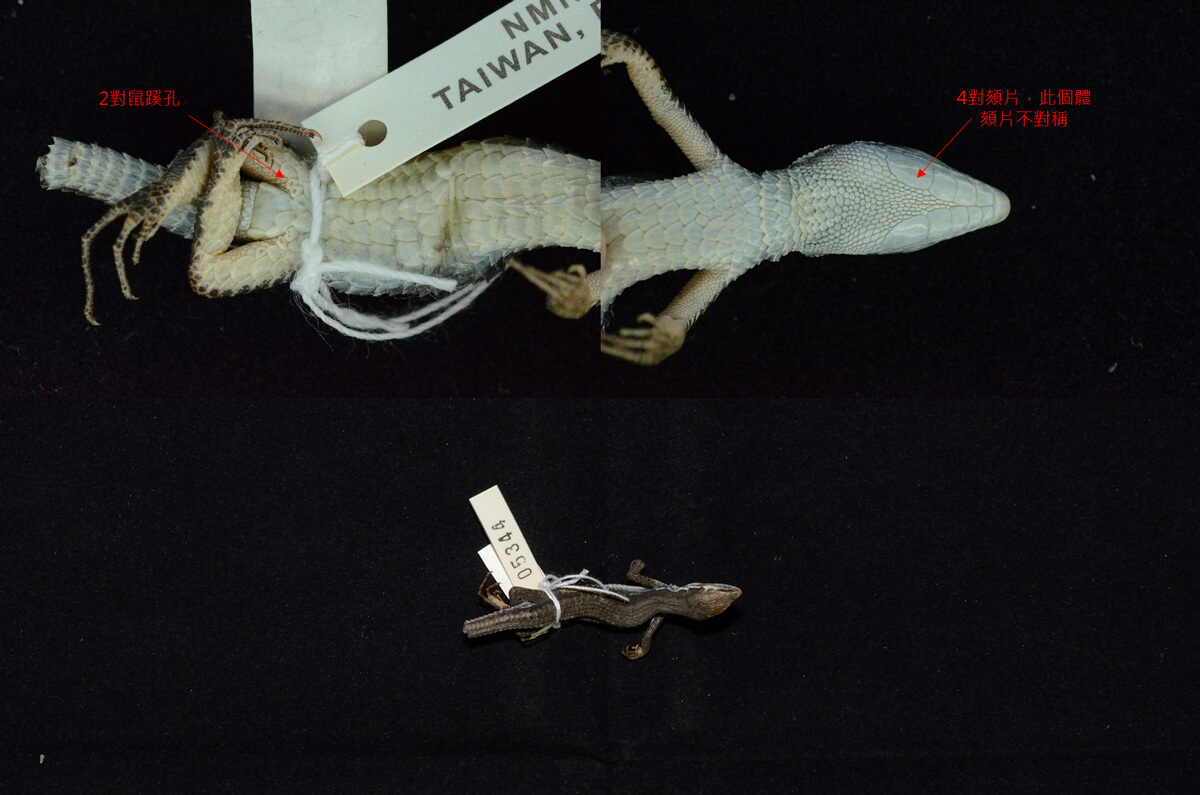
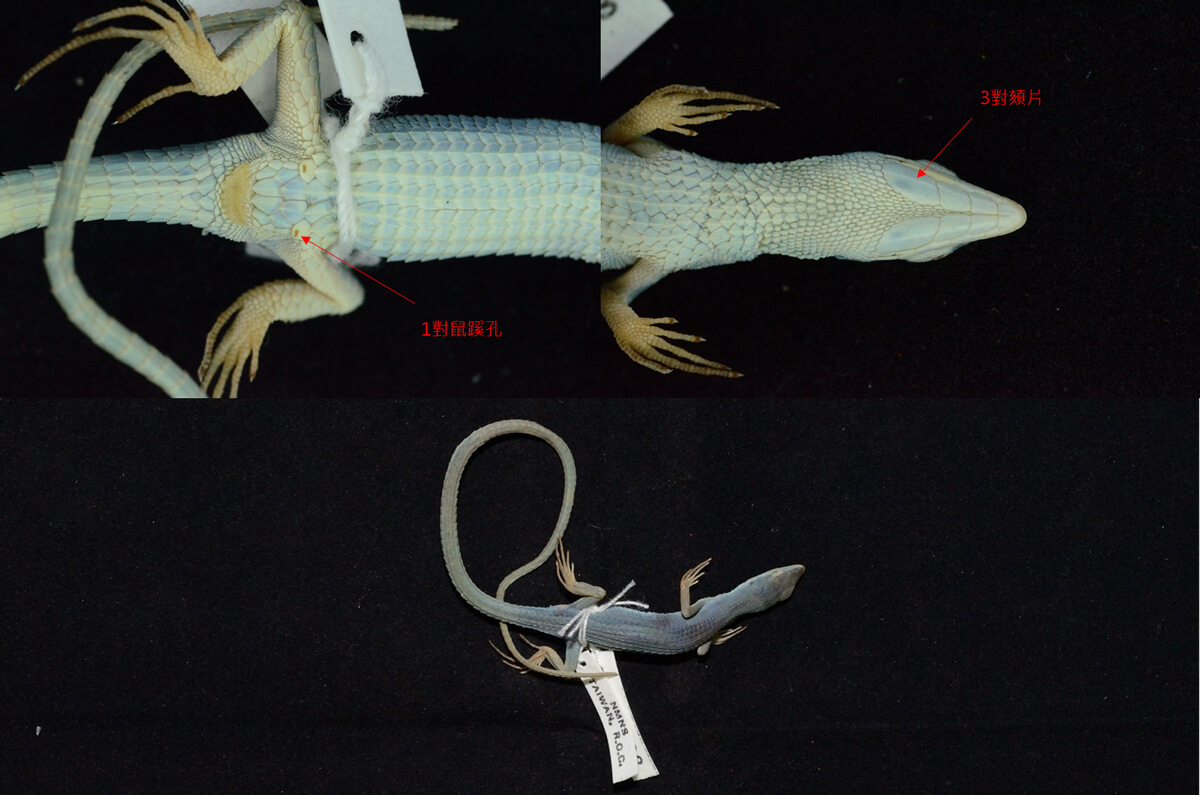
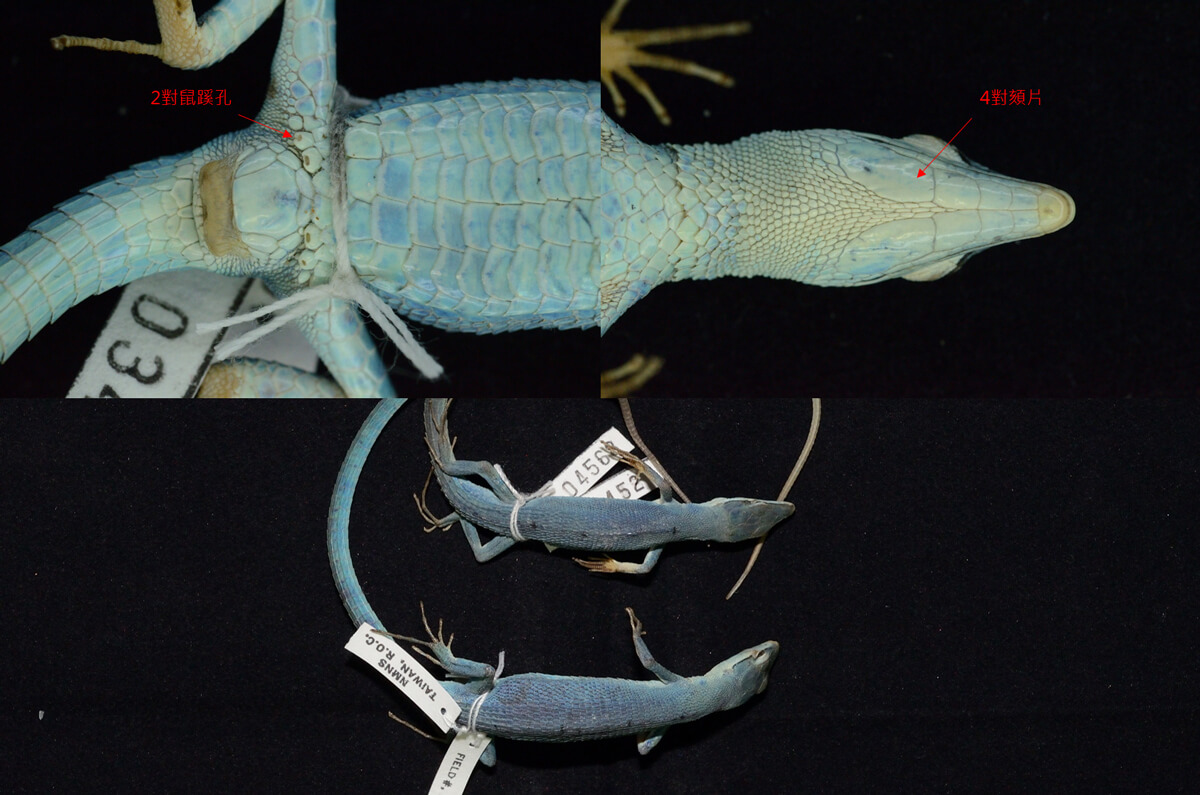
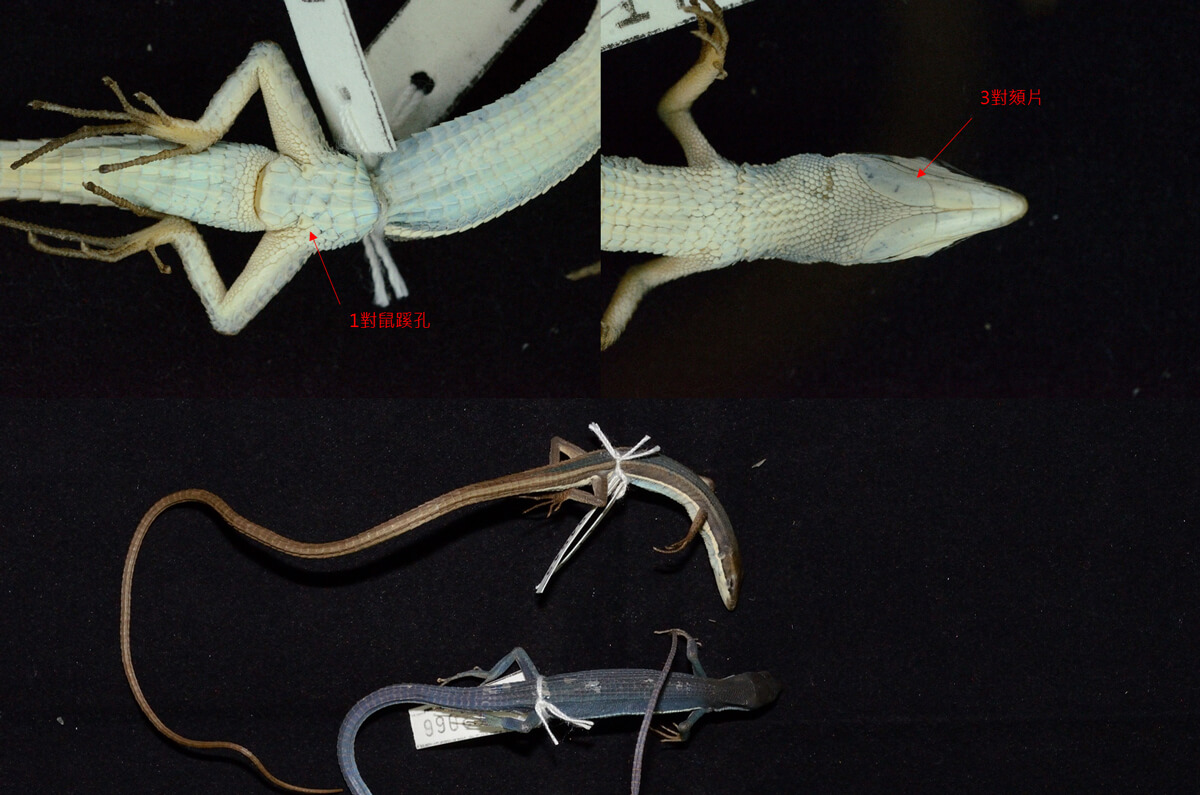
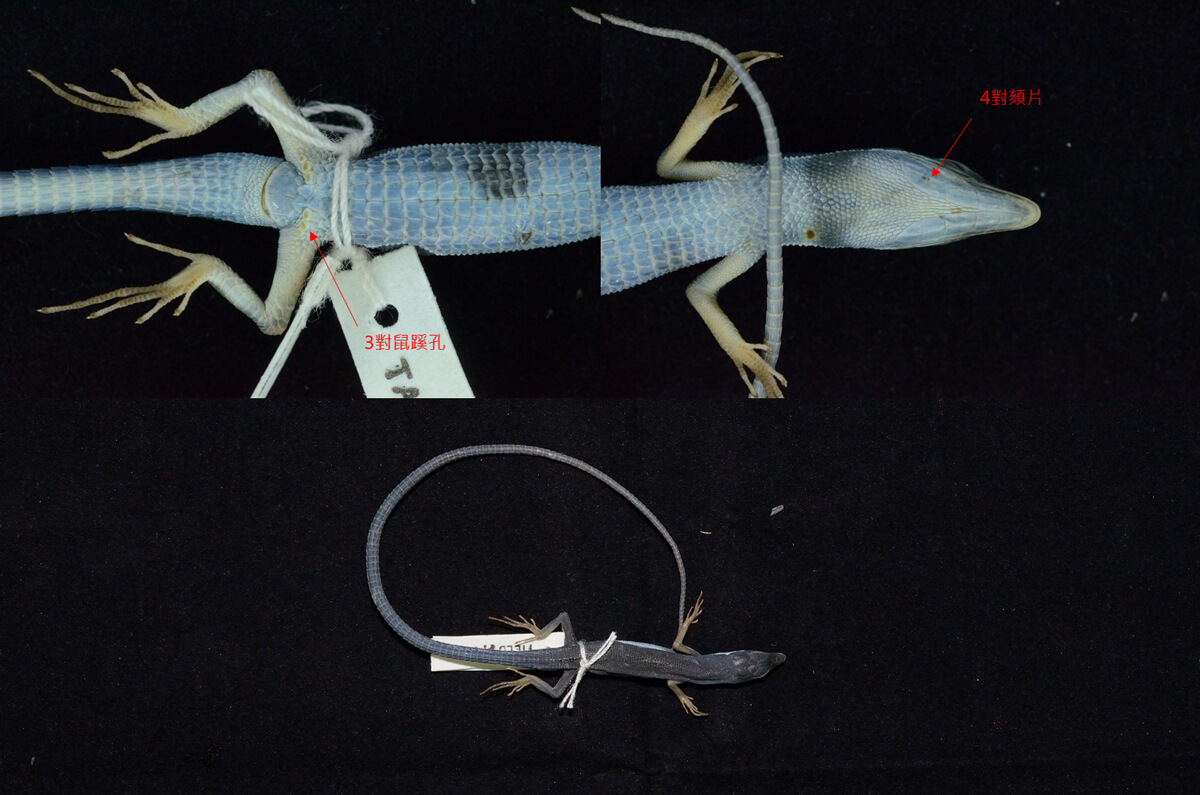
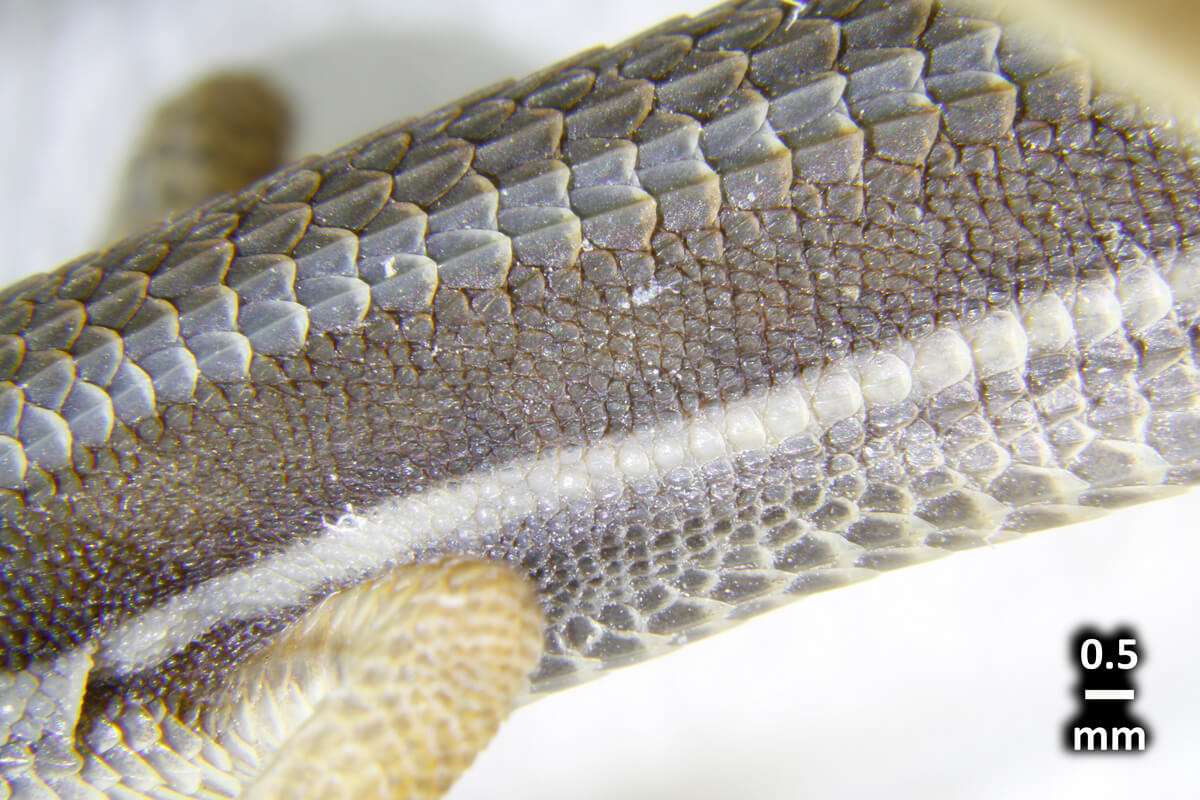
They share a characteristic elongated body. But, if you carefully observe various species of grass lizards, what are some of the different characteristics you will find? The most easily identifiable differences among species of grass lizards are size, thickness, and color. They can be differentiated by their size, larger or smaller, and whether their body is thick or slender. Coloring refers to the overall body color and features of certain parts of the body. There are two main body colors: brown and green. Markings and transverse white lines along the sides of the body are important features worth noting. In addition, taxonomists often use the number of pairs of chin shields and the number of femoral pores to differentiate grass lizard species. Please carefully observe the area under the chin and the femoral pores of the specimens in this exhibition and see if you can find the differences among species.
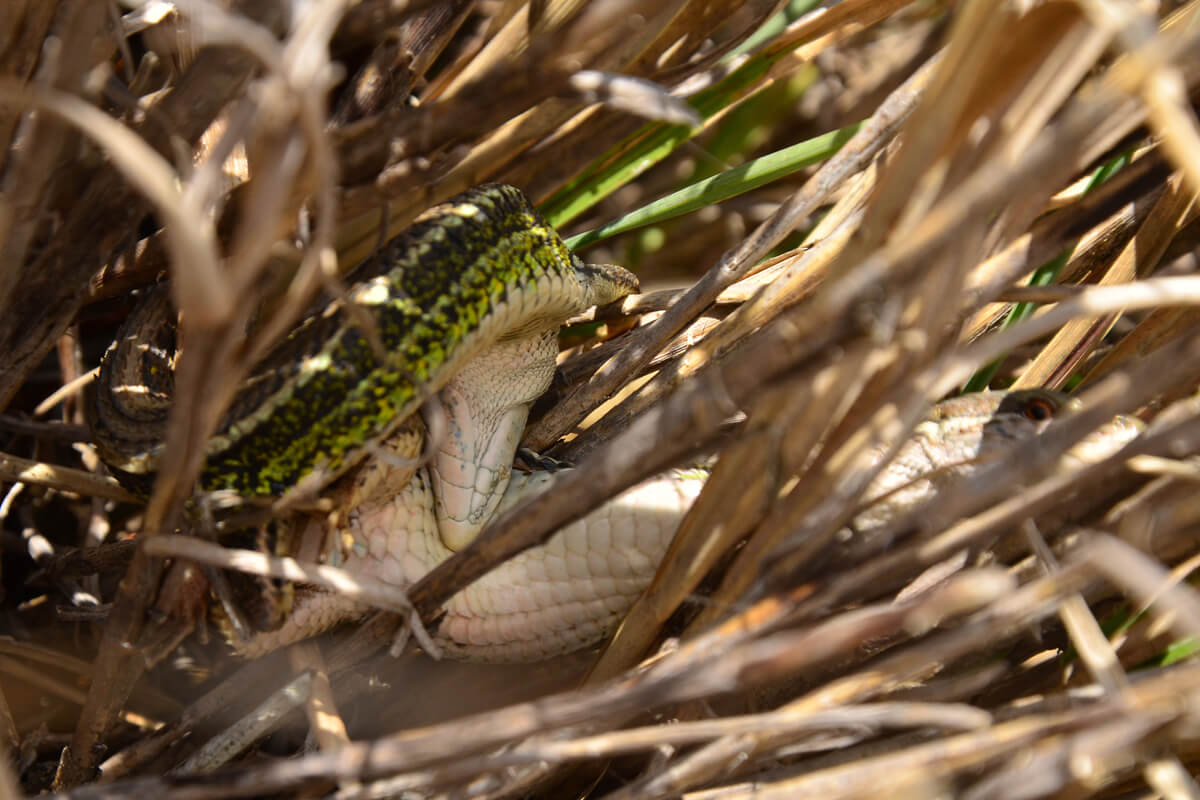
There are currently 24 species of these lizards. It is worth noting that six were discovered after the year 2000, suggesting that there are many species still hidden in the grass, awaiting careful exploration by herpetological taxonomists. In this exhibition are 12 species of grass lizards found in Taiwan and neighboring areas, as well as photographs of them in the wild to introduce their unique behaviors.