Introduction to Taiwan’s Rodents
Rodents refer to small mammals that look like rats or mice. Taiwan’s rodents include moles, shrews, rats, mice, voles, squirrels, and flying squirrels. Although there are similarities in their appearance, there are large differences in taxonomic classification. Shrews and moles belong to the order Eulipotphyla (in the past this was called Insectivora or Soricomorpha). They have a mouth with continuous sharp teeth, small and vestigial eyes, but excellent senses of smell and touch. There are five toes on each of the front and hind feet. They are carnivorous predators, mainly hunting insects, and worms, including earthworms. In terms of evolution, shrews and moles are more primitive mammals with a high metabolic rate, which means that they rapidly consume calories and become hungry quickly after eating. They must constantly eat to replenish calories. If they go without food for a few hours, they are at risk of hypothermia and death.
In the order Rodentia, rats, mice, squirrels, and flying squirrels have wide flat molars and constantly growing incisors. Some rodents in the family Cricetidae even have constantly growing molars and do not need to worry about their wear and tear. Rats and mice have a gap between the incisors and molars, which is called a diastema. This is a convenient opening through which the rat or mouse can push out debris that it has chewed but is not to be swallowed. Members of the order Rodentia are omnivorous and eat whatever animals or plants they can obtain, including insects, snails, fish, shrimps, frogs, lizards, chicks, bird eggs, and plant roots, stems, flowers, fruits, seeds, and mushrooms. Members of the order Rodentia have four toes on their front feet and five toes on their back feet, which differ from the numbers of toes of members of the order Eulipotphyla.
In nature, predators such as snakes, herons, raptors, leopard cats, canids, martens, and civets prey on rodents to survive. Rodents feed on plants, mushrooms, and smaller animals. In the ecological food chain, in addition to plants’ roles as producers, rodents play a very important role at the basic tropic level. Sufficient populations of rodents are needed for various predators to survive. In addition, shrews and moles can consume large numbers of insects. Therefore, they function to balance insect populations. Squirrels store large numbers of seeds and help plants to disseminate them. Although rodents are seemingly inconspicuous, due to their great diversity and large numbers, they play important roles in ecosystems.
Order Eulipotyphla
Shrews
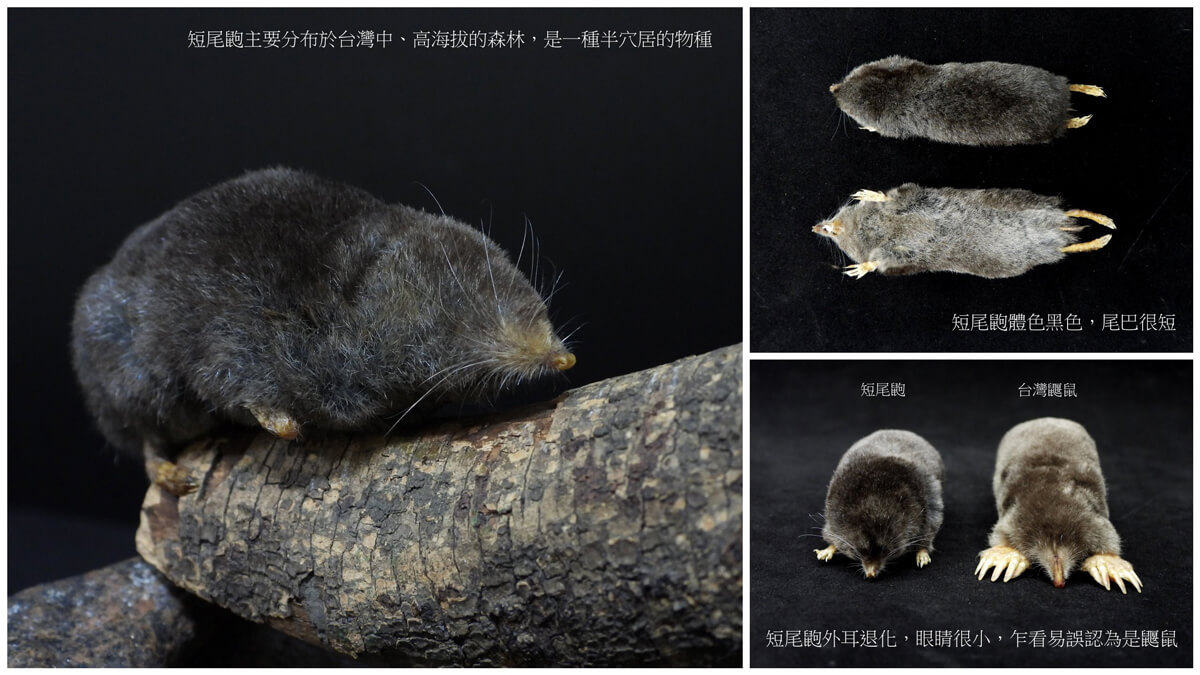
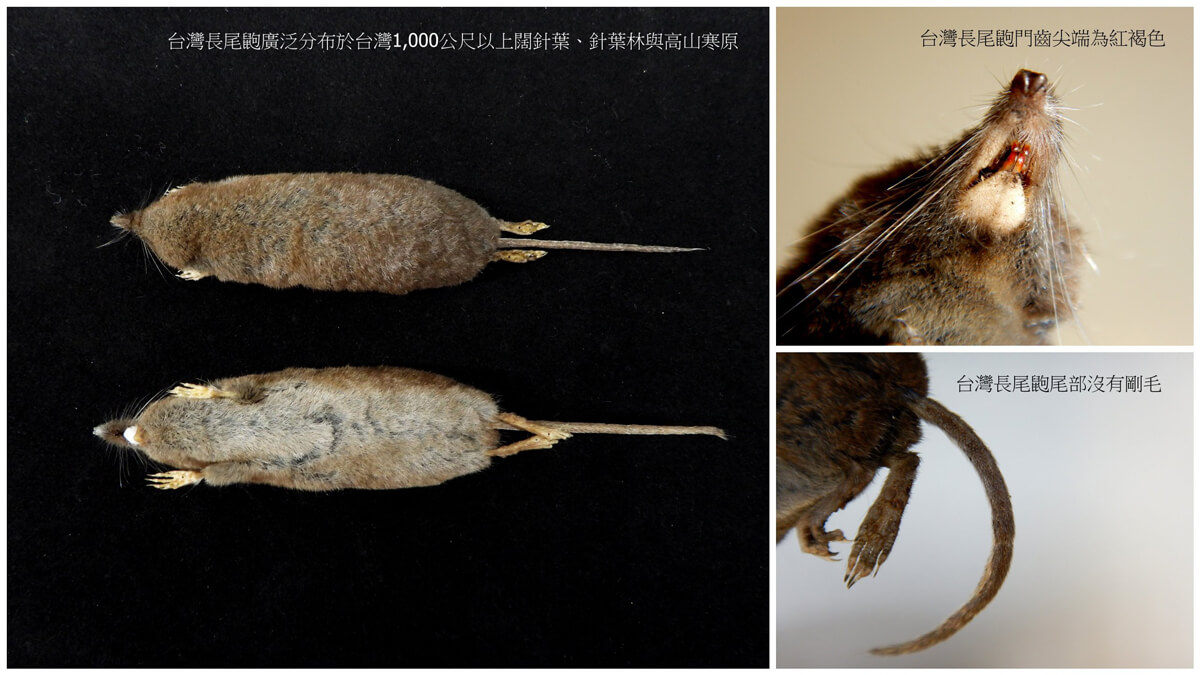
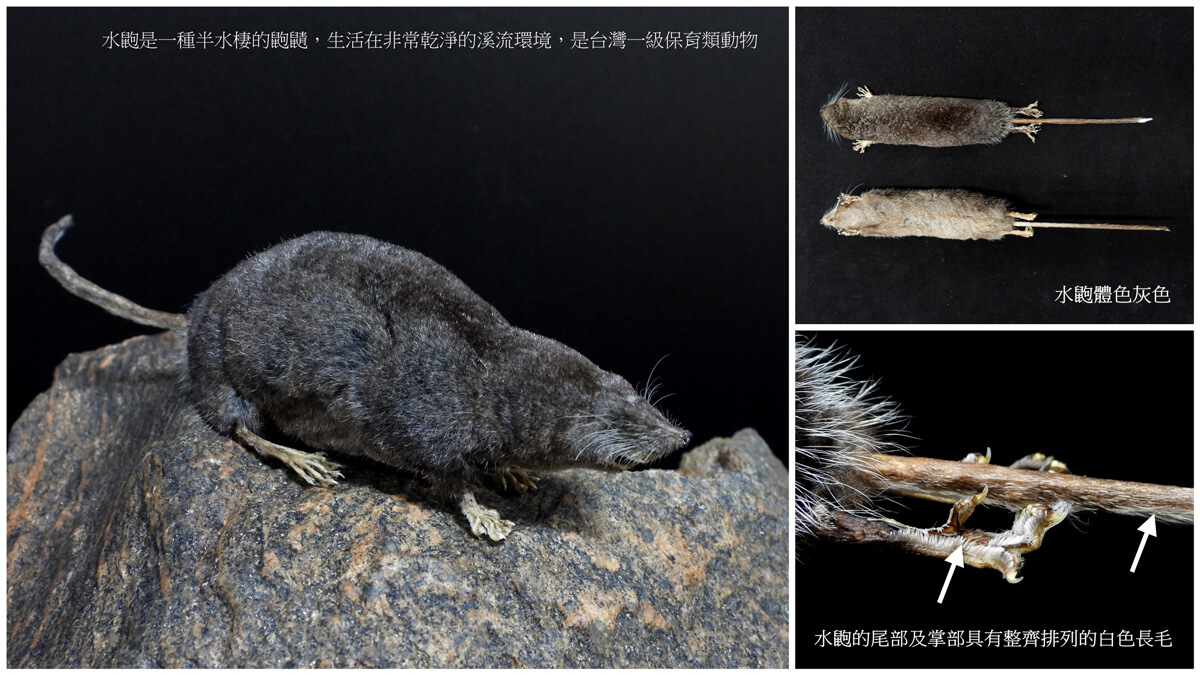
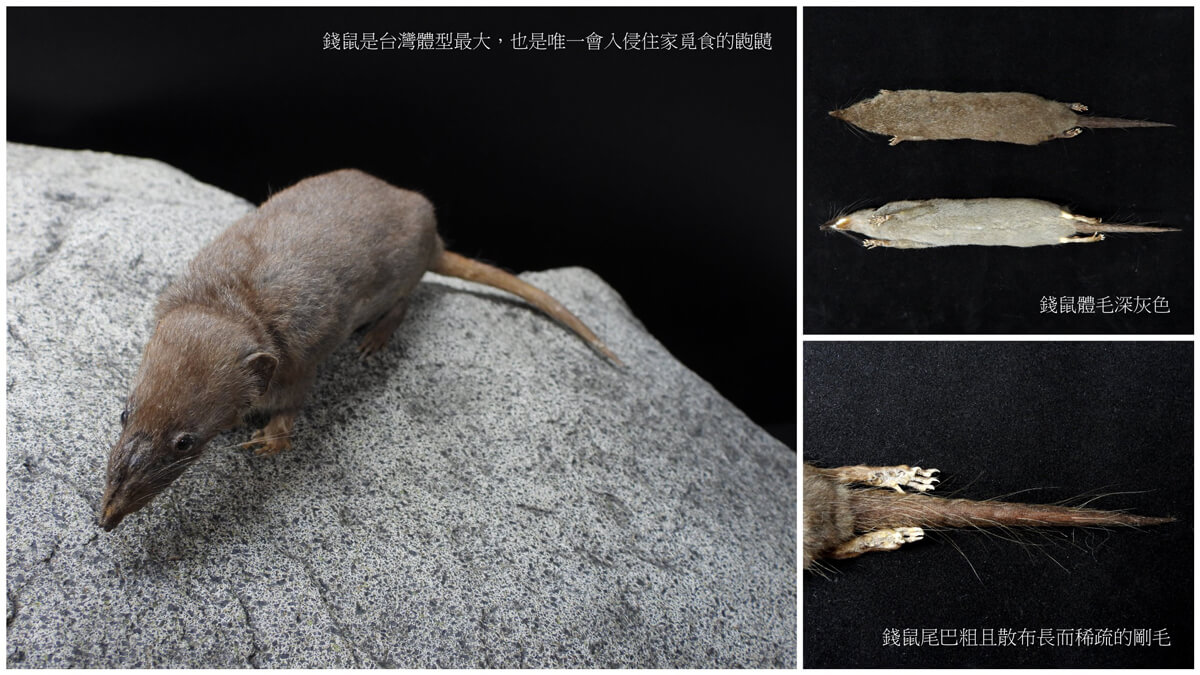
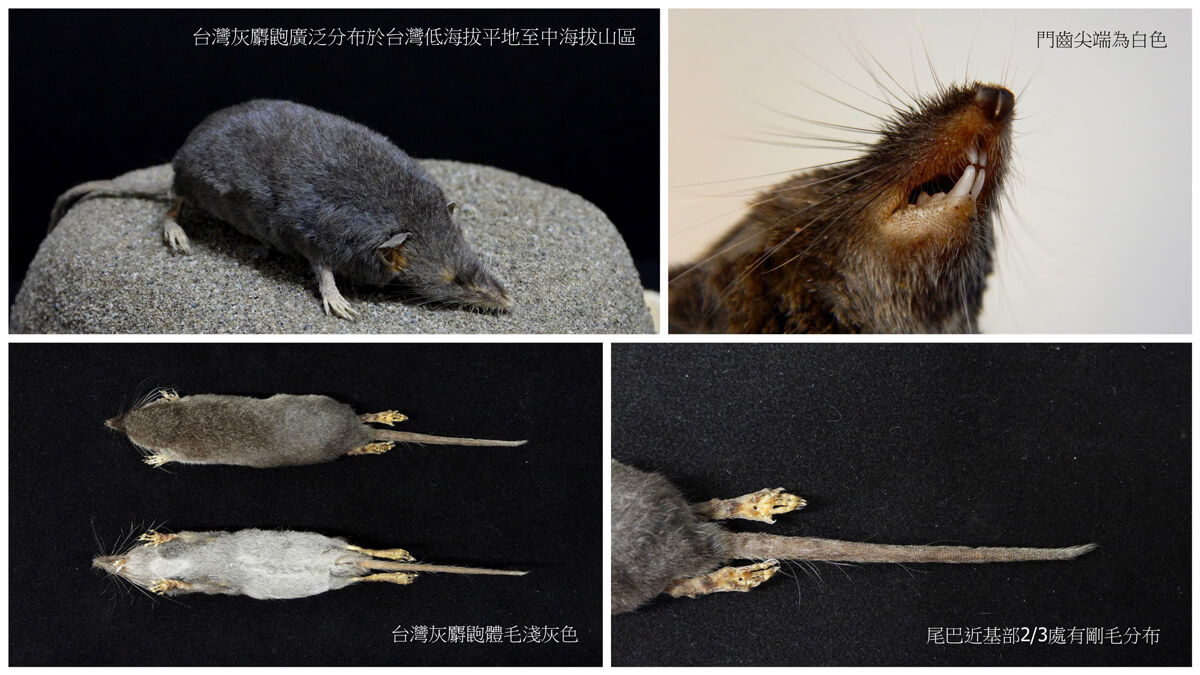
Shrews belong to the family Soricidae and the order Eulipotyphla. Their sense of sight is not well developed, so they rely heavily on their keen sense of smell to move around in the dark and hunt for food. Some shrews form “caravans.” When a mother shrew wants to move her offspring from one place to another, each of her offspring holds onto the one in front of it. Although they resemble rats, if you observe closely you can see that their eyes are very small and their snout is pointed. These are obvious differences with rats.
Moles
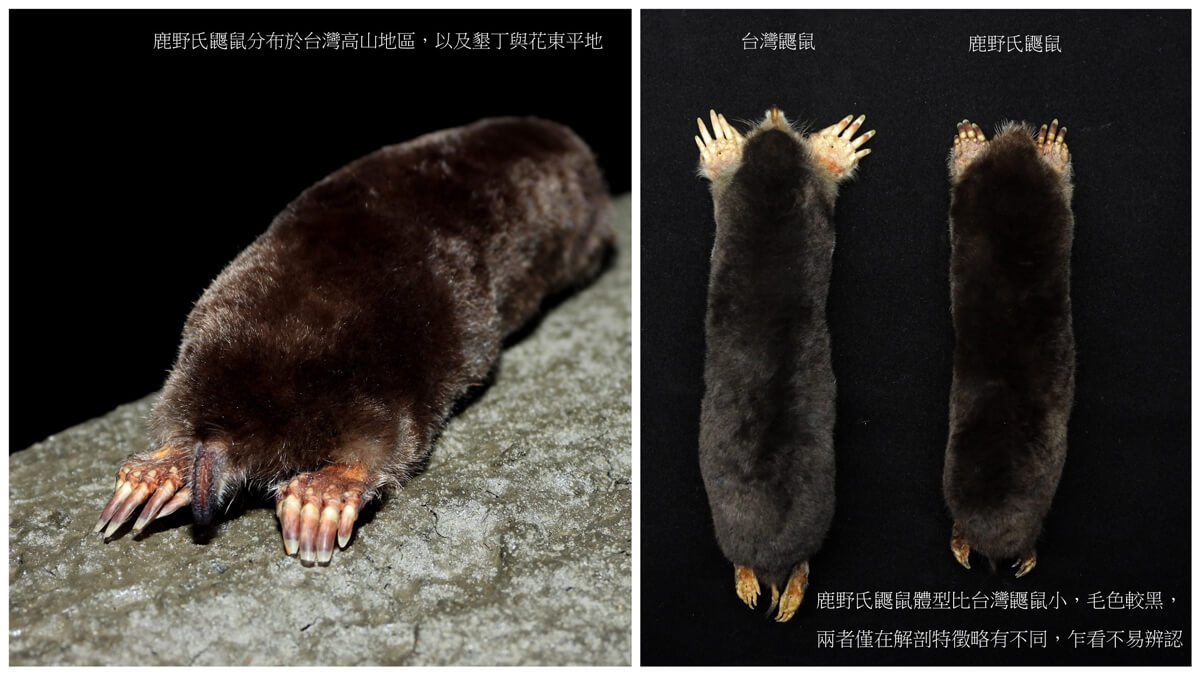
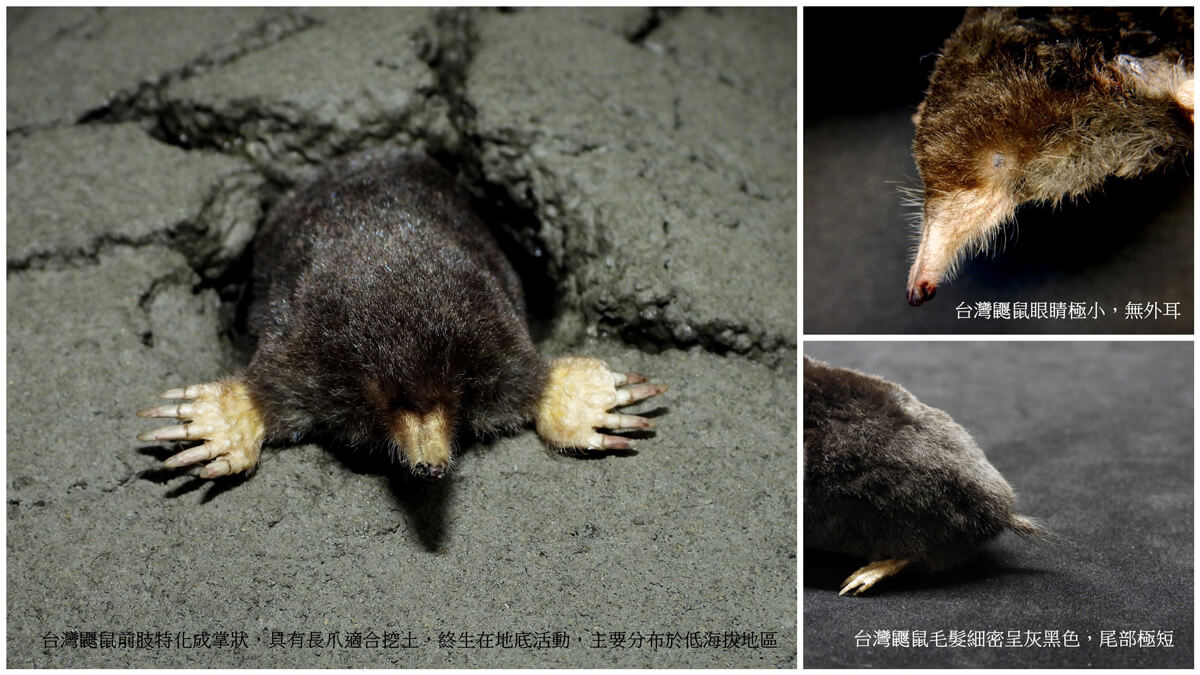
Moles belong to the family Talpidae and the order Eulipotyphla. They have a pair of specialized paws and small eyes with a protective film. They like to inhabit fields with moist soft soil and are adept at digging tunnels. Sometimes there will be soil on the surface above the tunnels, which is evidence of their activity. During the day, they stay in the tunnel or burrow they have dug. At night, they come out from underground to forage for small animals such as earthworms and insects. To adapt to life in the soil, their pinnae have also degenerated and their fur is especially thick such that soil does not easily stick to it. They are experts at living underground.
Order Rodentia
Rats and mice
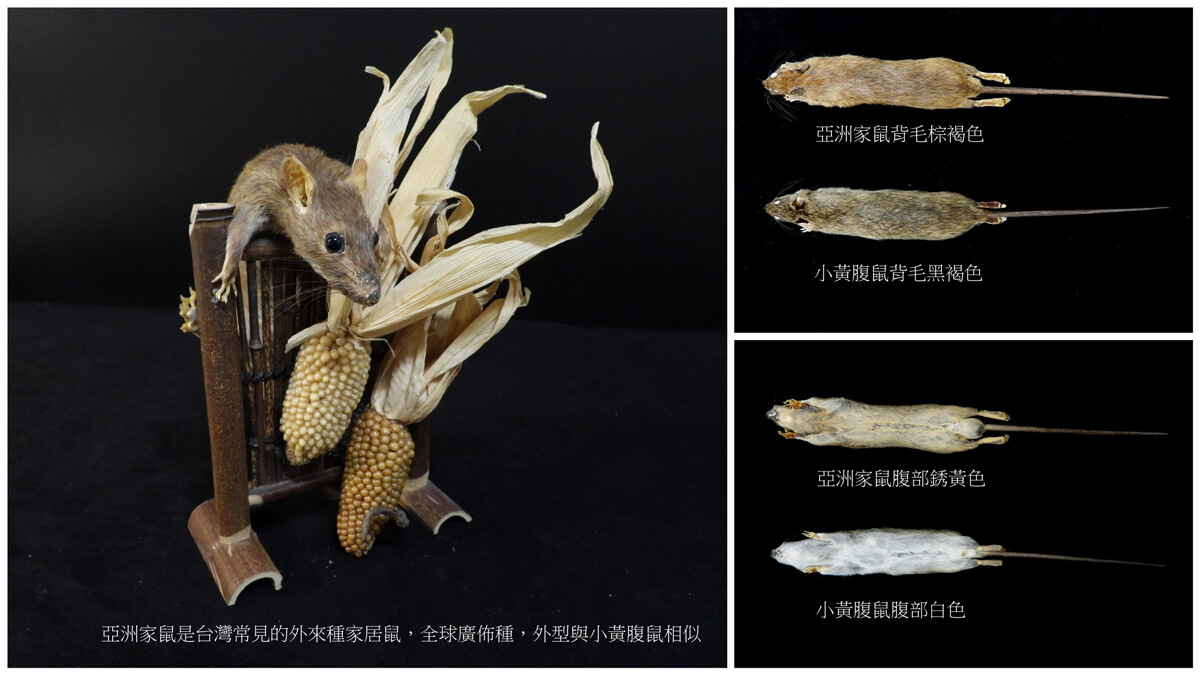
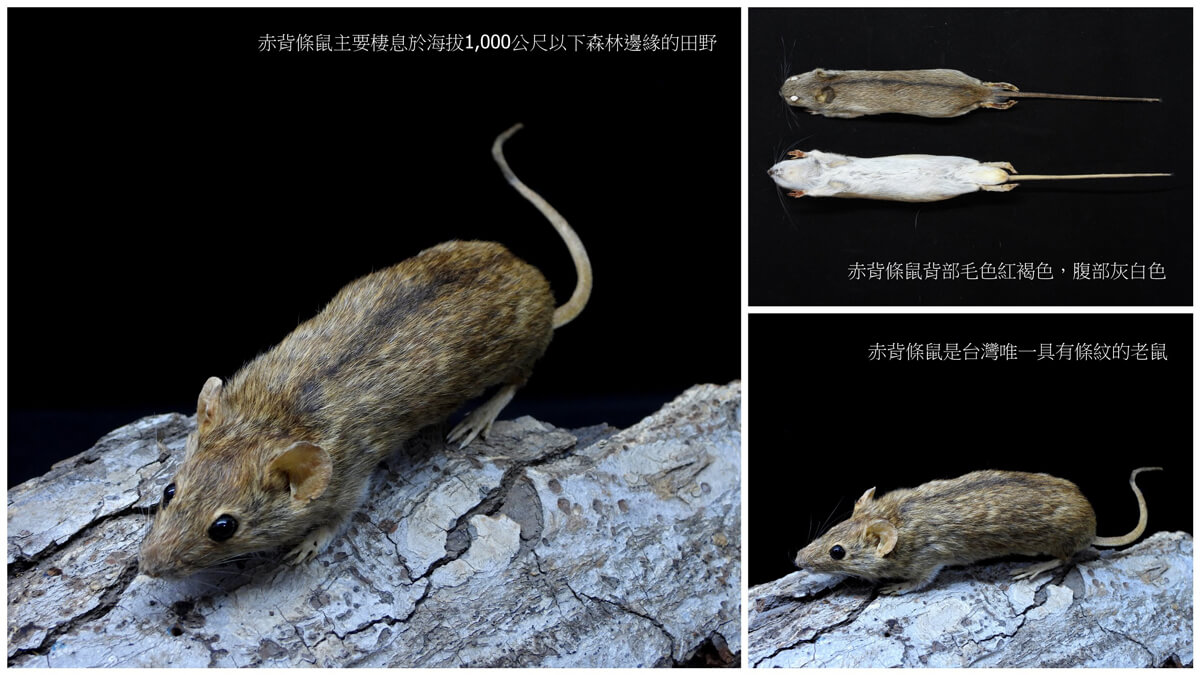
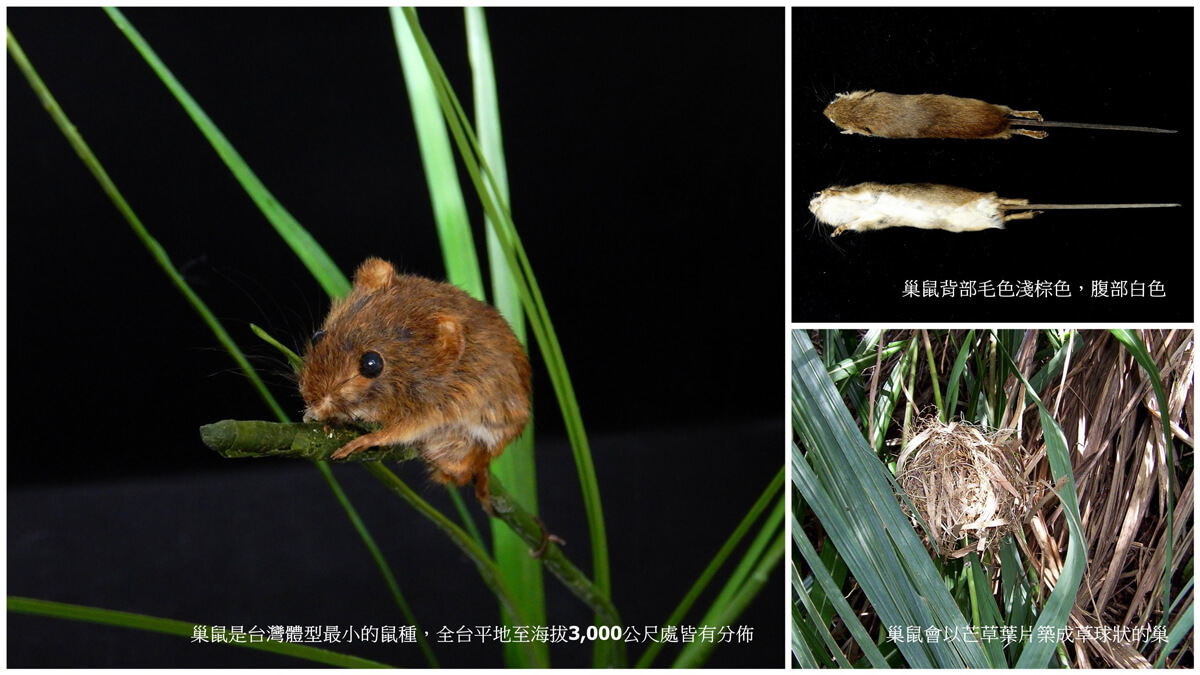
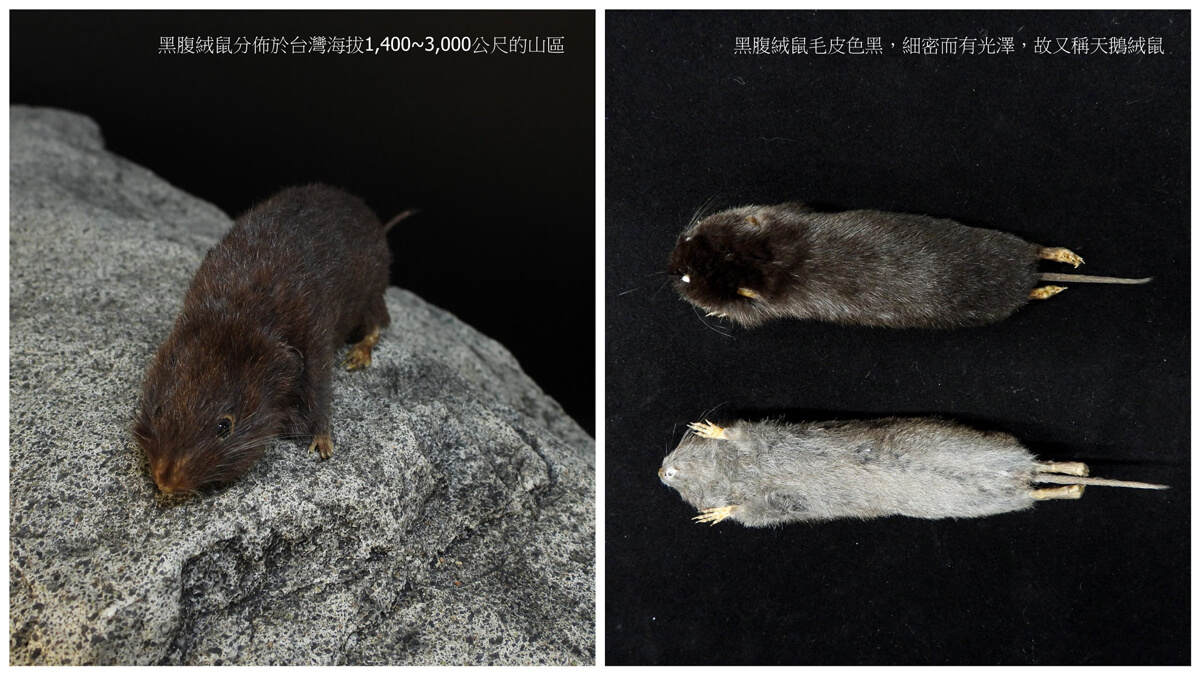
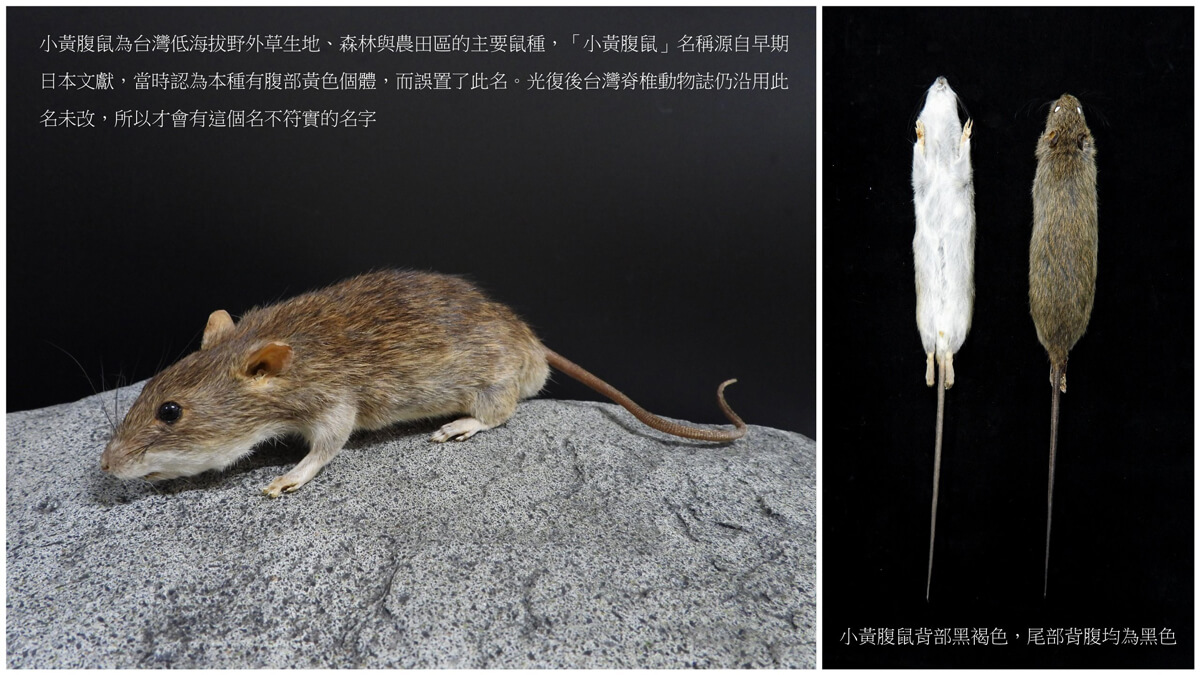
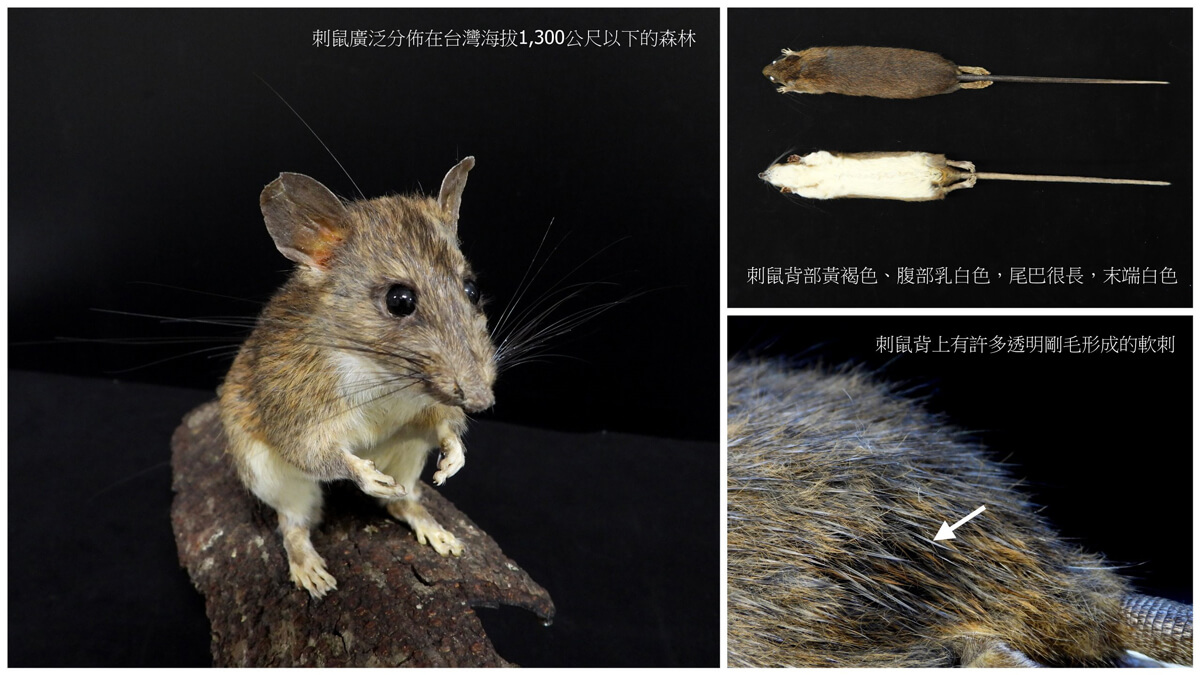
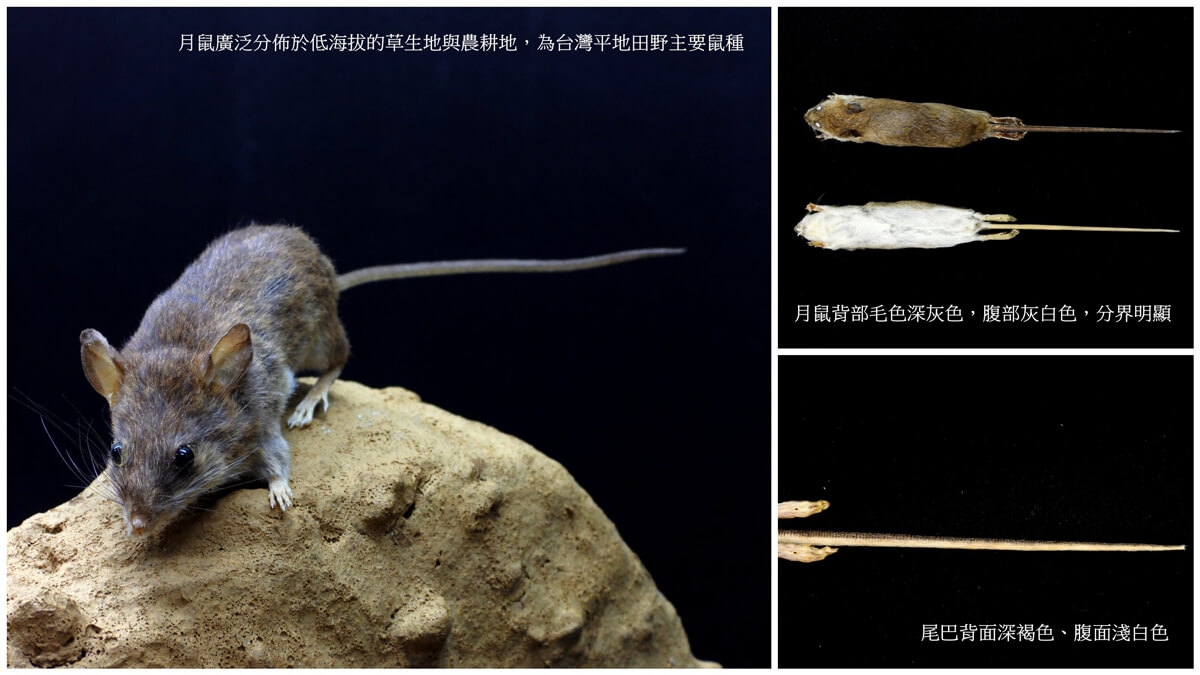
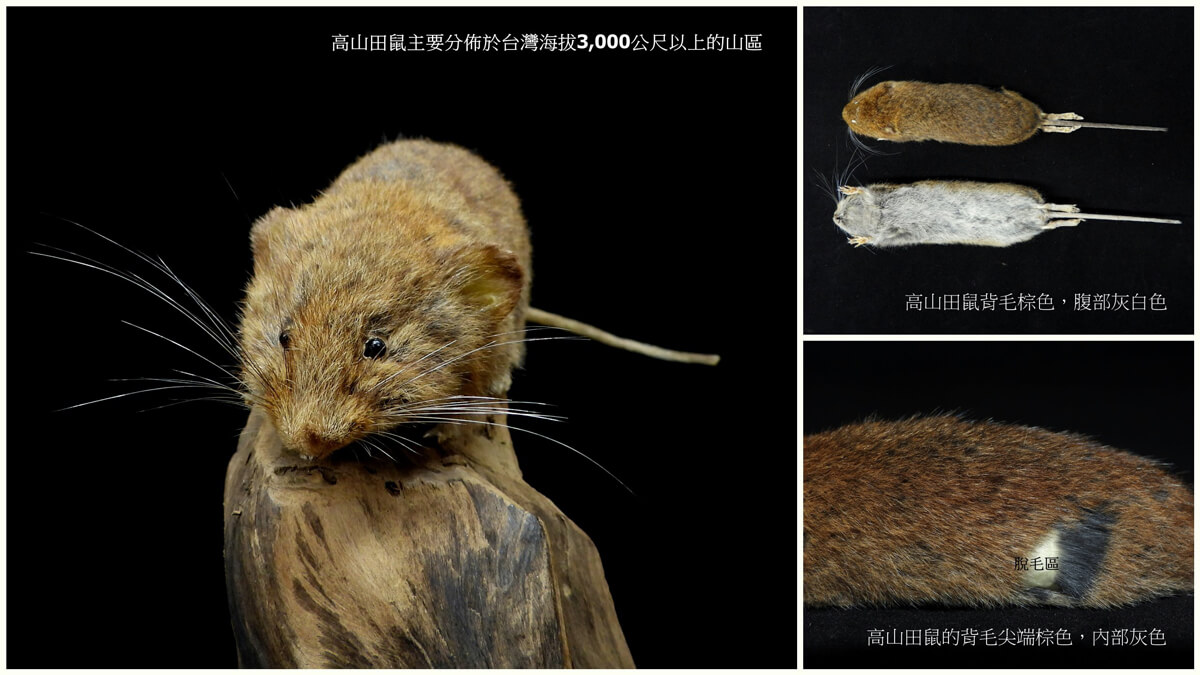
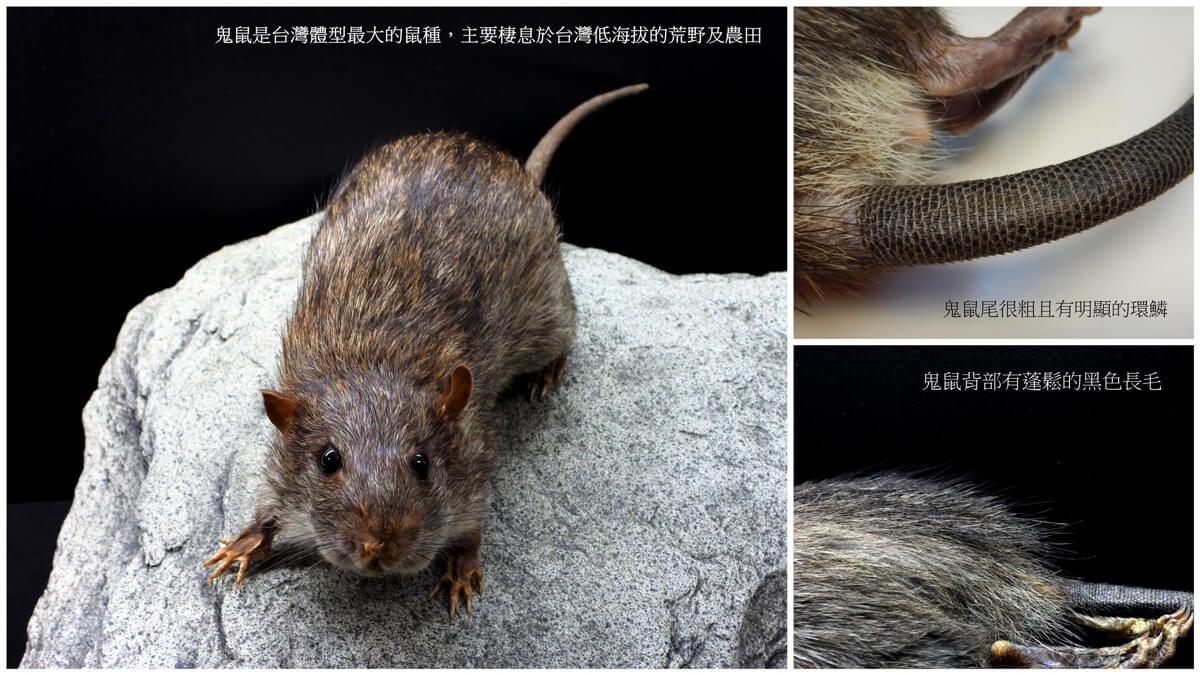
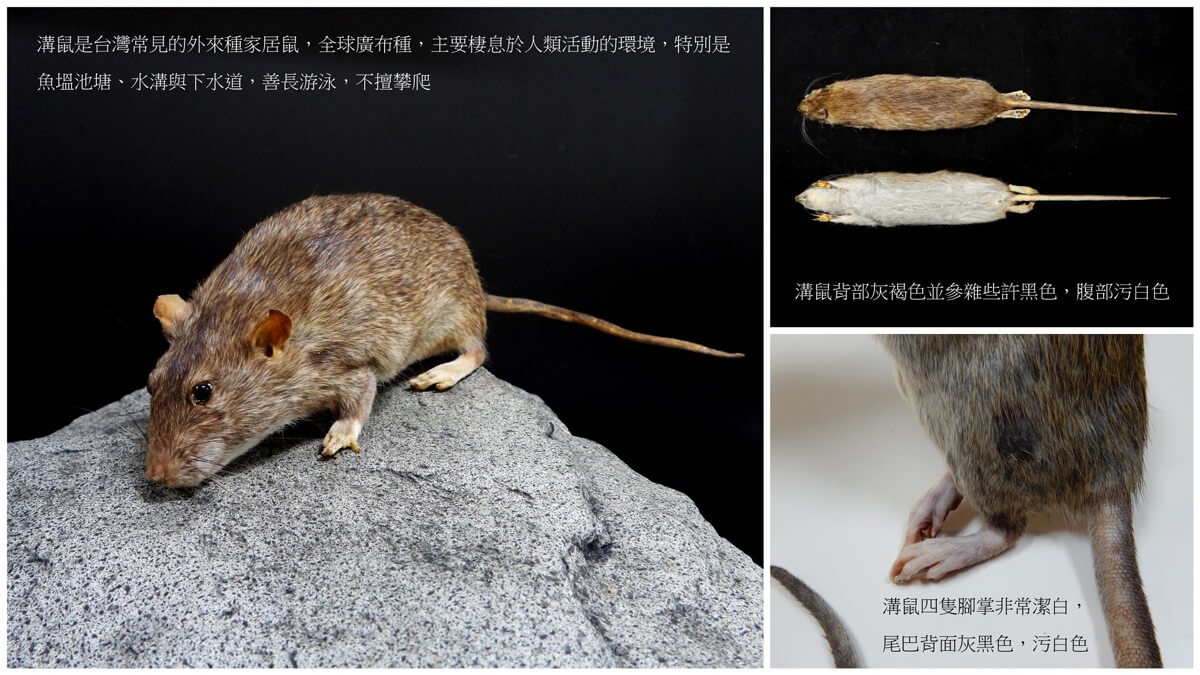
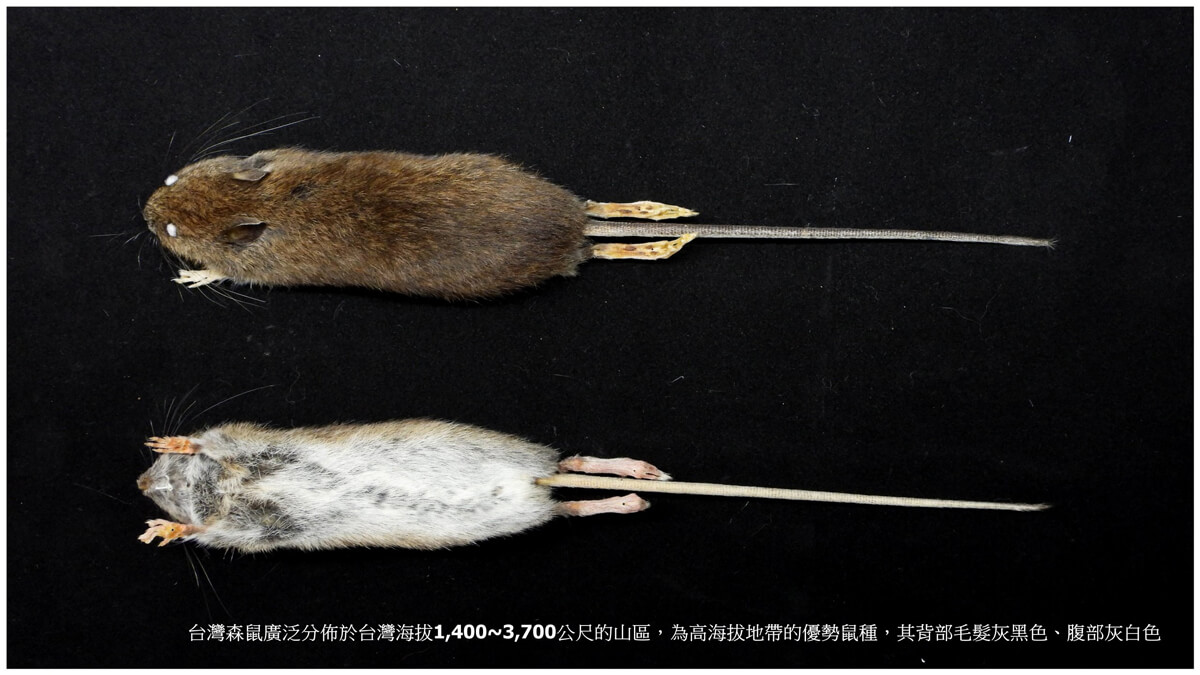
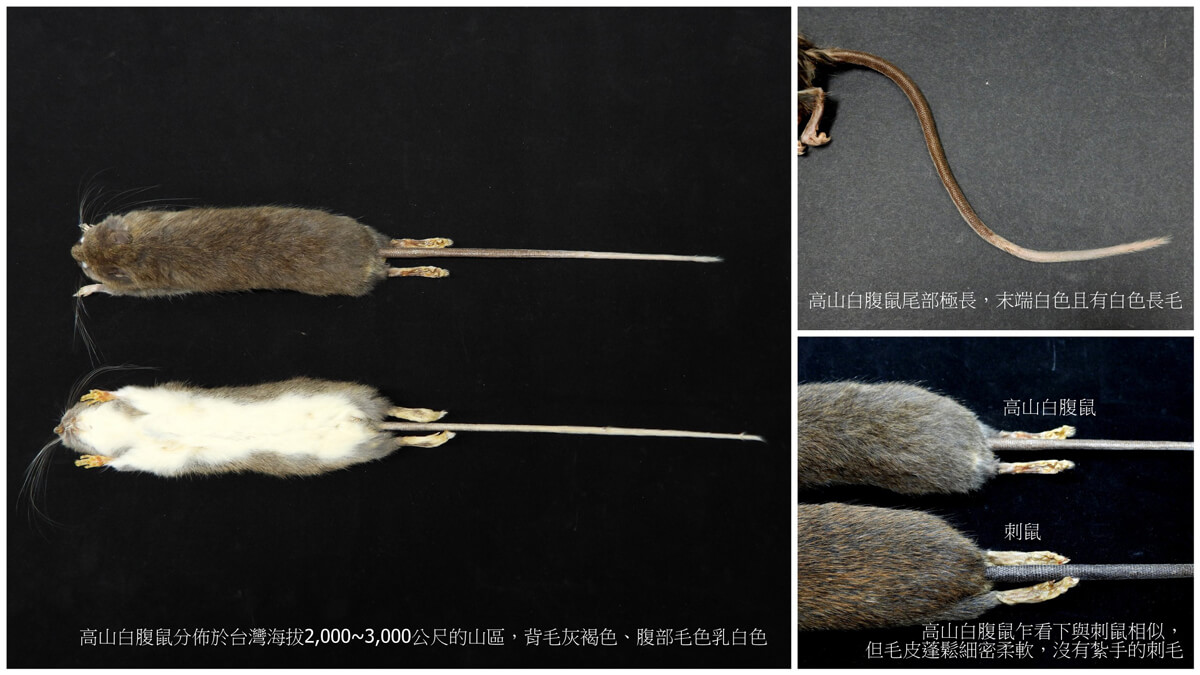
Rats and mice belong to the suborder Myomorpha in the order Rodentia. In addition to typical large incisors, they have three molars in each quadrant of the jaws. They usually have a pair of large round eyes, obvious pinnae, and long slender tail. In Taiwan, there are 14 species of rats and mice. In addition to the Asian house rat and brown rat, commonly seen in homes, there are species that inhabit low-elevation farmland and medium- and high-elevation frigid forests and grasslands, with diverse ecologies and habits.
Squirrels and flying squirrels
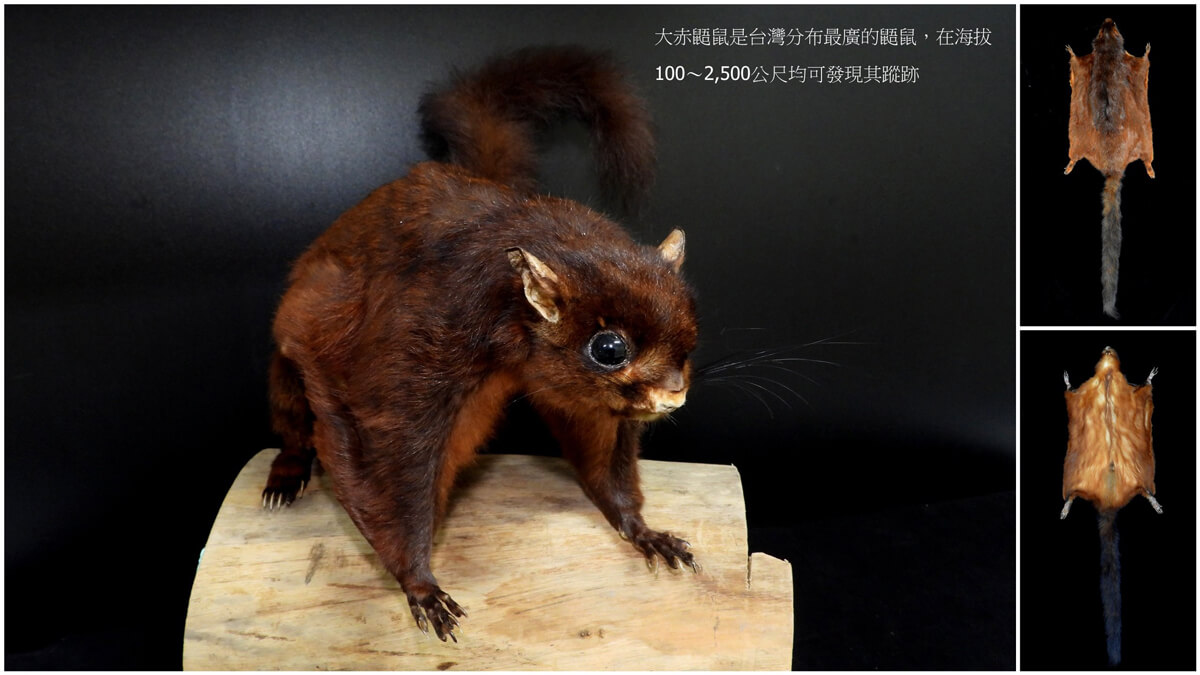
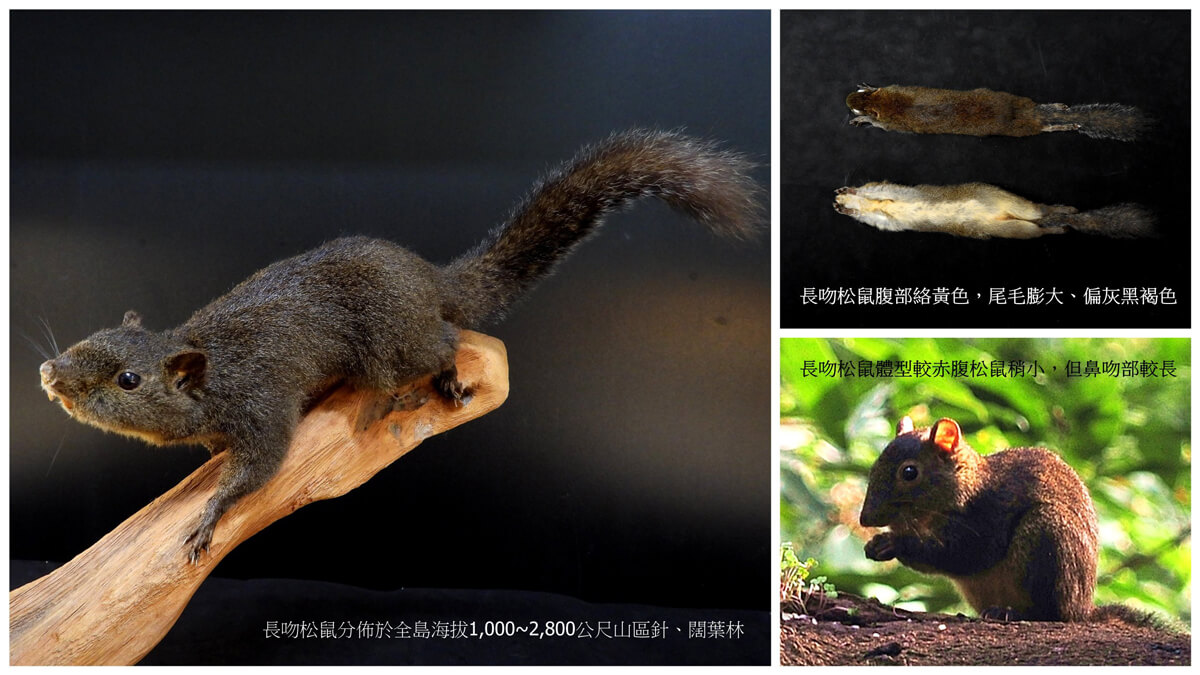
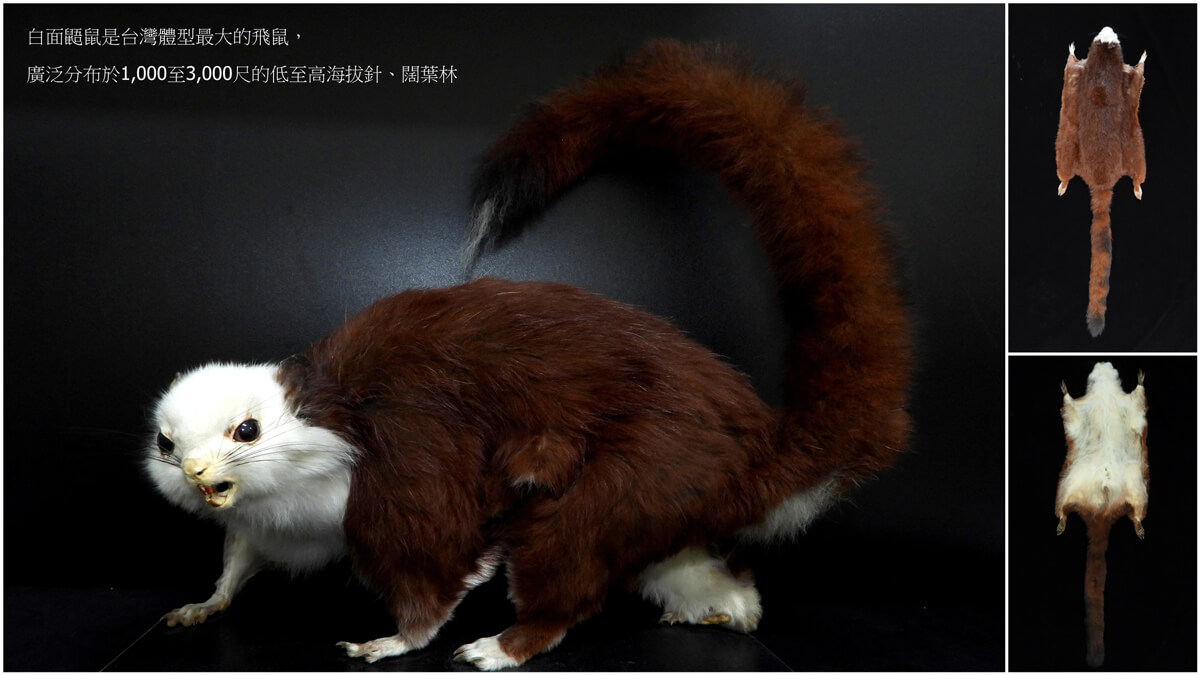
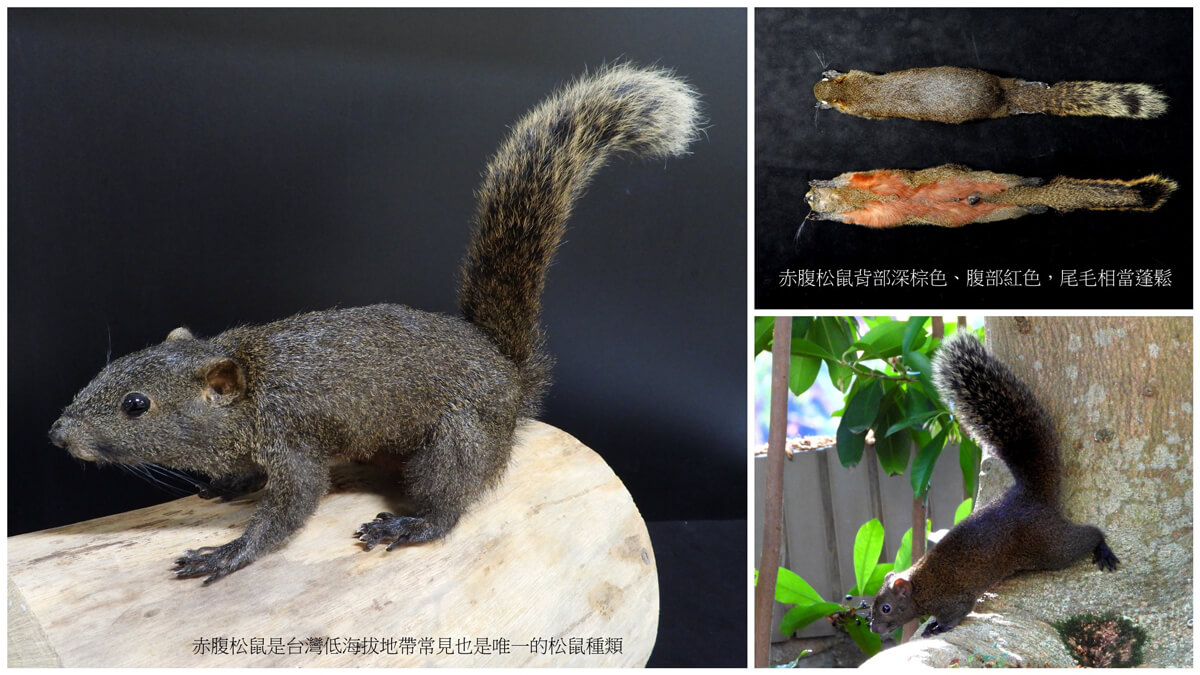
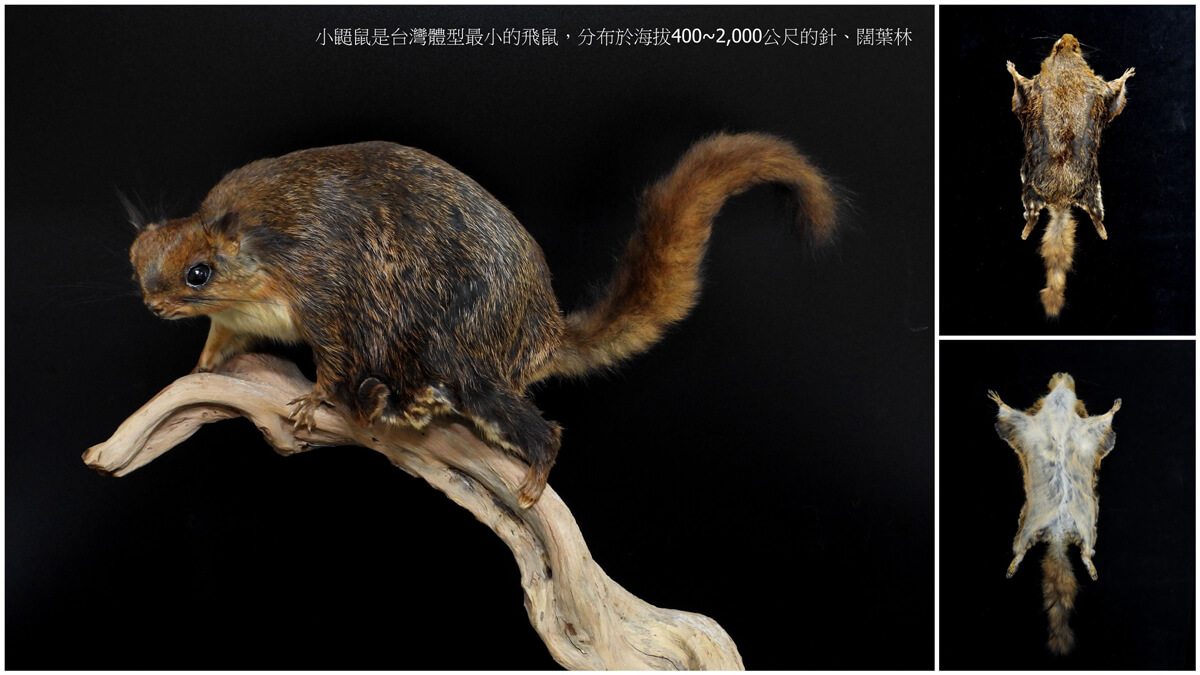
Squirrels and flying squirrels belong to the suborder Sciuromorpha in the order Rodentia and are closely related. They have large round eyes and thicky bushy tails, as well as four molars in each quadrant of the jaws. However, the difference is that flying squirrels have a specialized “wing membrane.” This large membrane is located between the front and hind limbs to help them glide from higher to lower points in the forest, which is why they are referred to as flying squirrels. In addition, squirrels are diurnal and flying squirrels tend to be nocturnal. Although they all prefer to eat the tender shoots of plants and fruits, there are not many opportunities for them to be active at the same time.