Spiders up Close
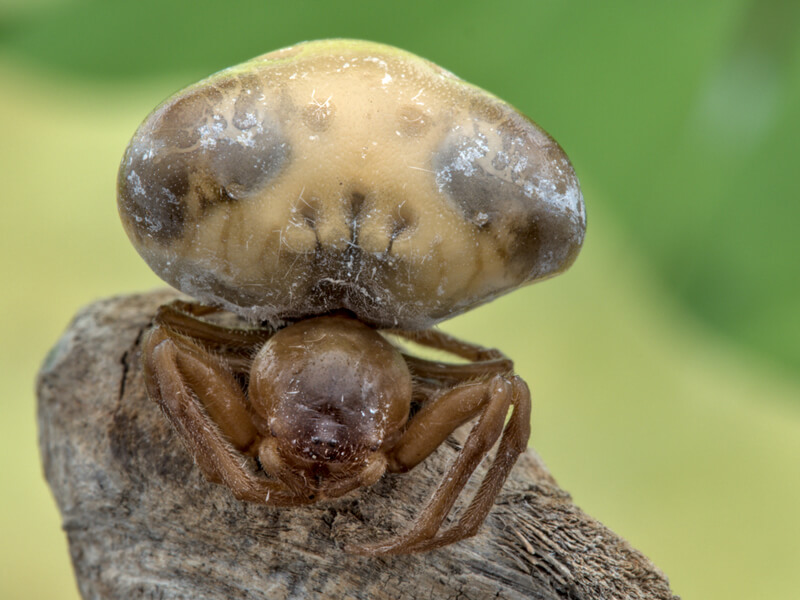
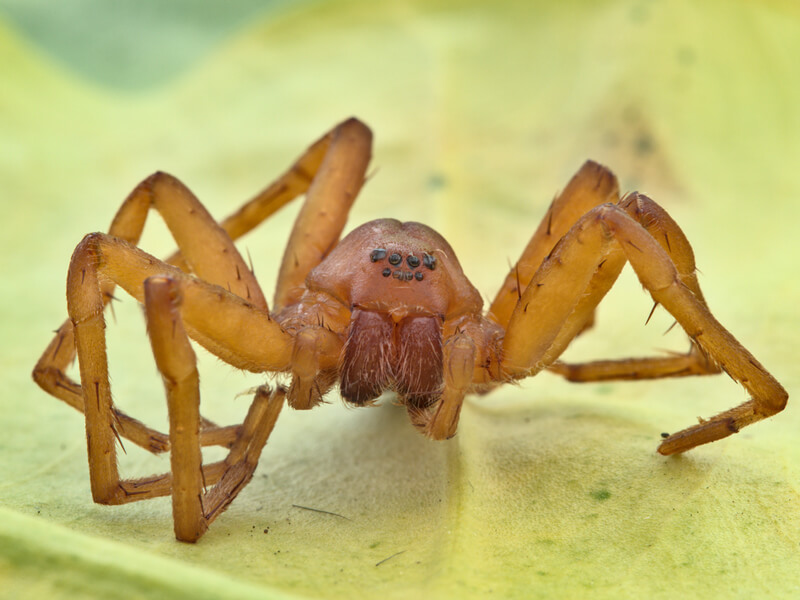
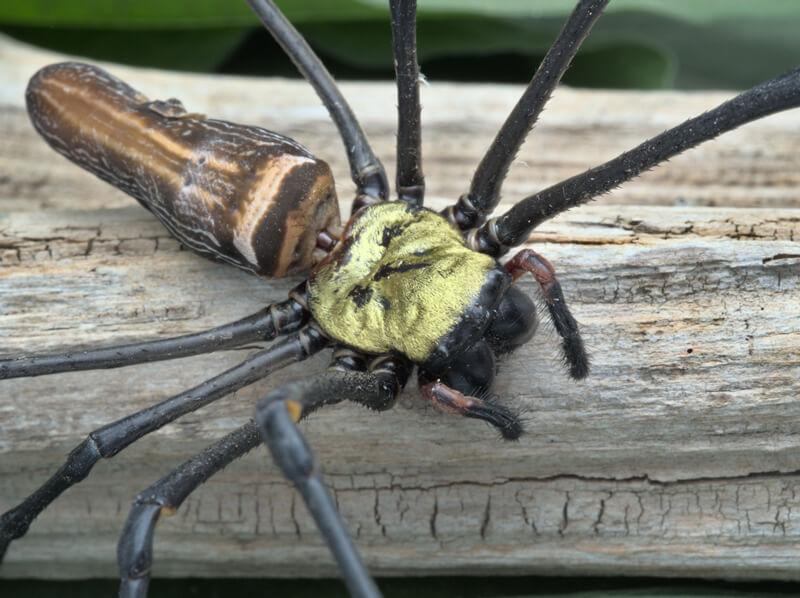
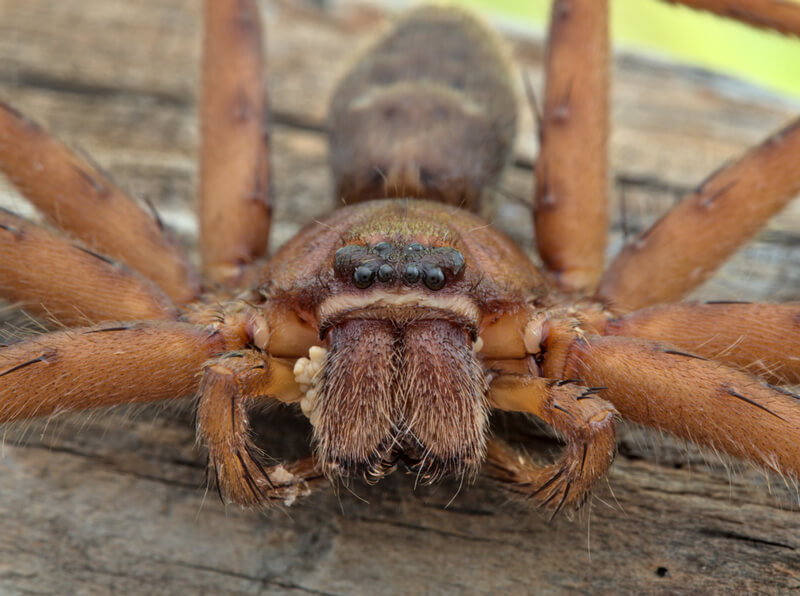
Have you ever seen a spider up close? Perhaps the thought of seeing a spider is not a pleasant one. But spiders deserve to be appreciated for their diversity and amazing abilities.
Spider taxonomy
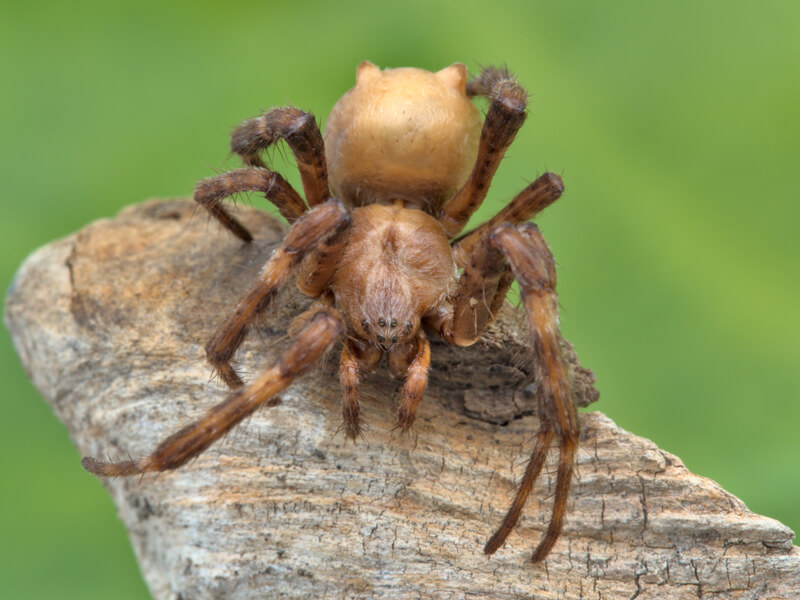
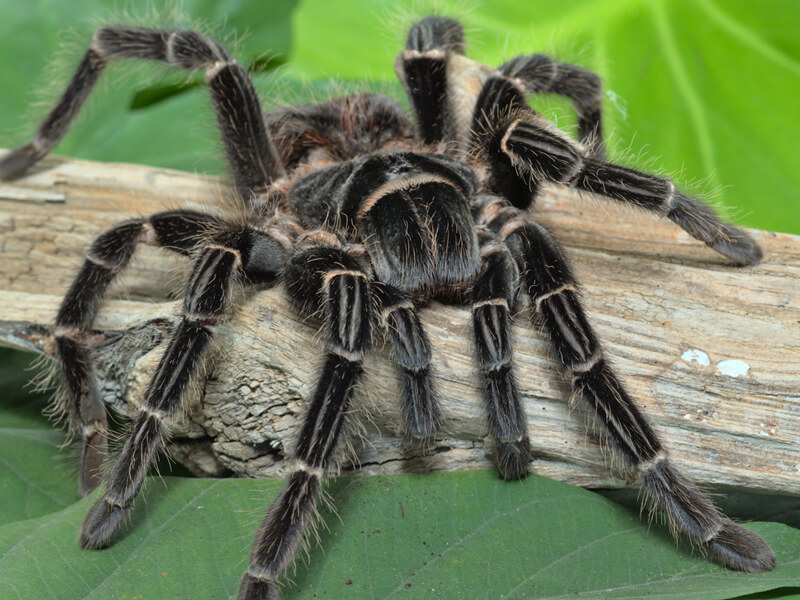
Some spiders belong to the phylum Arthropoda, class Arachnida, and order Araneae. Within the class Arachnida are distant relatives of spiders including whip scorpions, scorpions, daddy longlegs, and mites, among which having eight limbs is the common characteristic. A spider’s body is comprised of two segments, the cephalothorax and the abdomen, in addition to spinnerets, which are silk-spinning organs. This is the major difference with other arachnids. The order Araneae can be roughly divided into the suborder Mesothelae, infraorder Mygalomorphae, and infraorder Araneomorphae. The suborder Mesothelae includes some of the oldest existing spider species. The way they hunt is to dig a burrow and create a trap door at the entrance with silk and soil. They then lie in wait in the burrow. Therefore, they are also commonly known as trapdoor spiders. There are 30 extant families in the infraorder Mygalomorphae. They are usually active along the ground, or inhabit rock crevices or caves. They are large, hairy, and fierce-looking and can live for several years. Commonly referred to as tarantulas, they are popular pets. The infraorder Araneomorphae includes spiders commonly seen in our daily lives, with 95 families and nearly 46,000 species. Around 90% of spider species belong to this infraorder, which diverged during the Jurassic Period. This was relatively late in evolutionary history. Their major characteristics are their left-right symmetrical chelicerae (fangs) that bite in the axial direction and functionally differentiated silk system. Among the specimens included in this exhibition is the Brazilian salmon pink bird-eating tarantula, which belongs to the infraorder Mygalomorphae. The remaining spider specimens are from the infraorder Araneomorphae.
Appreciating spiders
An appreciation for spiders begins with understanding their taxonomy and observing their external characteristics, habits, and habitats, as these three aspects are often related to one another. The first thing to learn about a spider is the family it belongs to, as that is closely related to its morphology and habits.
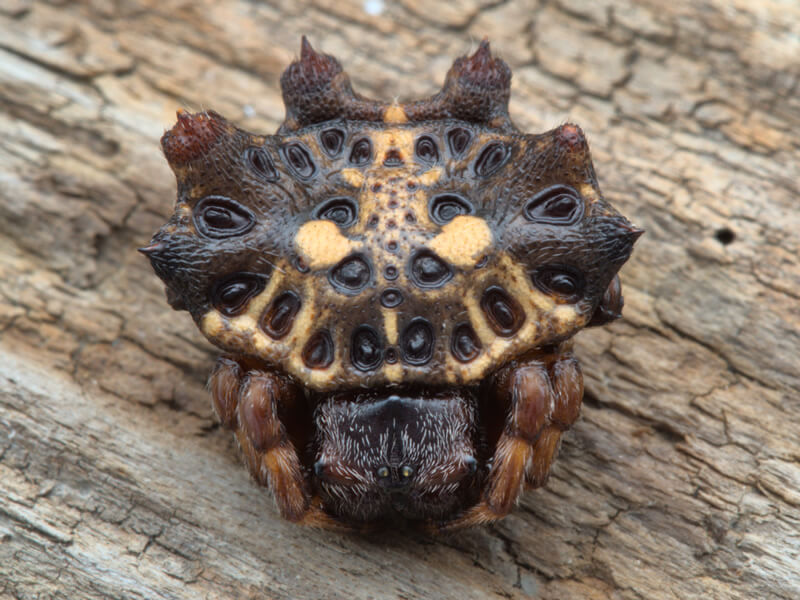
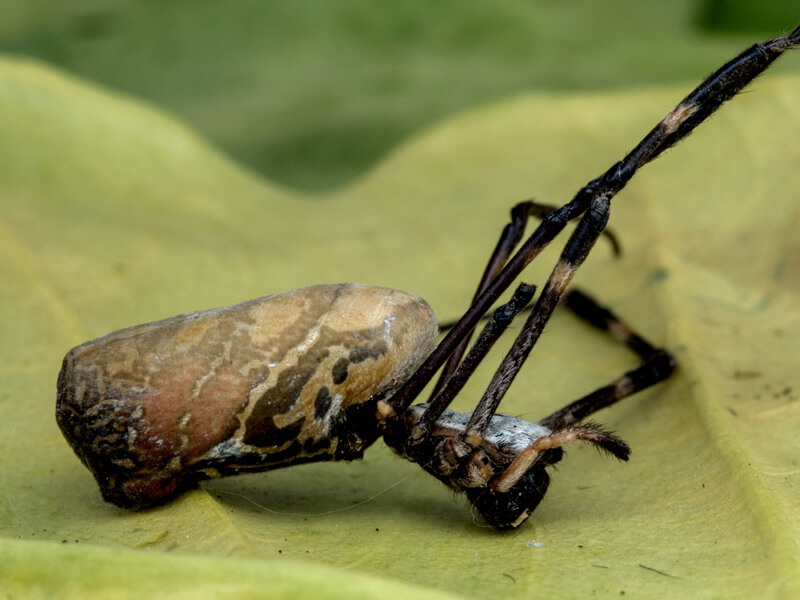
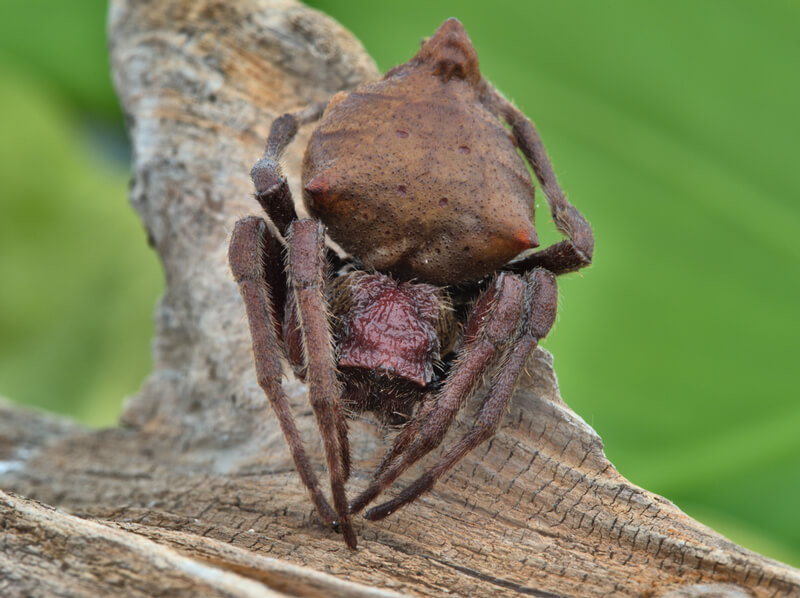
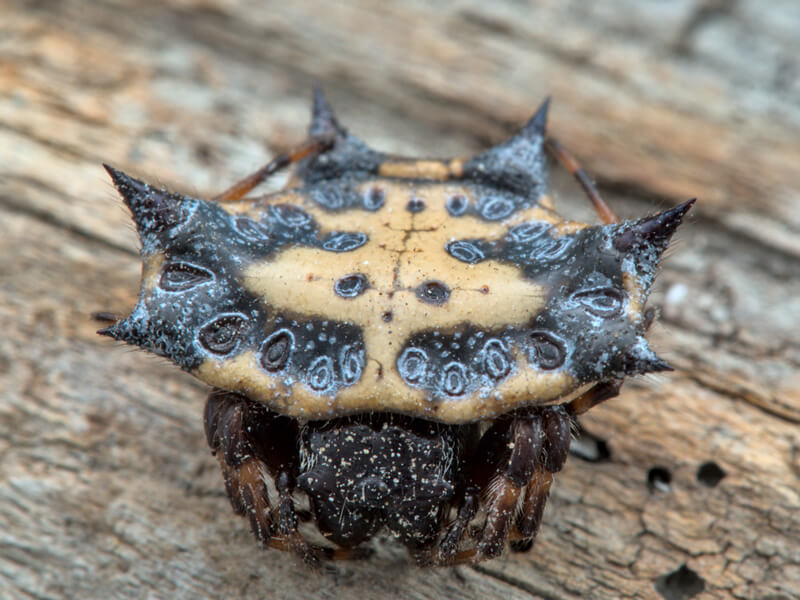
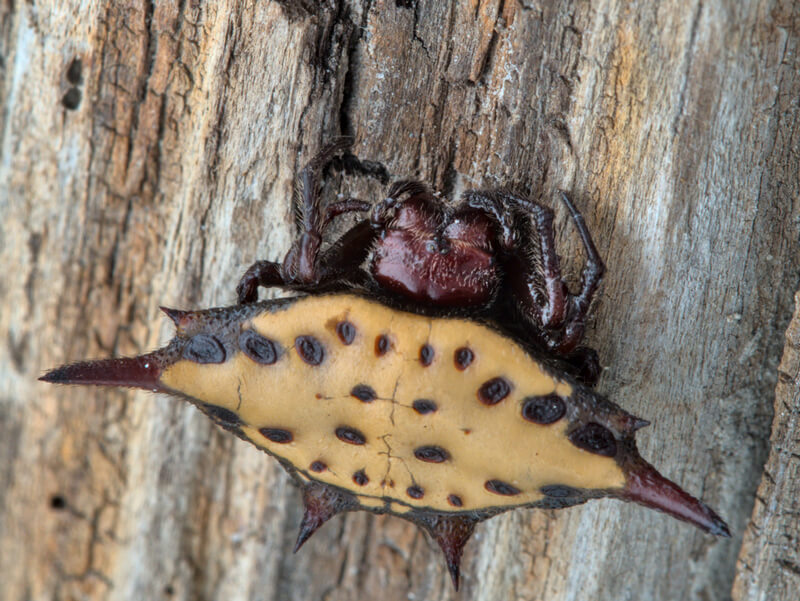
Excluding the less common suborder Mesothelae and infraorder Mygalomorphae, spiders are customarily and roughly divided by their habits into two categories: web-building spiders and hunter/ambush spiders. Web-building spiders usually have long slender legs and less developed eyes. They build webs, which serve as traps. Without a web they are unable to catch prey. Moreover, they move easily on their web but not as easily elsewhere. They may periodically remake or repair their web to maintain its functionality and may be brightly colored or have markings to attract prey to their web. Rather than waiting for prey on their web, some spiders rest on a twig or leaf nearby. There are eight specimens of the family Araneidae included in this exhibition and they are all web-building spiders.
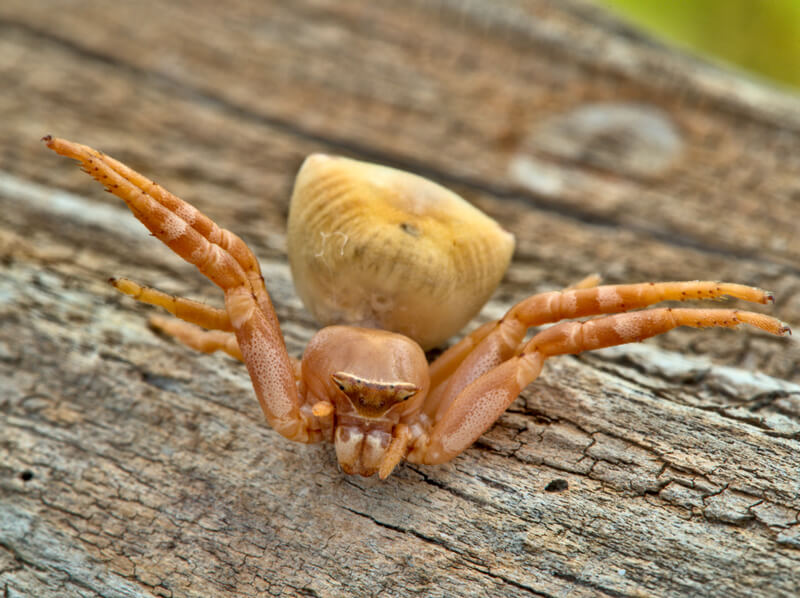
Another group of spiders lives a wandering lifestyle and ambushes its prey. They usually have thicker legs, which they can use to move quickly along the ground, on tree trunks, or on rocks. Some families have especially large eyes that provide them with better sight for capturing prey. They do not build webs. Instead they stay motionless in specific types of locations, such as among flowers, in crevices, or next to rocks along a stream, quietly waiting for their prey to approach before striking. They may also wander around a small area and randomly search for prey. In this exhibition, the masked crab spider, huntsman spider, and fishing spider are all members of this group of wandering and ambush hunters.