Following in the Footsteps of S. Yano - Taiwan's Post-First Sino-Japanese War Low-elevation Fauna
Seikichiro Yano, also known as S. Yano, was an amateur plant collector from Japan whose dates of birth and death are unclear. He collected plant specimens from Taiwan of numbers 600-700 during a key period following the First Sino-Japanese War possibly to sell, or as part of his job. As little is known about this, it has not been a subject of discussion among botanists. Currently, these specimens are divided among four herbaria: Komarov Botanical Institute, Russian Academy of Sciences, St. Petersburg, Russia (LE); Graduate School of Science, Hokkaido University, Japan (SAPS); National Museum of Natural Science, Taiwan (TNM) and University Museum, University of Tokyo, Japan (TI).
These specimens were discovered in 2007, through a National Science Council (today's Ministry of Science and Technology, MOST) digital collections database project. Subsequently, through a Taiwan-Russia collaborative agreement, some isotype specimens were returned to Taiwan and placed in the TNM collection (2010-2012). In 2012, before the completion of this collaborative project, an exhibition of plant specimens collected by Yano on Taiwan in 1896 and 1897 was planned. Co-curator Professor Hsieh Chang-Fu came across a 1902 article by Jinzo Matsumara which recorded more than 100 specimens collected by Yano in the Taiwan area. He discovered that many of the collection numbers were higher than those in LE. In 2014, with a partial grant from the Ministry of Education, he visited TI and SAPS. At SAPS, he found 232 specimens (many of which were not in this record and were not LE specimens). In addition, he discovered four specimens collected by Yano, numbered 690-693, from the Yaeyama Islands of Okinawa, Japan, dated May 19-23, 1896. From this, he could conjecture that after his collecting trip in the Yaeyama Islands, Yano boarded a ship to Taiwan, arriving at the end of May. On May 26 of that year, he began collecting in Taiwan.
Currently, there are four herbaria in which specimens collected by S. Yano in Taiwan can be found. Based on specimen information, we can approximate that following the First Sino-Japanese War, there were many wetlands in the plains of northern Taiwan. In the mountains was mainly pristine forest, except in areas near human settlements where various fruit trees and crops (longan, tobacco), as well as flowers (gardenias, great bougainvillea), were cultivated. In other areas were mainly plants of the families Asteraceae, Fabaceae and Poaceae. In the wetlands and irrigation ditches were mostly aquatic plants, some standing erect in the water and others floating. The water was very clean. In Hsinchu and Miaoli areas there was mainly low elevation secondary forest. Green Island and Lanyu (Orchid Island) were mostly likely still pristine. However, on these islands S. Yano only carried out collection along hill margins.
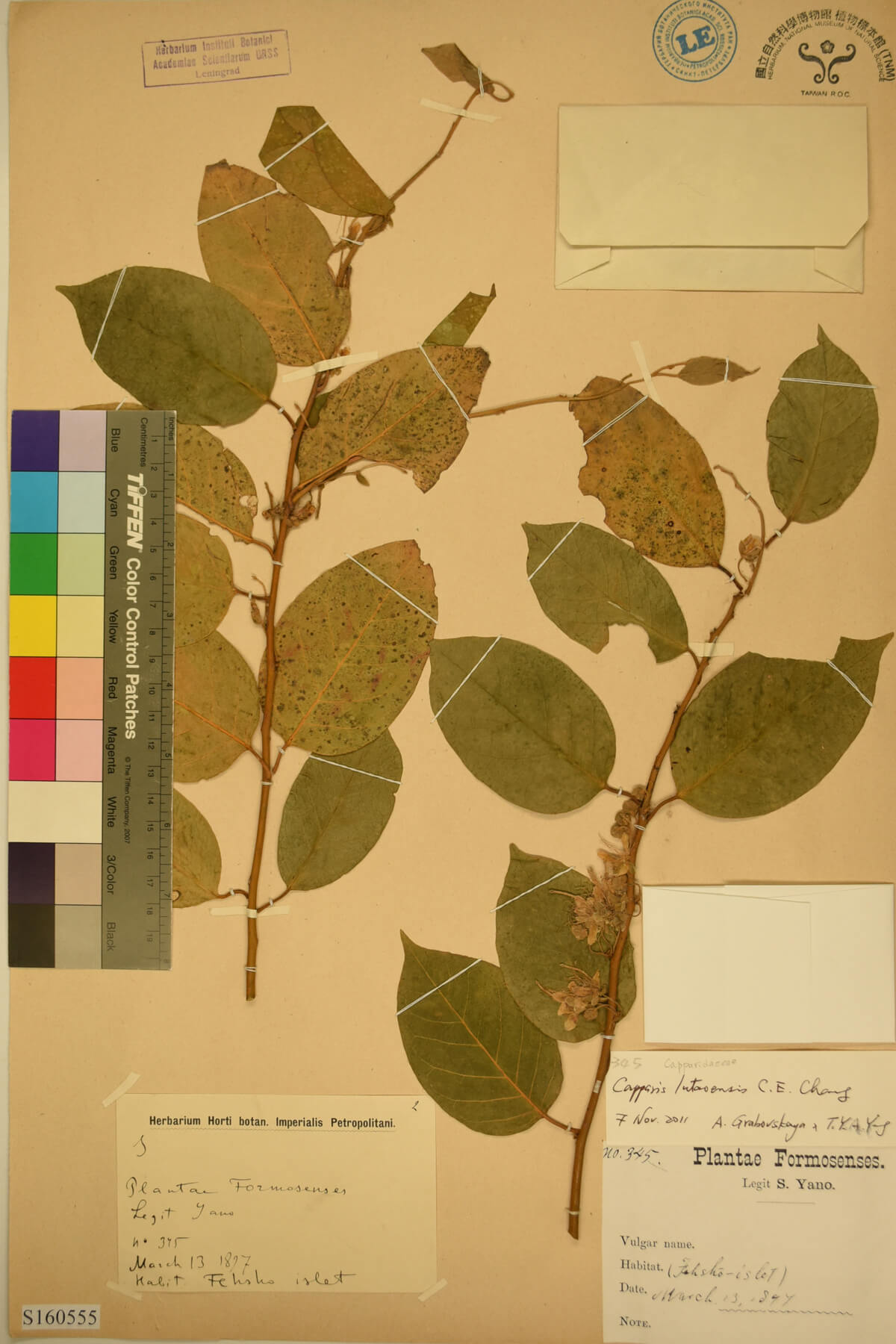
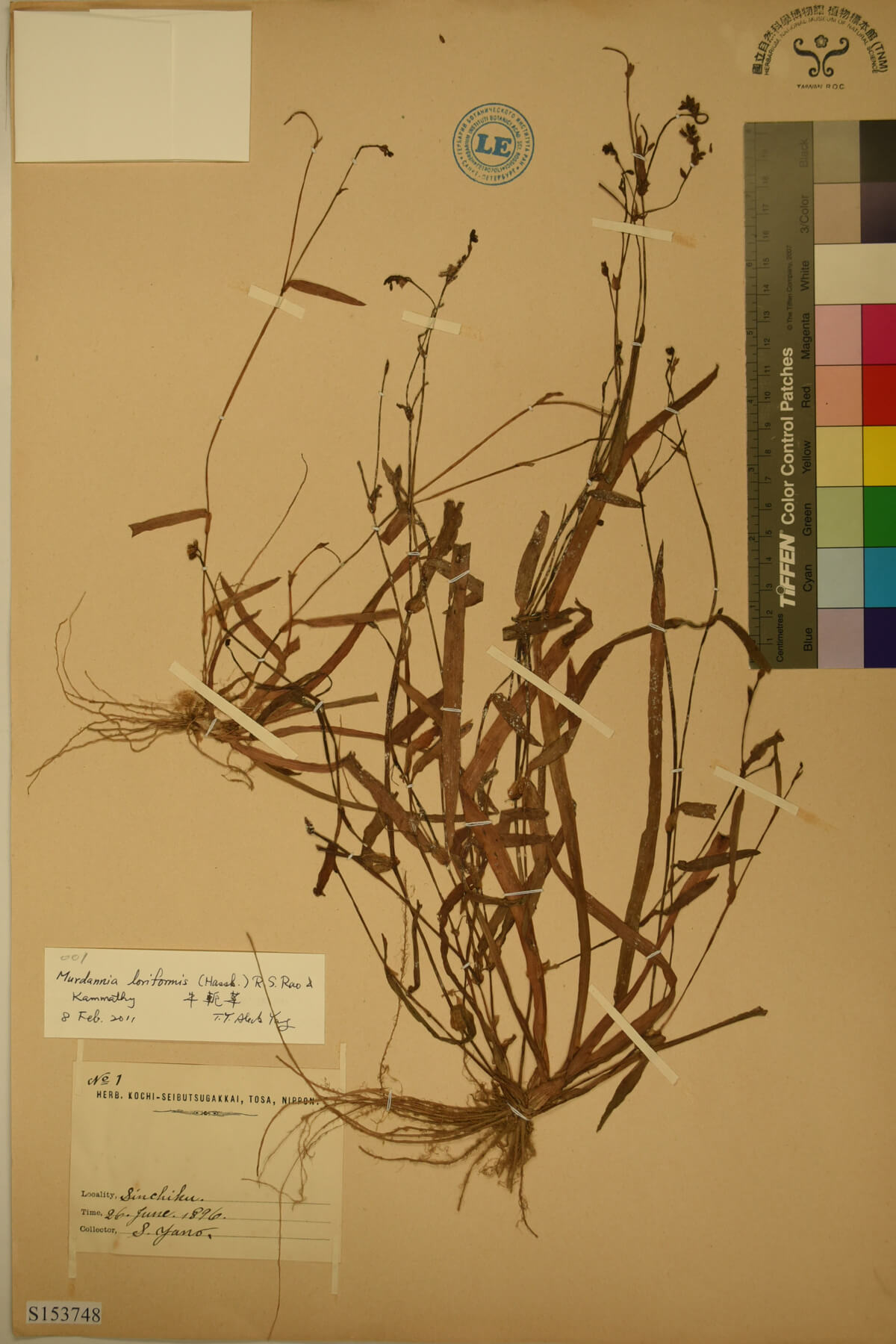
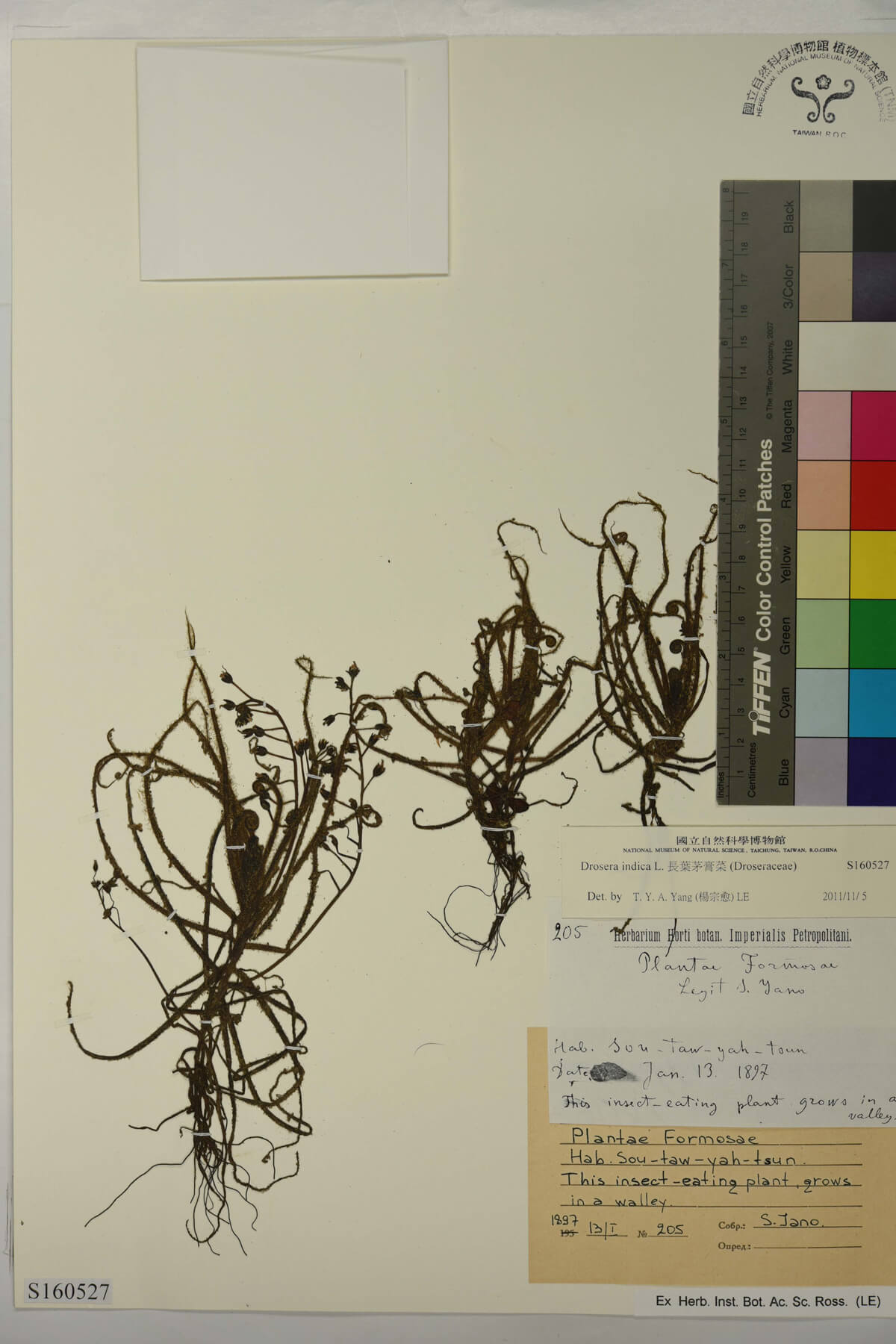
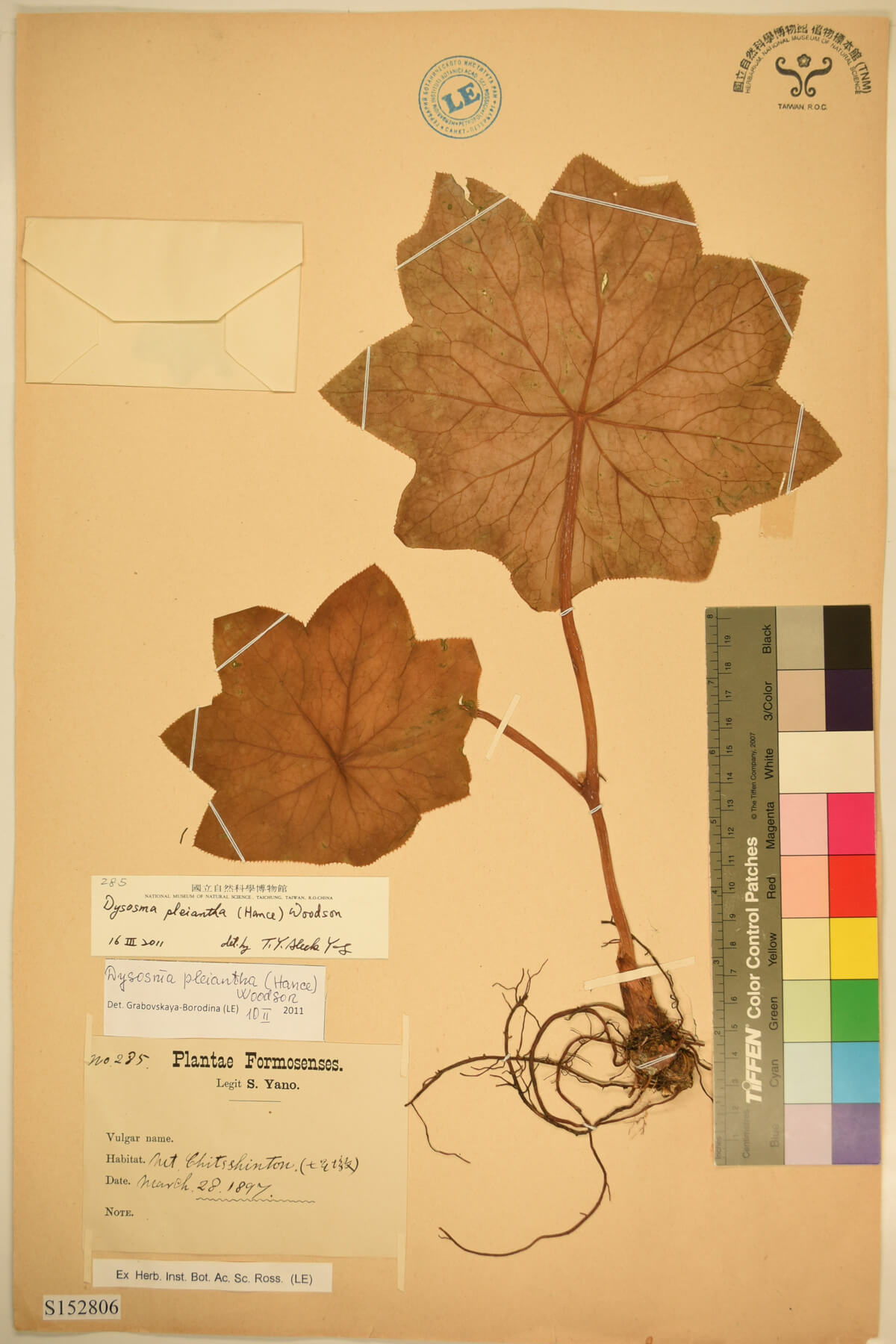
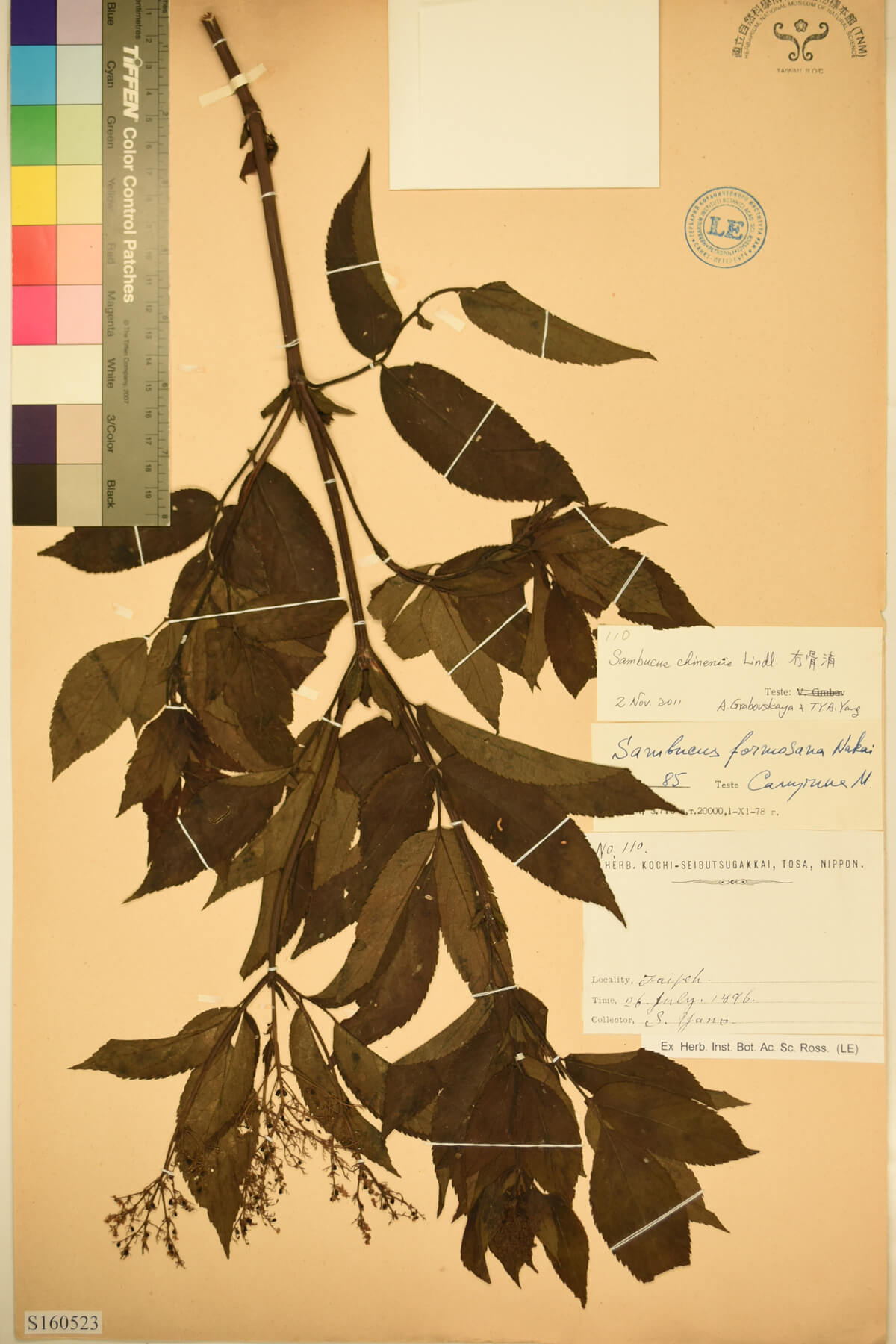
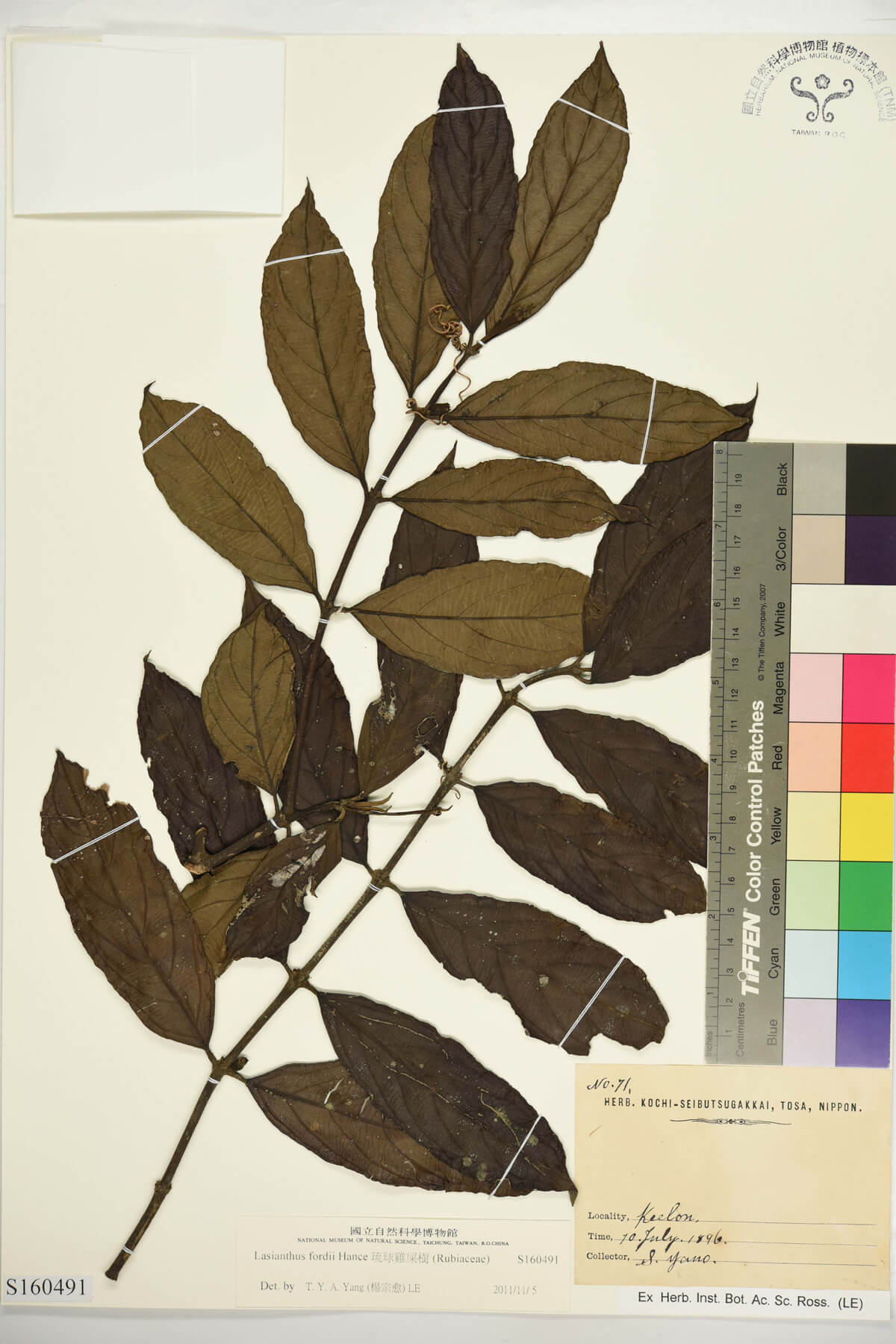
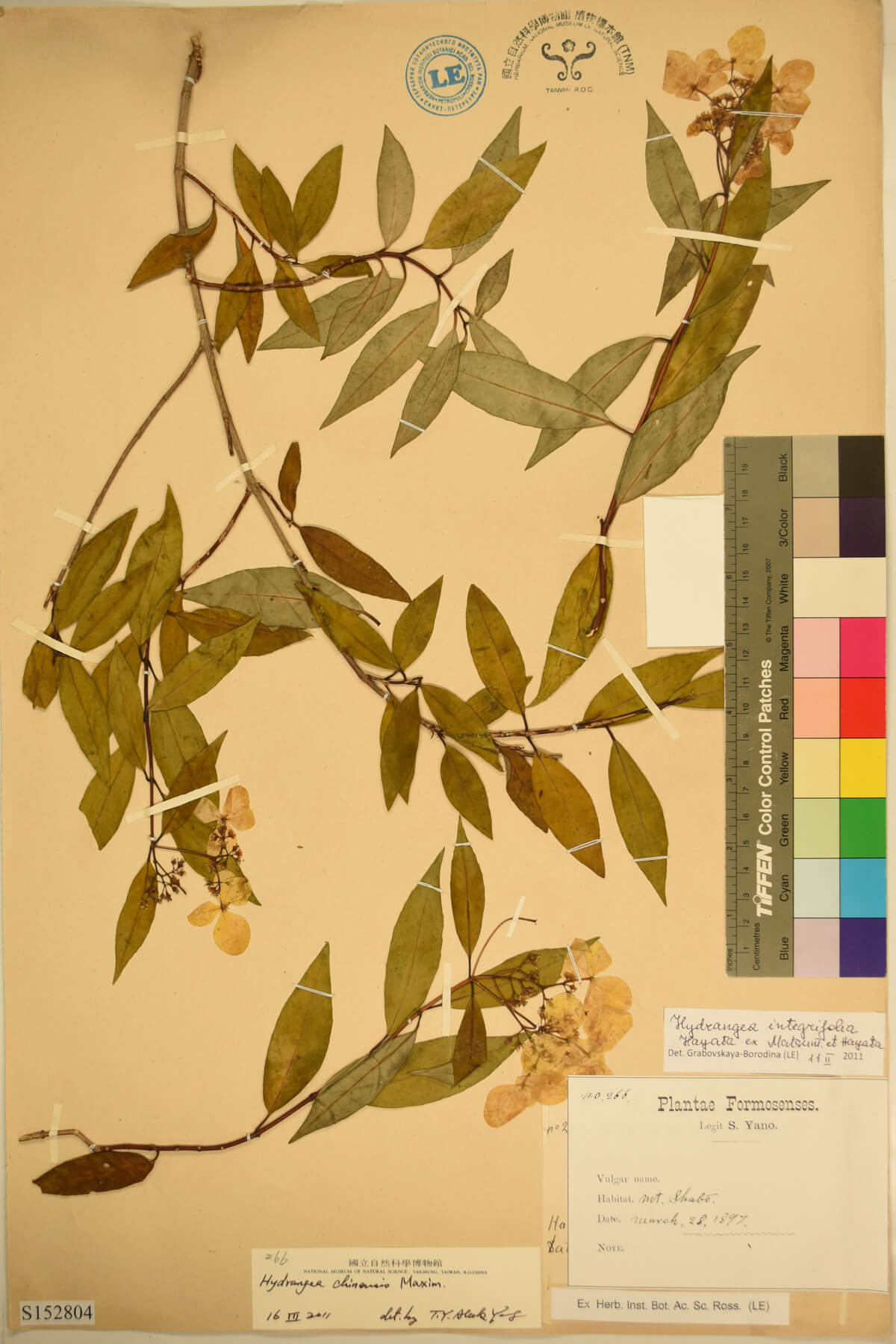
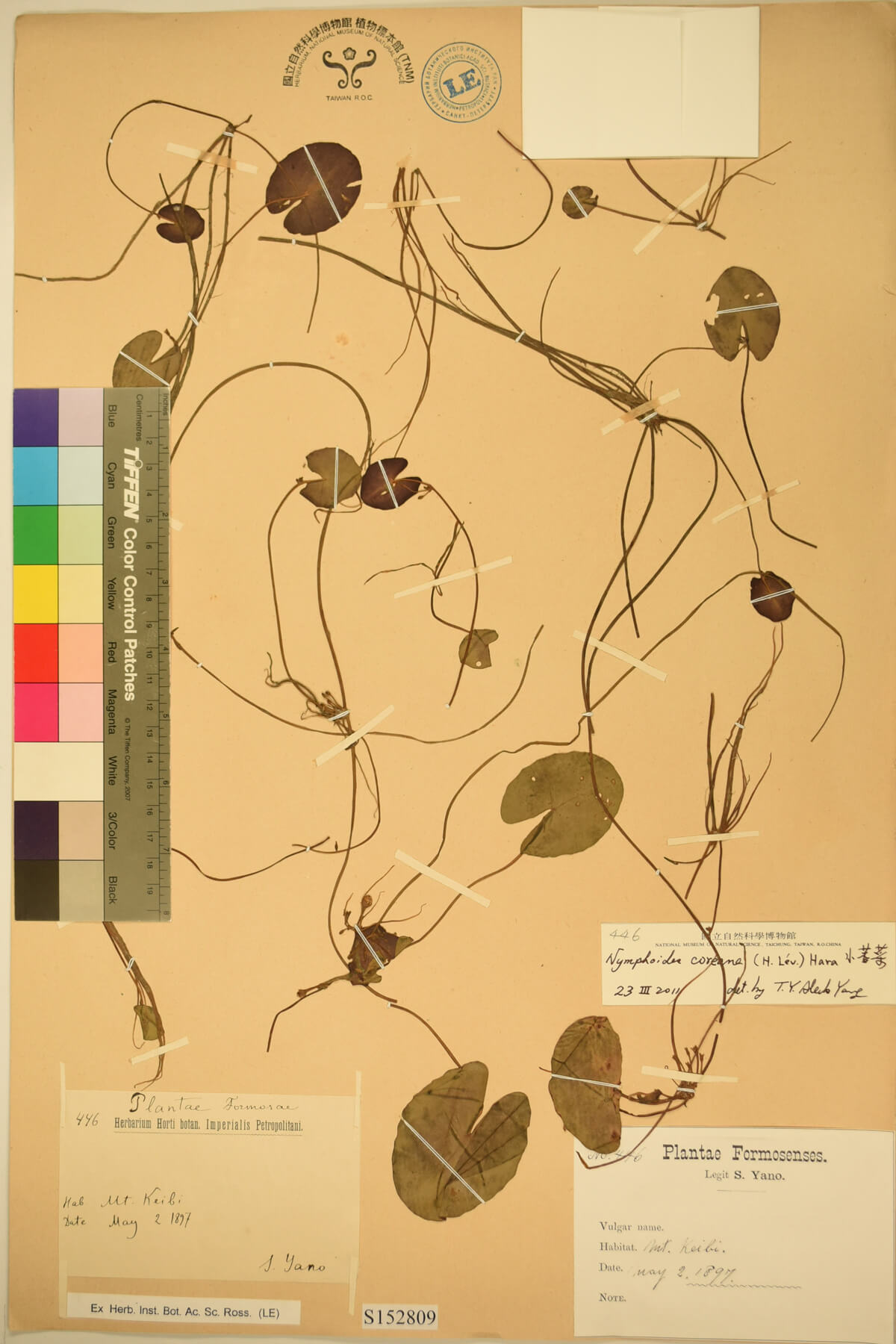
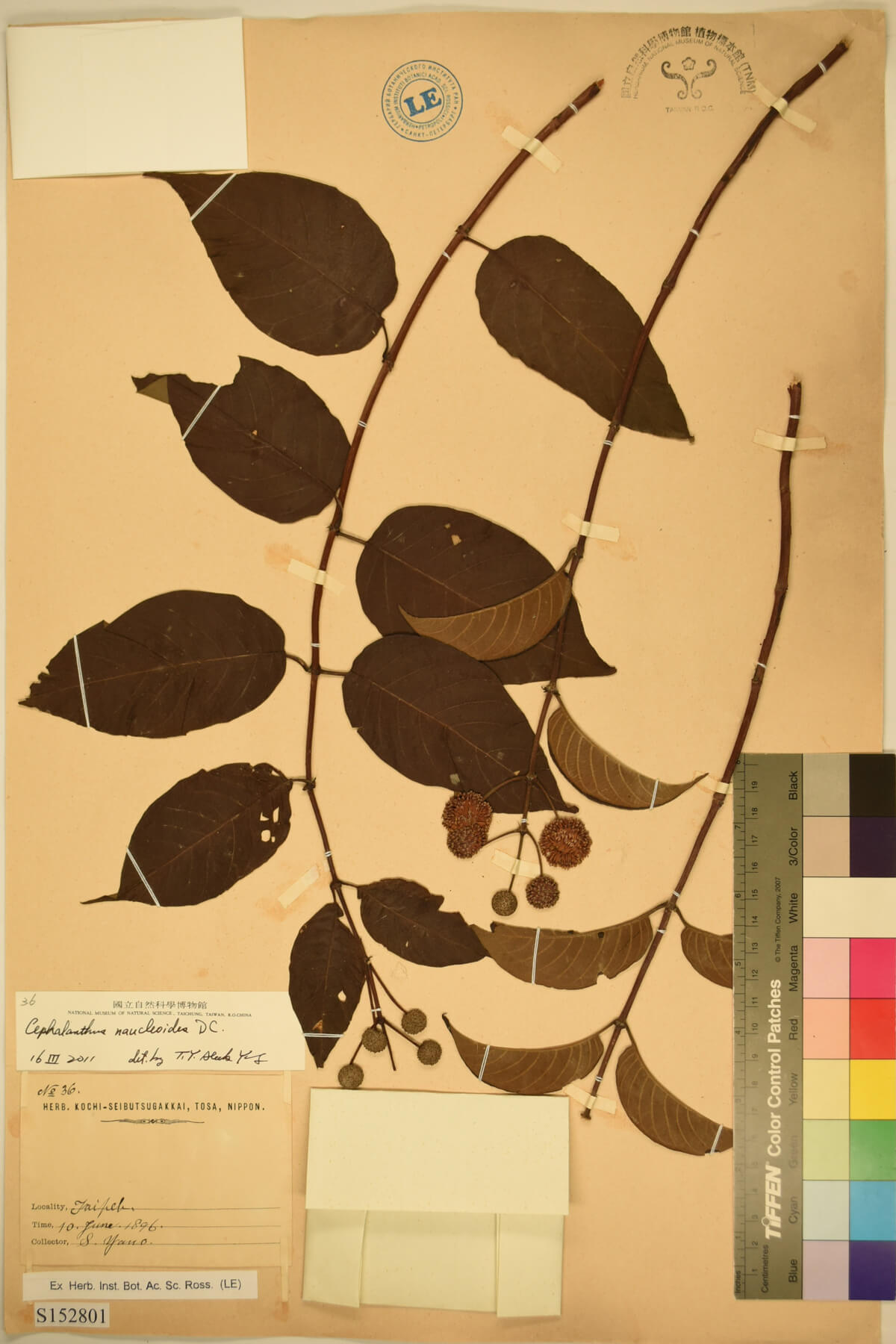
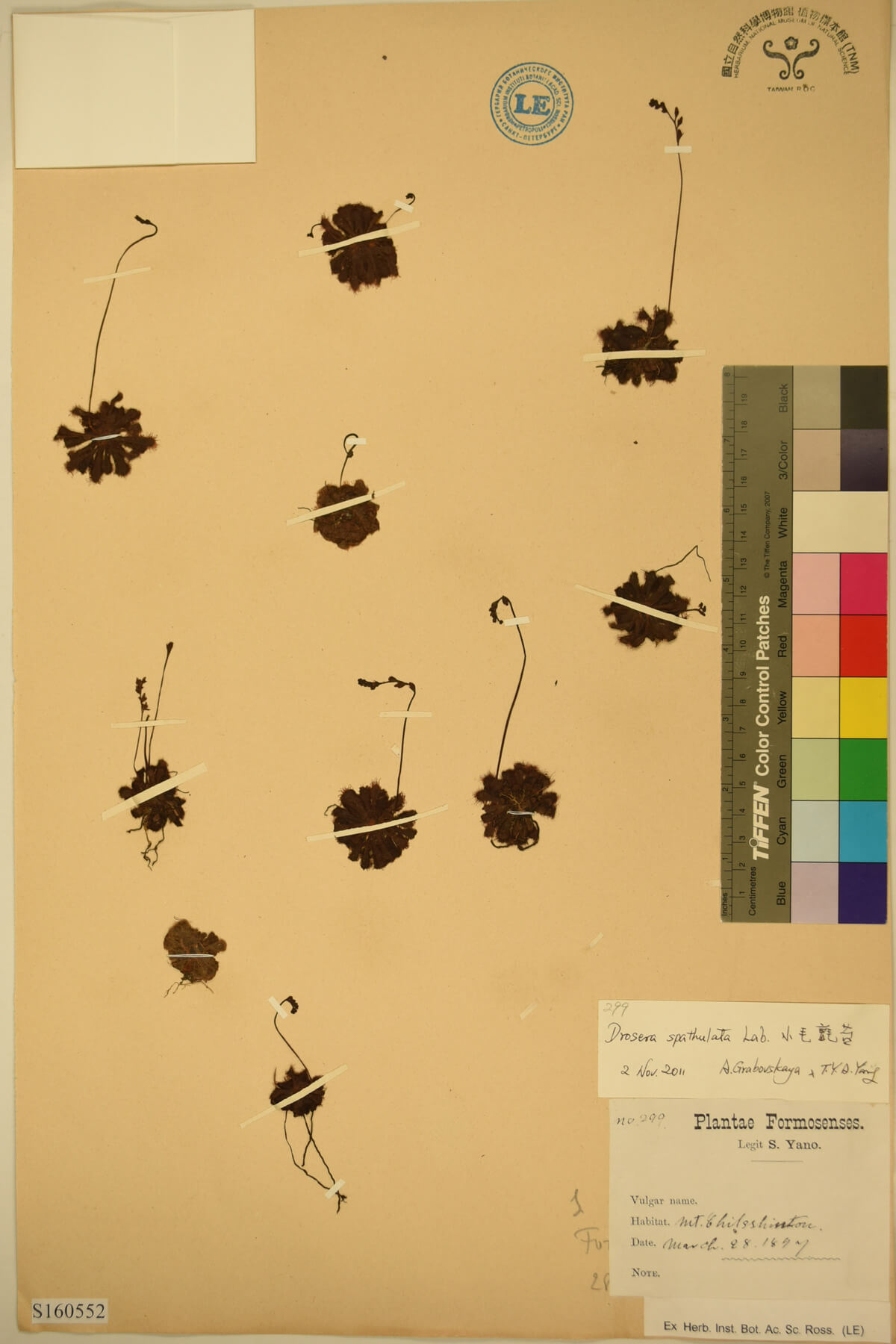
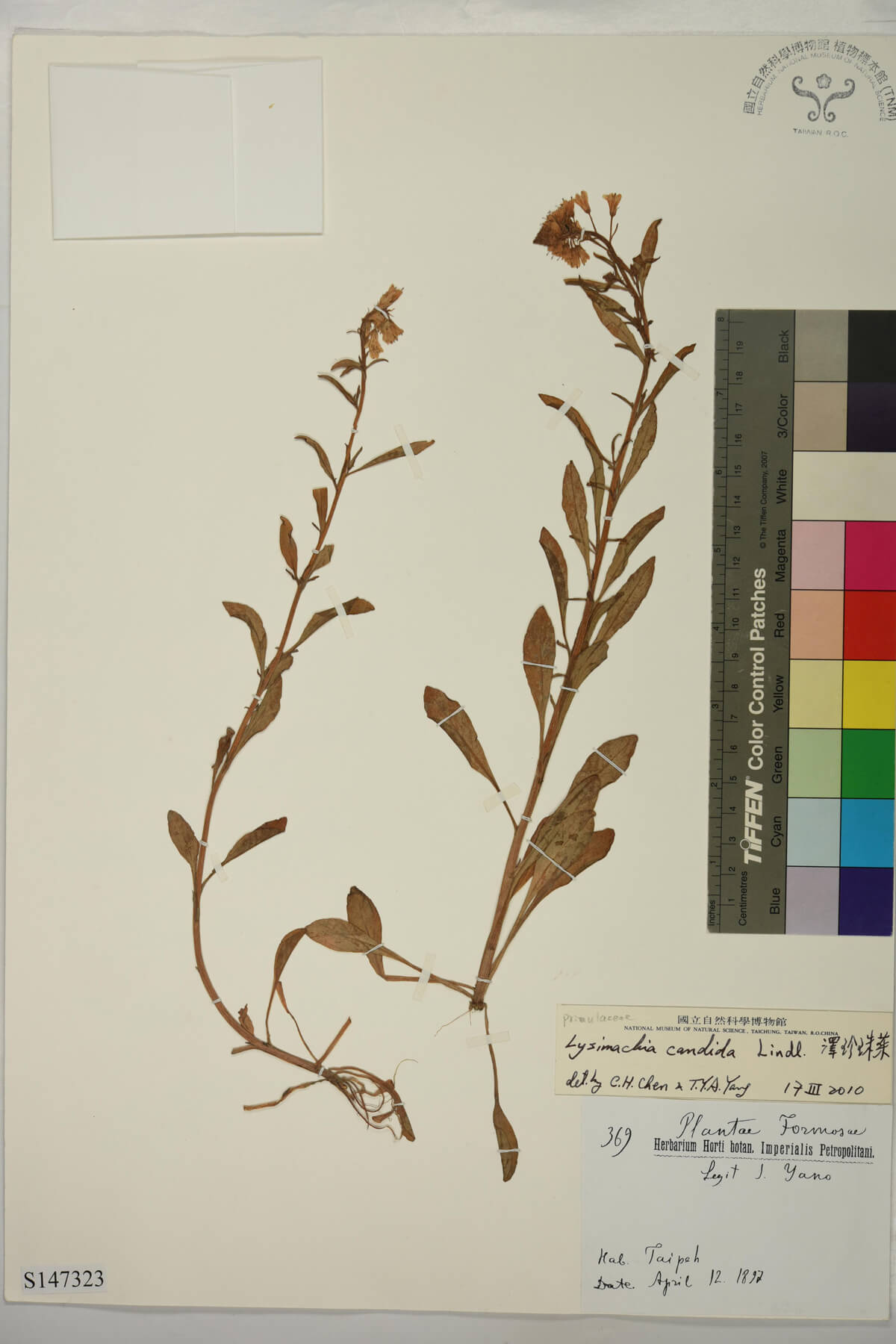
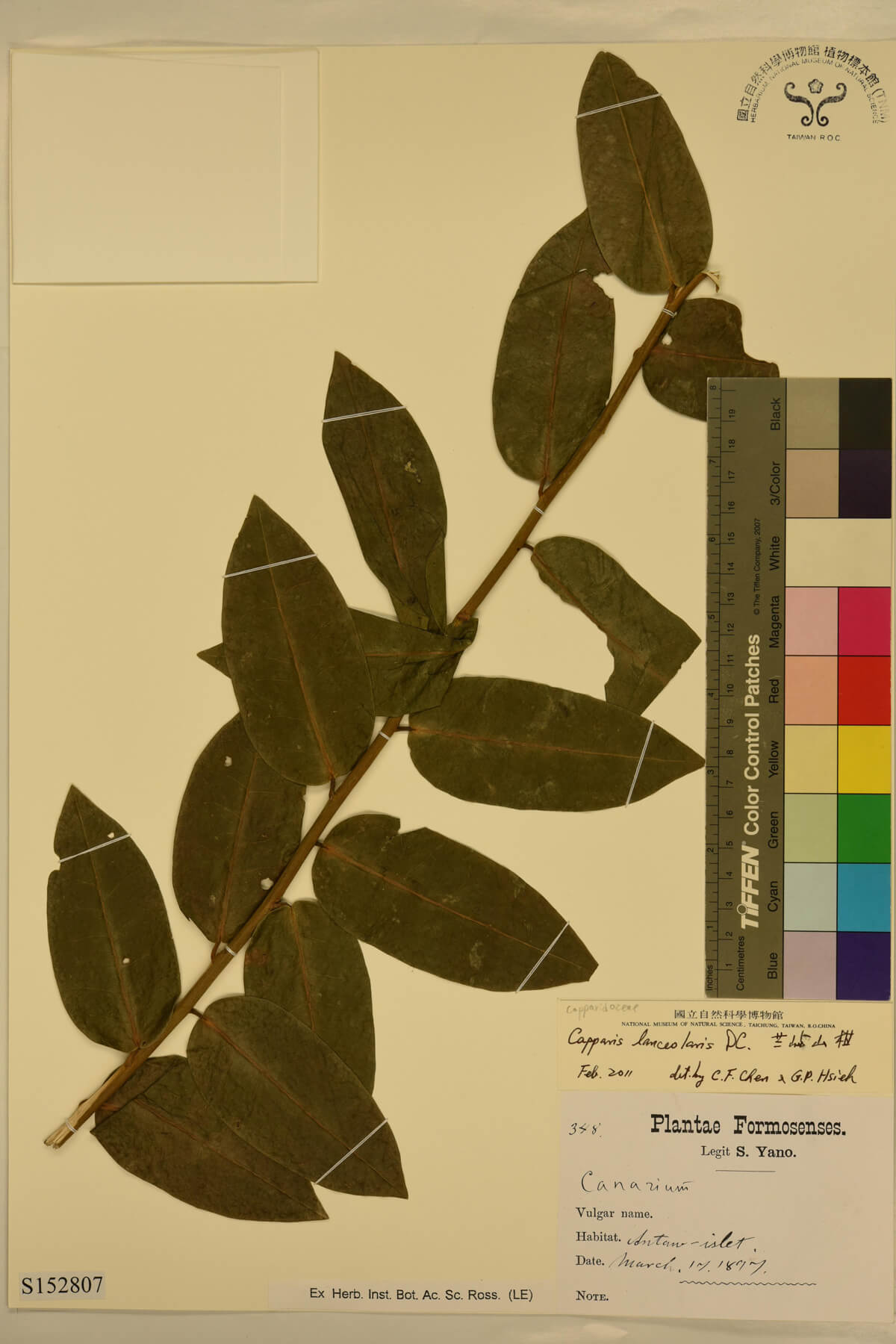
Due to a MOST digital collections database project and a Taiwan-Russia collaborative agreement, the specimens collected by Yano were discovered. Through a grant from the Ministry of Education, this museum was able to collect images from Hokkaido University and University of Tokyo. In this online database are presented 12 of the specimens in the collection of this museum. They include Murdannia loriformis (Hassk.) R.S. Rao & Kammathy, Asiatic button-bush, Lasianthus fordii Hance, Chinese elder, Indian sundew, Hydrangea chinensis Maxim., Dysosma pleiantha (Hance) Woodson, Spoon-leaved sundew, Capparis lutaoensis C.E. Chang, Capparis lanceolaris DC, Lysimachia candida Lindel and Nymphoides coreana (H. Lév.) Hara. They are affixed with the original LE and this museum's collection labels. More importantly, the specimens collected more than a century ago still appear green and lifelike! We welcome you to visit this museum and to be reminded of the importance of species diversity and ecological conservation. Let's not leave our children a world in which "spring fails to bloom".
Extended reading: This museum's newsletters, issues 293, 327 and 351.