Tsou Tribe
The Tsou tribe is mostly concentrated in Alishan Township of Chiayi County, such as in Dabang Village and other areas. Members of the Tsou tribe also live in Xinyi Township of Nantou County. The Tsou tribe was once divided into four main communities: Tefuye (Tfuya, Tfuea), Dabang (Tapangu), Yimuzhu (Imutsu, Limutsu) and Lufudu (Luhtsu, Luhtu). In the beginning of the 20th century, due to an epidemic of a virulent disease, the elders of Yimuzhu and Lufudu were left without descendants and these communities were abandoned.
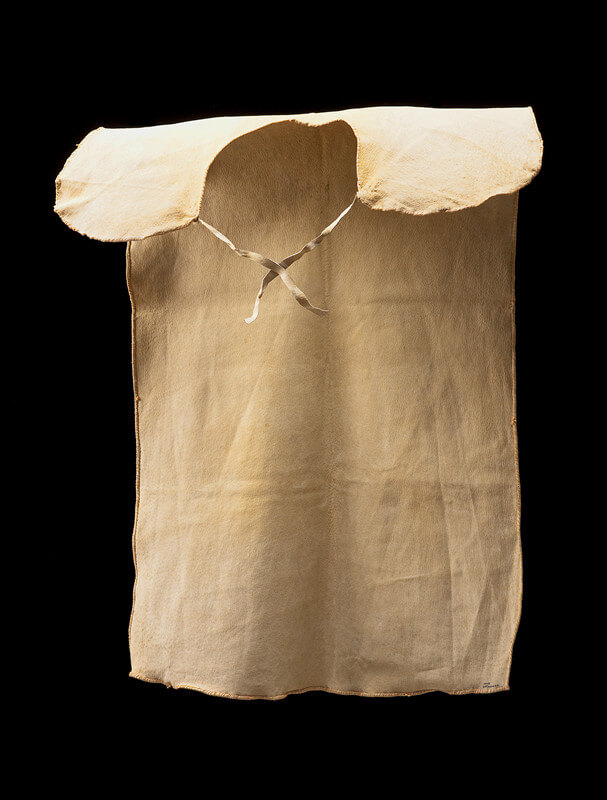
Animal skins were the main materials used in Tsou clothing, and were obtained through hunting. For example, the supple Formosan Reeve's muntjac skin was used to make caps and shoes. Mountain goat skin was used to make clothing. As the Tsou tribe traditionally relied on hunting for its livelihood, animal skin clothing and cap were everyday wear when walking in the mountains. To prepare the animal skins, they were first scraped to remove the flesh and then dried in the sun. Then, they were placed in a mortar. A pestle was used to pound the skins until soft. Or, the animals skins were placed on a thick log and two men repeatedly pulled back and forth until they were softened. Men's clothing included animal skin vest, cape, a bag worn at the chest and among the Tsou men of Alishan a bag at the waist. When hunting, they also donned deerskin sleeves and leggings.
Caps were made by sewing together two ladle-shaped pieces of soft deerskin, and were used to protect the head. Caps were not worn every day and when not in use were kept rolled up and attached to the waistband. Animal skin caps could only be worn by males after completing coming-of-age rites. A cap with feathers inserted was used to show the achievements of a Tsou male. On special occasions that called for formal attire, men would place one to four eagle feathers in their caps. (Today, pheasant feathers are mostly used instead.) These feathers were obtained by the wearer himself and symbolized courage and the ability to take on the responsibility of protecting his community and family. Four feathers were considered the most suitable. Two feathers were too few and more than four were too many. Before a Tsou male reached adult age, he would wear a black cloth head wrap. Following the successful completion of coming-of-age rites, he would don a deerskin cap. For adult males, basic attire included deerskin cap, chest cloth, animal skin cape and knife.
In addition to animal skins, clothing was made from woven plant fibers such as cotton and ramie. For the Tsou, red represented purity. During important ceremonies, they wore red clothing, as a symbol of purification. Men's formal attire included red and black cotton tailored long sleeve, collarless shirt that opened in front. During formal rites and ceremonies, to express the solemnity of the occasion, the red side of the shirt was worn outward. On less formal occasions, the black side was worn outward.
The chieftain and warriors had the special privilege of decorating the front of their caps with a red-patterned band approximately six centimeters in width. They could also add beads and shells. Men who had successfully hunted a wild boar, could add an arm band made with the tusks to the copper bracelets that they usually wore. During important ceremonies, Tsou men were required to wear formal attire and accessories.
Female attire was mainly of cotton or ramie cloth. Colors used were red, blue and black and there was some influence from the Han Chinese. Formal attire for women included embroidered head wrap, blue shirt, black skirt and exquisitely embroidered chest cloth. Pieces of colored cloth were added to the neckline, front part of the shirt, hems and sleeves and embroidered. Embroidered patterns were in red, yellow and blue and were similar to the patterns on male chest cloths. Currently, head wraps are rarely used and have been replaced with simple headdresses. Everyday wear for women was made from pieces of cloth produced from plant fibers such as cotton and ramie that were sewn together.