Ecological role of stag beetles
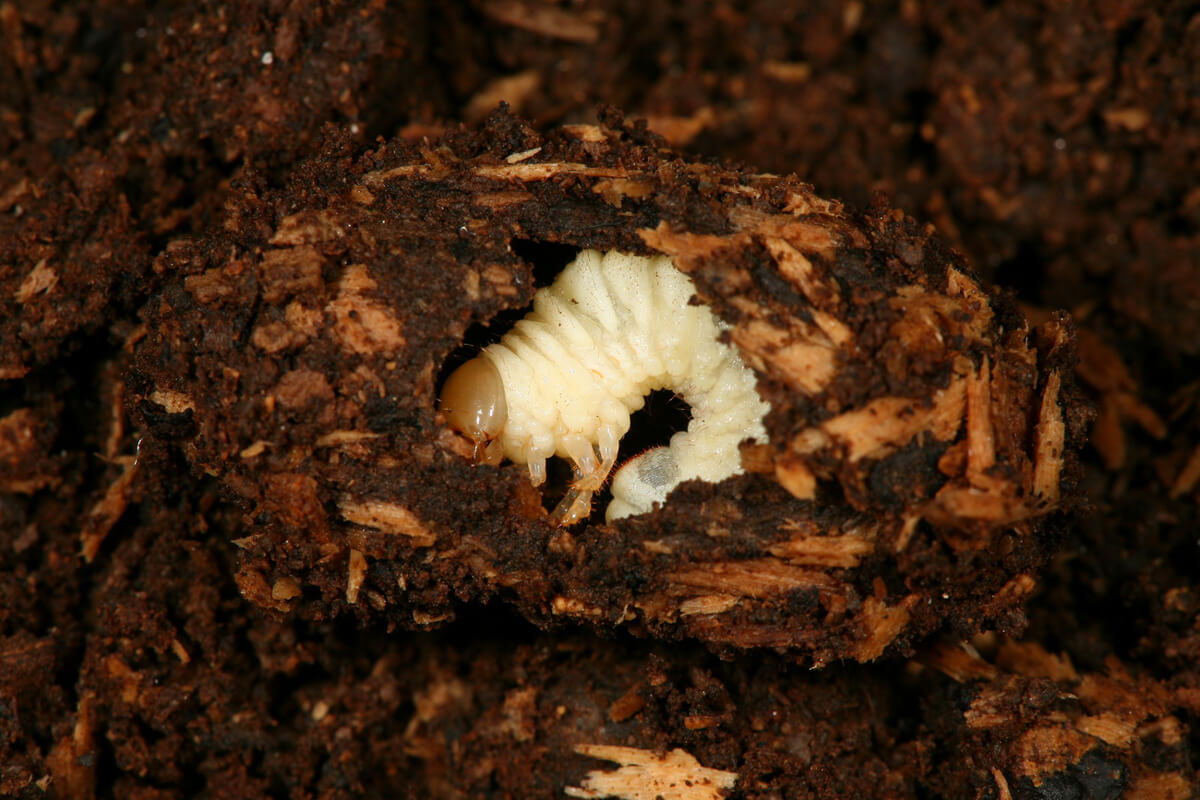
The life cycle of many stag beetles involves rotting wood. The larvae rely on decayed wood in which there has been fungal fermentation. Near the tail end of the abdomen in the female is a sac for storing fungi. When laying eggs, the female will smear some of the fungi from this sac on or near the eggs. The larvae will be able to feed on the wood that has been decomposed by the fungi or directly on the fungi. Different species prefer different types of rotting wood. More primitive groups prefer brown rot or white rot. Among most species with obvious sexual dimorphism, there is a preference for dry rot. Moreover, some species feed on the humus soil produced from rotting wood. Fungi decompose wood and insects that feed on rotting wood help to spread fungal spores. Through consumption and excretion, a rare nitrogen-based nutrient cycle is created in forest environments, making stag beetles beneficial insects.
Image is of larva of Aegus nakaneorum Ichikawa & Fujita in rotting wood.
Image source: Provided by Li Hui-Yong.