Origins of its common names
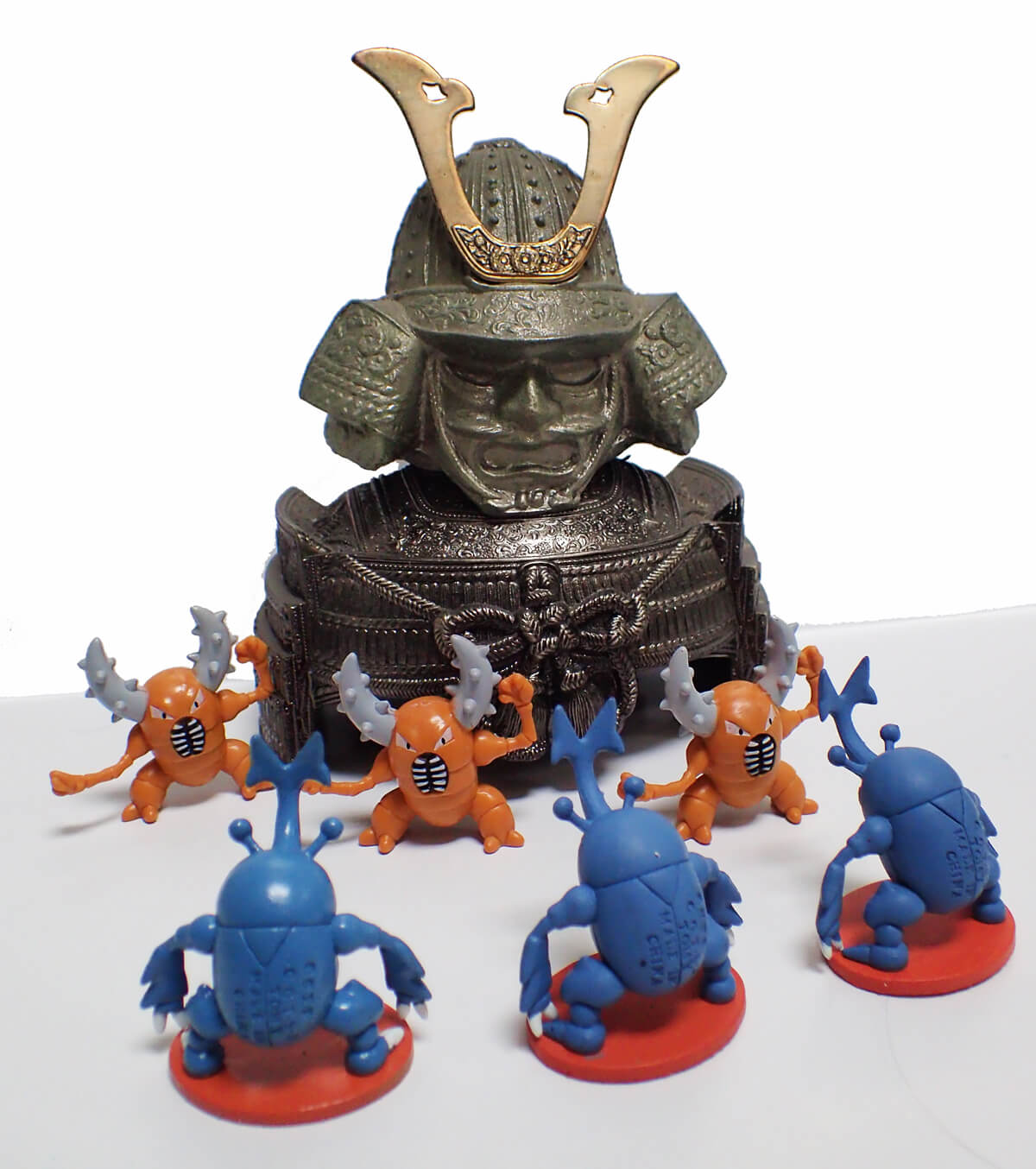
The Chinese common name for stag beetle, qiao xing chong, comes from the Japanese word "kuwagata", which means "spade-shaped". During the Sengoku period (Age of Warring States in Japan, 15th to 17th centuries), on the helmets of high-ranking warriors were V-shaped or U-shaped embellishments. From these, it is not difficult to imagine how the stag beetle came to be given this name.
In the Minnan dialect, it is referred to as "scissors beetle", due to the scissor-like, clamping mandibles.
The English name, stag beetle, literally means "male deer beetle", referring to the mandibles which are similar in shape and function to deer antlers.
The German name, Schröter Käfer, can be translated as "tailor's beetle", referring to the scissor-like mandibles.
The French common name, Cerf-Volant, similar to its common names in other Latin-based languages, such as Spanish (Ciervo Volante) and Italian (Cervo Volante), means deer that flies. But, its more common meaning is kite. Perhaps, this comes from children tying a string to the beetle's legs, which makes it appear like a kite when it tries to fly away.
Pictured here is a warrior from the Sengoku period (Age of Warring States in Japan). Pay attention to the spade-shaped decoration on the helmet.
Specimen source: Liquor bottle helmet decoration was provided by Li Hui-Yong; Nintendo figurine.
Image source: National Museum of Natural Science