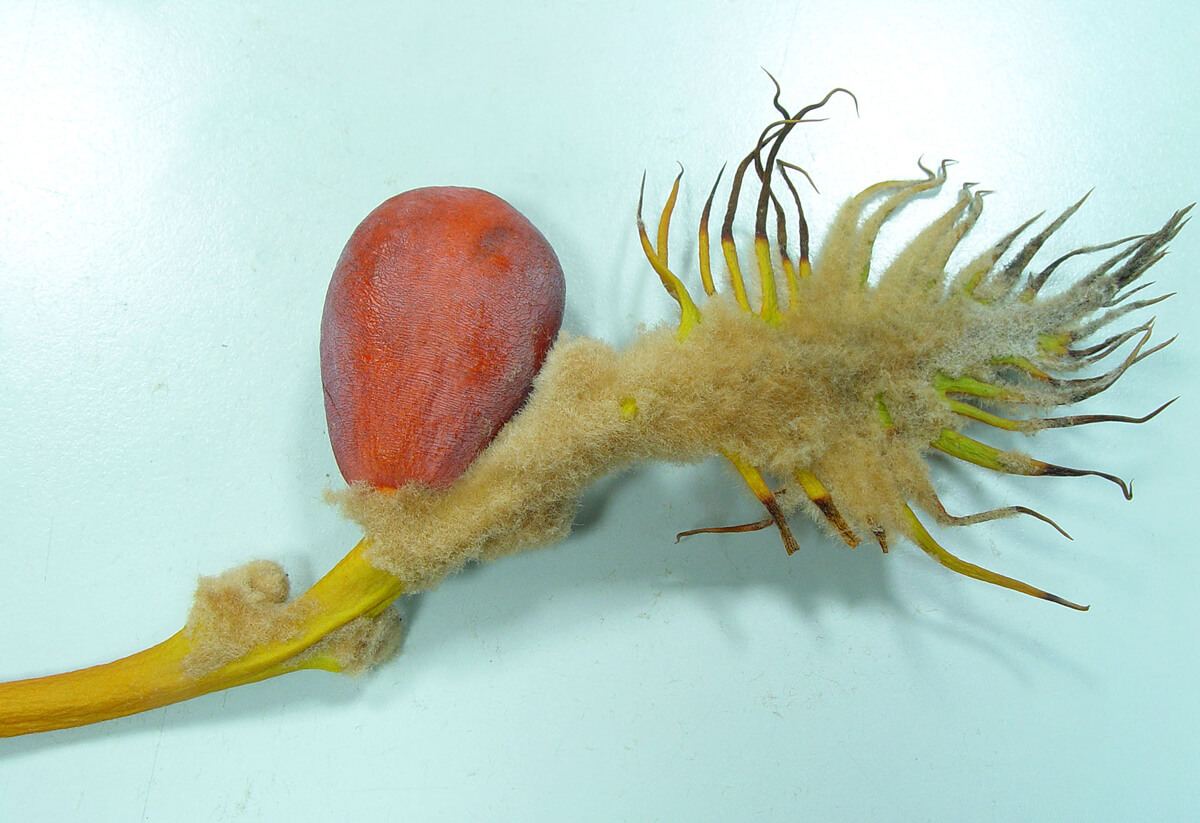
Cycas taitungensis
Cycads are ancient gymnosperms. The existing species are all dioecious.
On the top of the female plant is a large cone (megasporophyll), which produces seeds. On the male plant is a slightly long cone (microsporophyll), which produces pollen.
There are only 30 species in the Cycas genus worldwide, mainly distributed in southeastern Asia. Currently, they are being threatened due to exploitation by scale insects and the Cycad blue butterfly (Chilades pandava).
Very early on, in the 1860s, British scholar Robert Swinhoe collected this plant and sent it to England. It passed through many hands before being preserved at the British Museum. In 1893, William Carruthers published a study, naming this species.
It was originally referred to as the Taiwan cycad (Cycas taiwaniana). It was not until 1993 that it was discovered that the original type specimen was not that of the cycad now produced in Taitung. Thus, it was renamed Cycas taitungensis resolving a 100-year-old mistake.