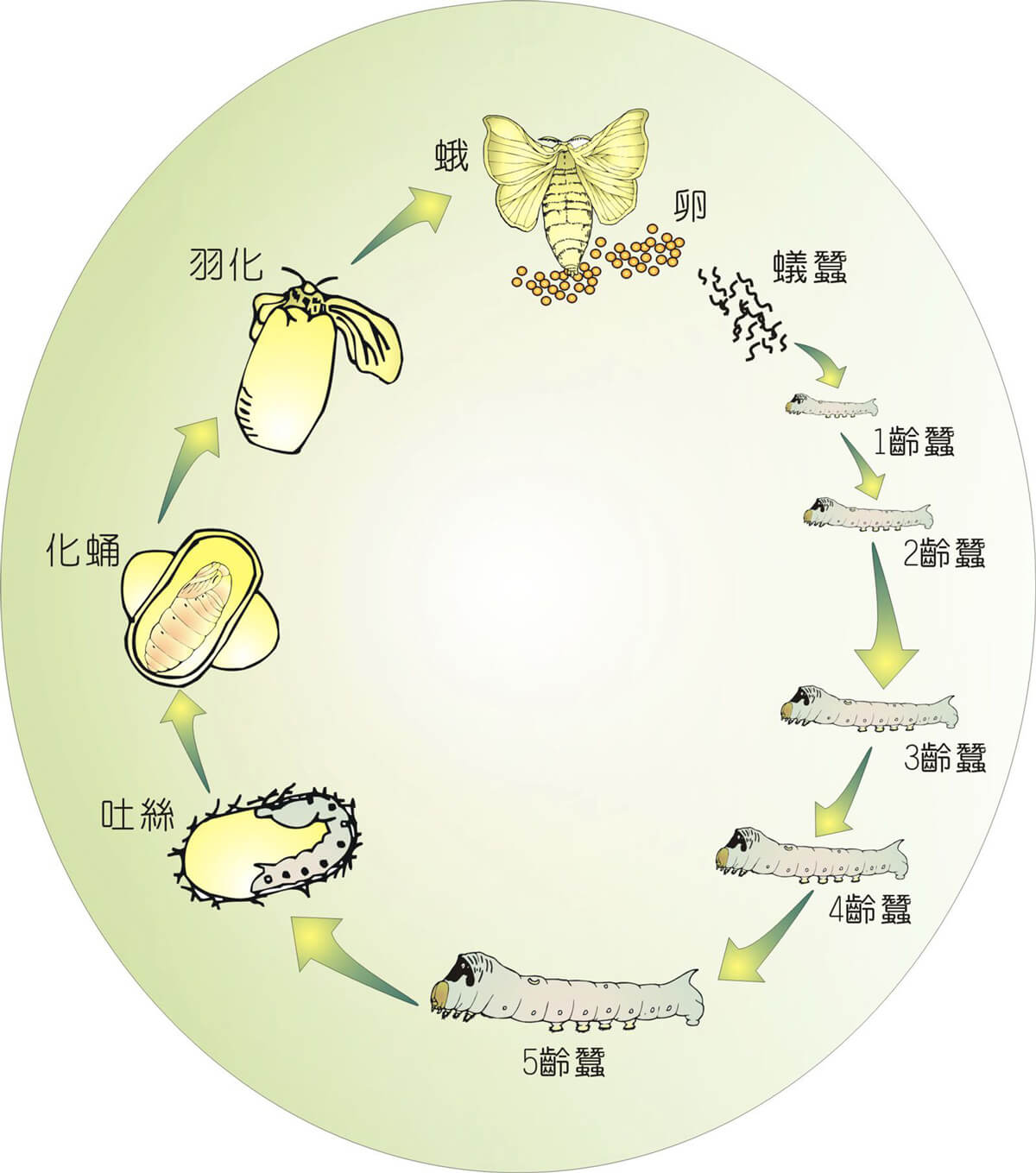
Life cycle of the silkworm
The silkworm undergoes complete metamorphosis. In one generation, there are 4 morphologically different stages of development: egg, larva, pupa, and adult. As soon as it hatches, it begins to search for food and to grow until it becomes an adult. This process is called post-embryonic development. These 4 developmental stages each have different significance. The egg is the stage of embryogenesis and development into a larva. The larva is the growth stage of absorbing and accumulating nutrients. The pupa is the transitional stage between larva and adult. The adult is the reproductive stage during which there is mating, laying of eggs, and production of offspring. The amount of time in each developmental stage depends on the variety and breeding conditions.