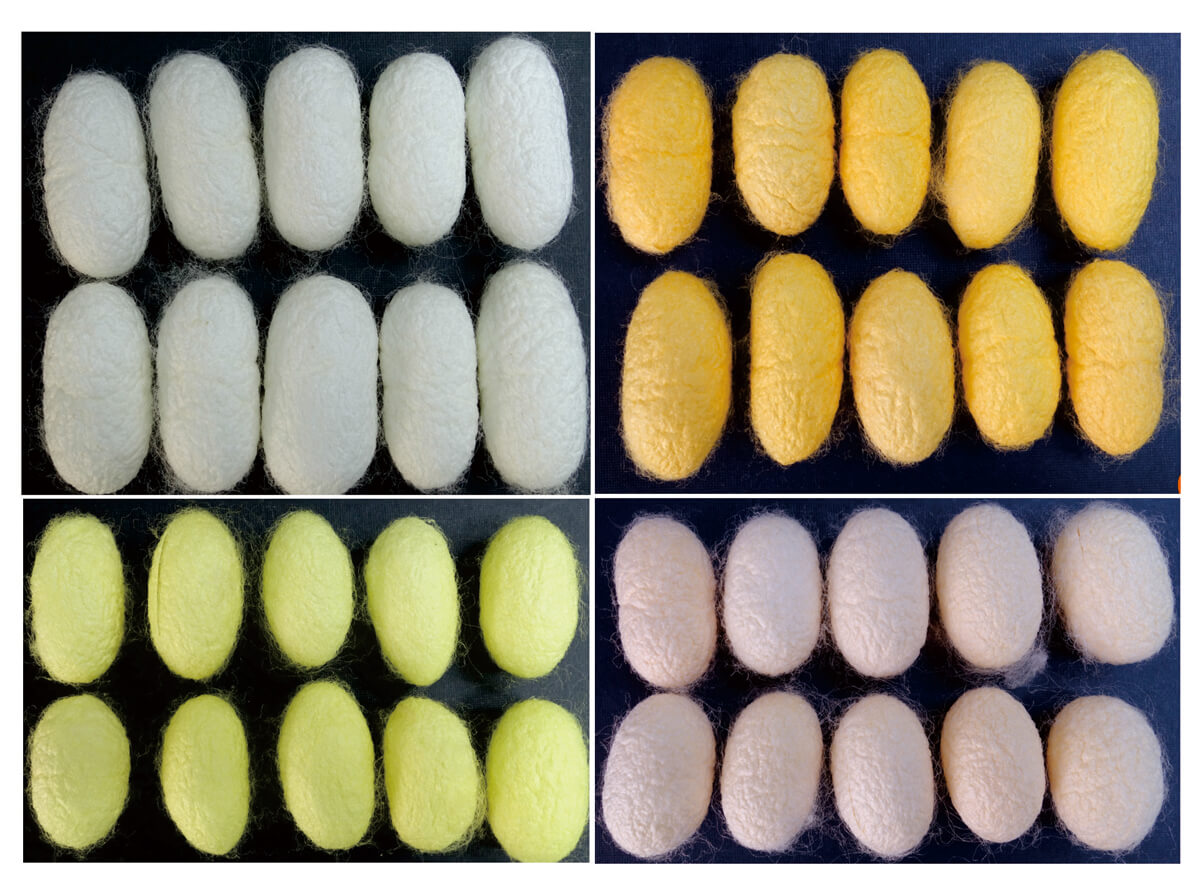
Silkworm cocoon mutants
In terms of cocoon color, they are mainly white or yellow, as well as flesh-colored or light green. The main source of cocoon color is mulberry leaves. There are differences in the abilities of the digestive tract and silk glands to absorb, transmit, or synthesize pigments among silkworm varieties. Therefore, even if they all eat the leaves of the same species of mulberry tree, they produce cocoons of different colors. For example, in some varieties that produce white cocoons, as pigments cannot pass through the walls of the digestive tract, their body fluids and cocoon silk are colorless.
Yellow cocoon pigment is mainly due to carotene and lutein passing through the digestive tract and silk gland walls. This pigment mainly exists in the outer layer of sericin. As the sericin is removed during the silk reeling process, most of the pigment is also removed.
Light green cocoon pigment is mainly from the resynthesis of chlorophyll from the mulberry leaves after entering the silkworm’s body. Chlorophyll not only exists in the outer layer of sericin, but also penetrates the inner layer of fibroin. Even if the sericin is removed during the reeling process, considerable amounts of pigment remain.
Flesh-colored cocoon pigment is mainly from the red pigment in mulberry leaves that is resynthesized after entering the body of the silkworm. The red pigment is not only stored in the outer layer of sericin, but also penetrates the inner layer of fibroin. Even if the sericin is removed during the reeling process, considerable amounts of pigment remain.
This specimen was provided by the Miaoli District Agricultural Research and Extension Station.