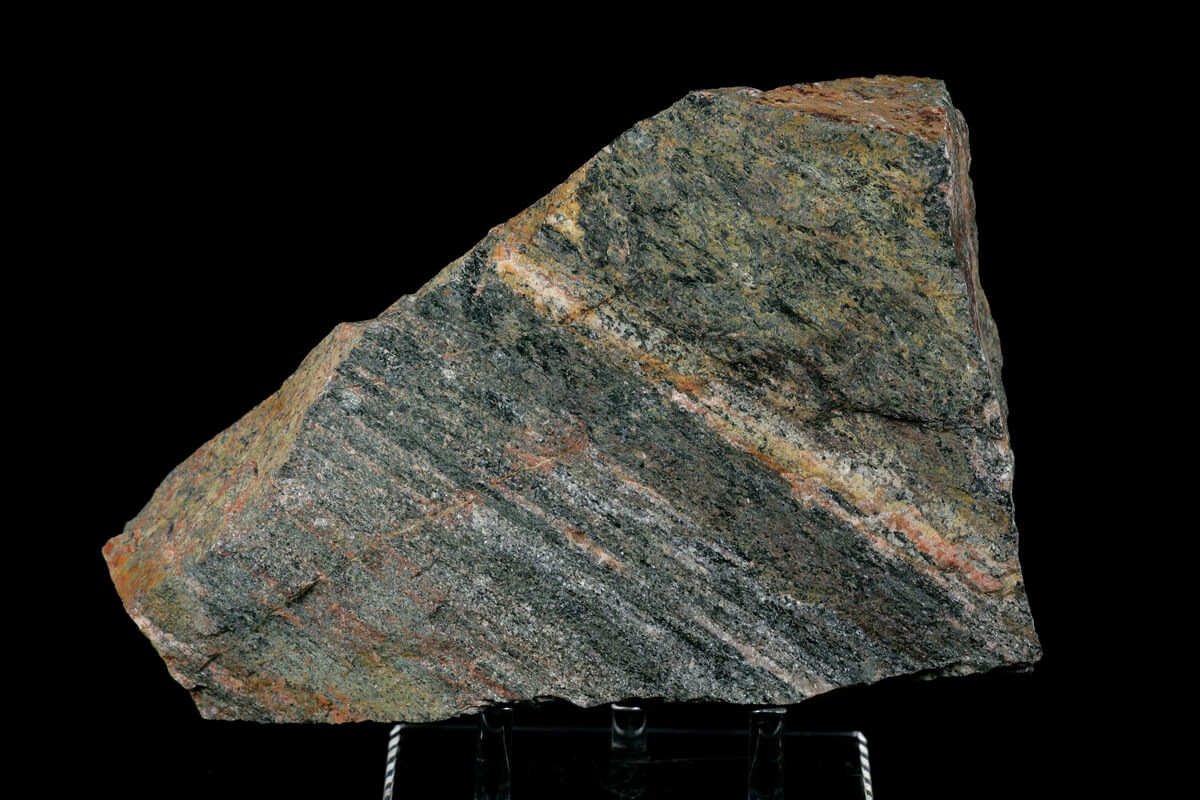
Archean granite
The primitive crust during the Archean Eon was originally a single sima oceanic crust. In the lower part of the crust (containing basaltic amphibole) temperatures were higher and a small amount of moisture precipitated, causing partial melting of the lower part of the crust and formation of medium acidic magma, which is the origin of Archean granite and the early continental crust. TTGs are plutonic rocks that are acidic and contain large amounts of silica. SiO2 content is generally >64% (~70% or higher). They are rich in Na and Al, with a K2O/Na2O ratio of <0.5, showing compositional characteristics of low potassium and high sodium, with relative lack of ferromagnesium (MgO: 0.2-2.6%), Ni, and Cr. Moreover, garnet is the stable mineral facies that remained after the melting of the original rock that formed the TTGs. Heavy rare earth elements stayed within this infusible garnet, such that TTGs lack such elements and their mineral types include quartz, zircon, plagioclase, biotite, and amphibole.