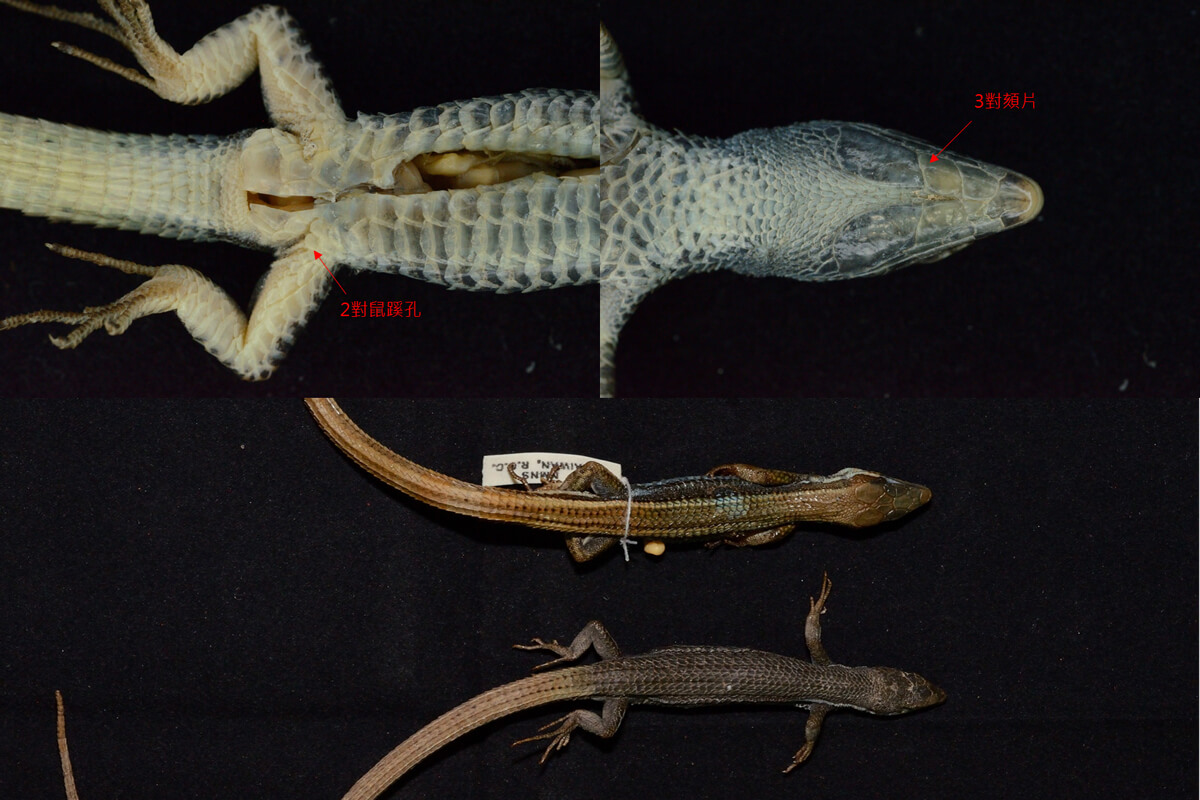
Takydromus hsuehshanensis
This grass lizard is endemic to Taiwan and distributed at elevations of 2,000-3,000 meters above sea level. It was discovered in the Hsuehshan area by professors Lin Chun-Yi and Cheng Hsien-Yu in 1987, for which it was named. The Hsuehshan grass lizard is the largest and thickest grass lizard species in Taiwan and is very easy to distinguish from other grass lizards. Of the brown type, they are similar to the green grass lizard in terms of seasonal dichromatism. Male lizards have emerald green patches along the sides during the breeding season. In addition, they possess three pairs of chin shields and two pairs of femoral pores. The Hsuehshan grass lizard lives in high mountain areas where it prefers bamboo thickets and rock piles. It differs from other grass lizard species, as it prefers to basks in the sun on top of rock piles. This is most likely a behavioral adaptation for quickly increasing body temperature in the high mountains and also explains why it is thicker than most lizards.
Reptile research fact: Huang Wen-Shan, the academic deputy director of this museum, has described the morphological characteristics and reproductive cycle of this species in detail. Currently, Professor Huang Shu-Ping of National Sun Yat-sen University is researching the physiology and ecology of the Hsuehshan grass lizard.