Palaeoloxodon huaihoensis
Kingdom Animalia
Phylum Chordata
Subphylum Vertebrata
Class Mammalia
Order Proboscidea
Family Elephantidae
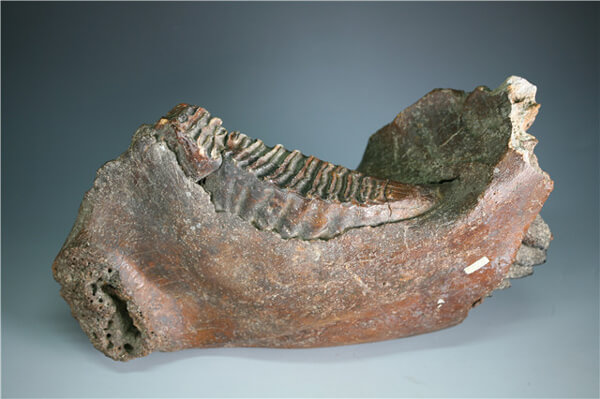
Similar to other members of the Family Elephantidae, there is unique molar growth, development and replacement. Three premolars and three molars move forward from the back of the mouth in a sloping manner. One molar follows another molar, continuously, as new molars move forward. As the new molars slowly grow and move forward, the older teeth are gradually pushed out and replaced. With age, molars increase in size and molar shelves increase in number. Therefore, from the size of the teeth and the number of molar shelves, it is possible to determine an elephant's age. The slanted position of the teeth increases the chewing area to allow for a large amount of food to be ground up. At the same time, this method of tooth replacement increases the number of years that the teeth can be used, as well as the animal's longevity.