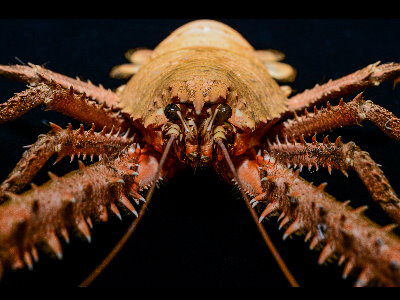
Eumunida funambulus
For shrimp, lobster, and crab warriors of the deep sea, life is difficult. In a survival arena where hunters become the hunted, limited resources must be invested in the most effective survival strategies, that is in functions and forms with high CP value. The exoskeleton provides support for the body and increases the ability of a crustaceans to hunt and protect themselves. As such, the exoskeleton, or carapace, should be hard, thick, light, strong, and sharp. Where in the world can such a thing be found? Moreover, strong thick armor adds bulk, which is not conducive to flexible or agile movement. Therefore, many shrimp, lobster, and crab species have evolved carapaces made from strong but light materials, with sharp spines, making predators hesitant to launch an attack, creating a precious opportunity to escape. The carapace of the deep sea squat lobster is a product of this evolutionary strategy. Its carapace is thin and not very hard (which is a common characteristic of lobster carapaces). However, the first segments of the walking legs and chelipeds are covered in spikes, most likely serving a defensive function. However, what is interesting is, the subsequent walking leg segments have no long spines or very few spines, which is likely due to the need to feed on detritus or scavenge. If there are spines on the lower legs, this would hinder movement when eating.