08 Coelopleurus maculatus Agassiz & Clark, 1907
Coelopleurus maculatus is of the Order Arbacioida and Family Arbaciidae. It is found in deep sea floor silt at depths of 70-360 meters. It is omnivorous and, based on the width of its test, it is a small to medium-sized sea urchin. The test of an adult measures two to four centimeters in diameter.
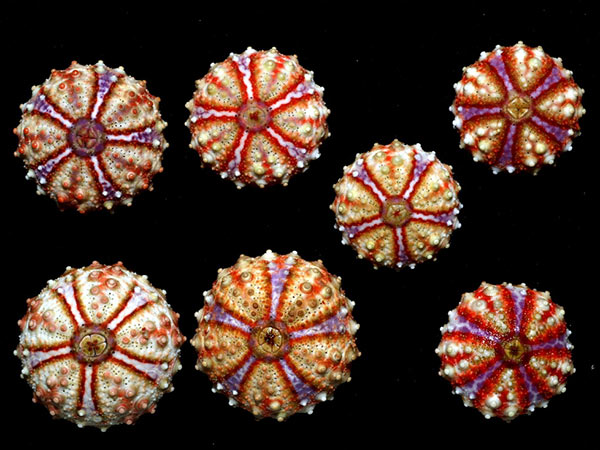
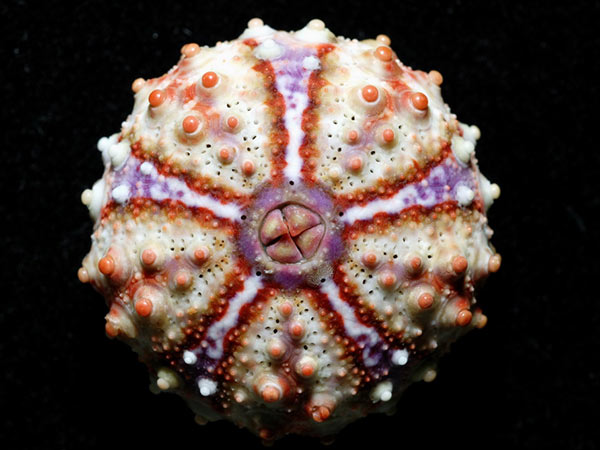
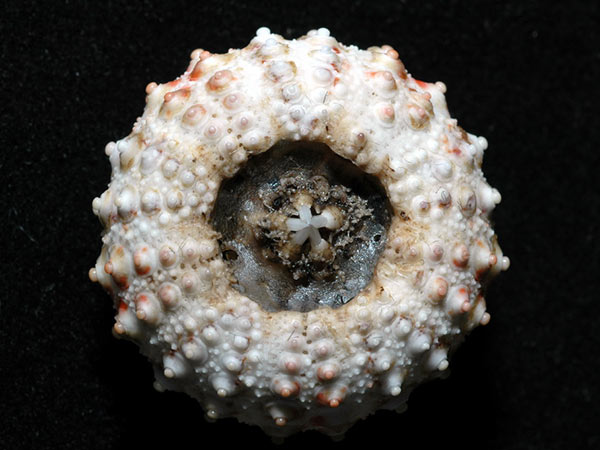
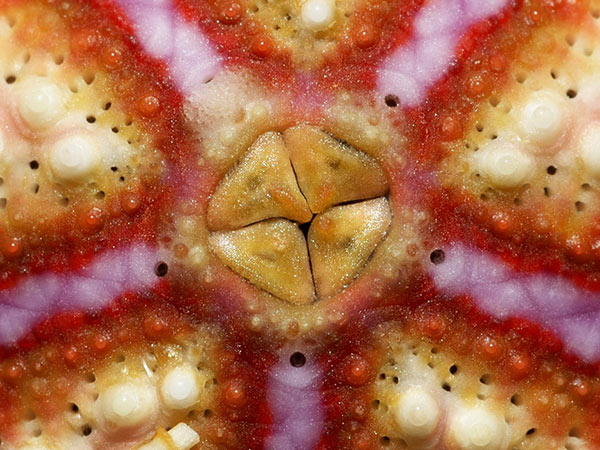
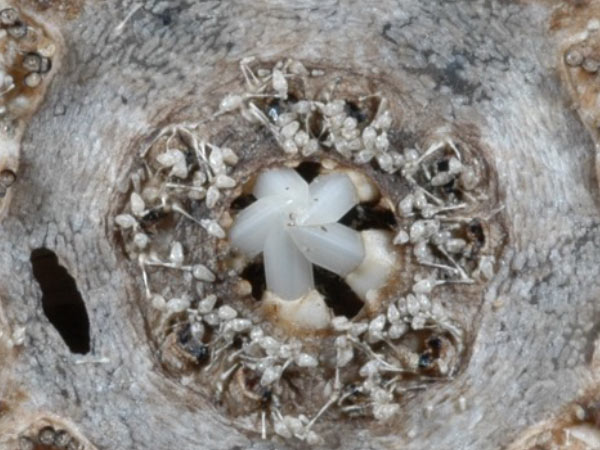
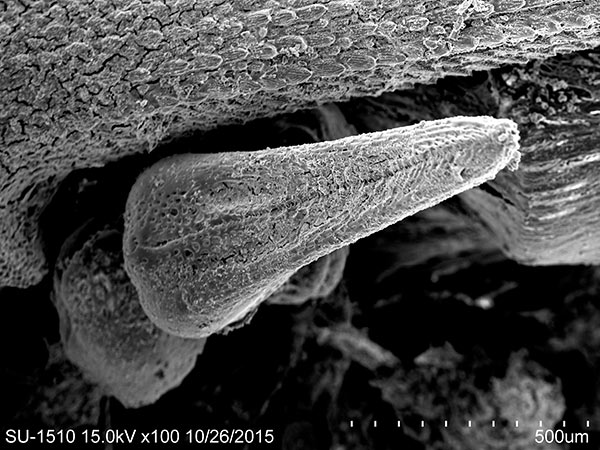
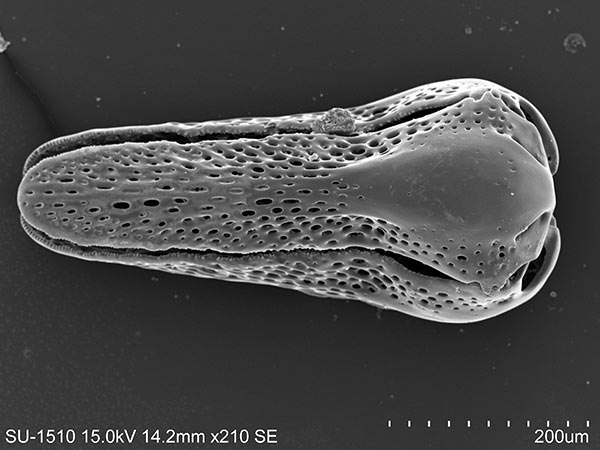
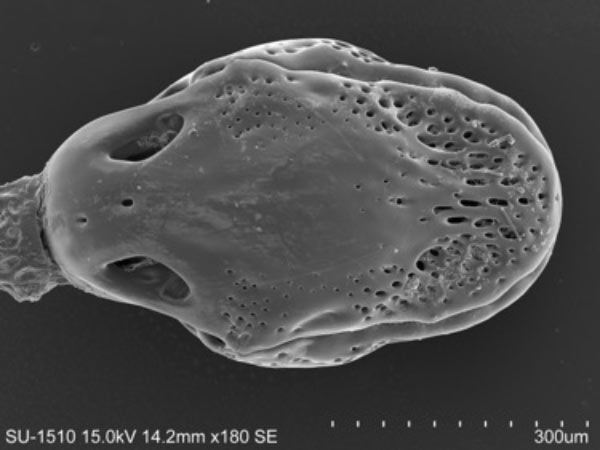
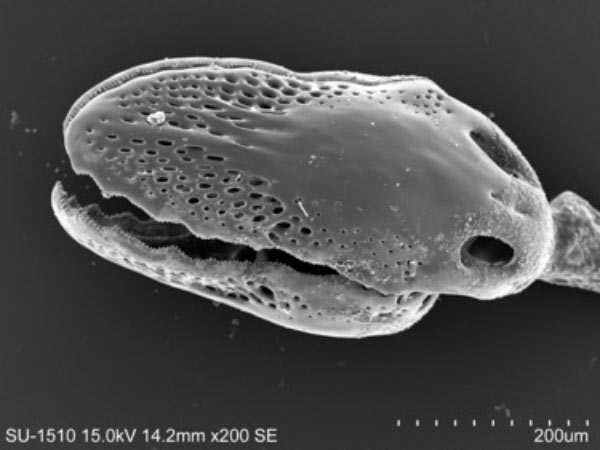
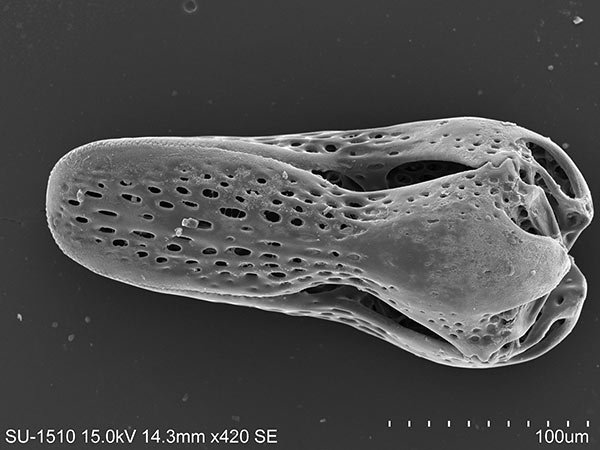
The ambulacral and interambulacral plates are of the same width. Except for one to two significantly smaller tubercles on the upper part, tubercles are very large. The internal part of the reproductive plates of the apical system protrudes, forming a ring-like shape around the periproct. There are four periproct plates that protrude toward the anal opening. Between each of the periproct plates is a small tubercle. Around the mouth, each pair of plates is closely connected, and each plate contains small tubercles on the pedicellariae.
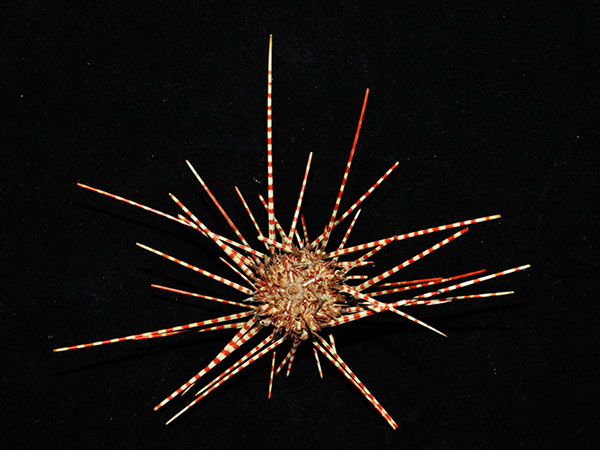
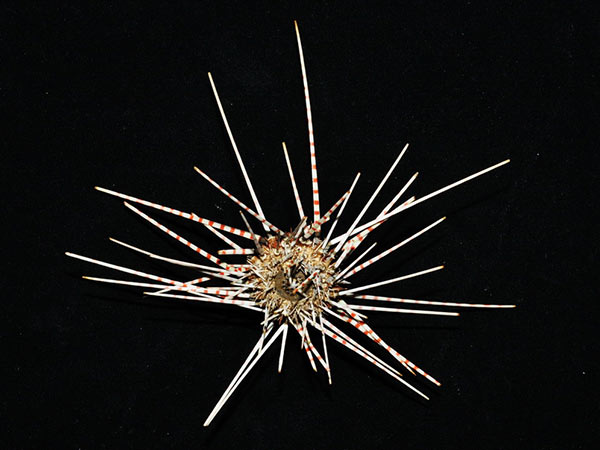
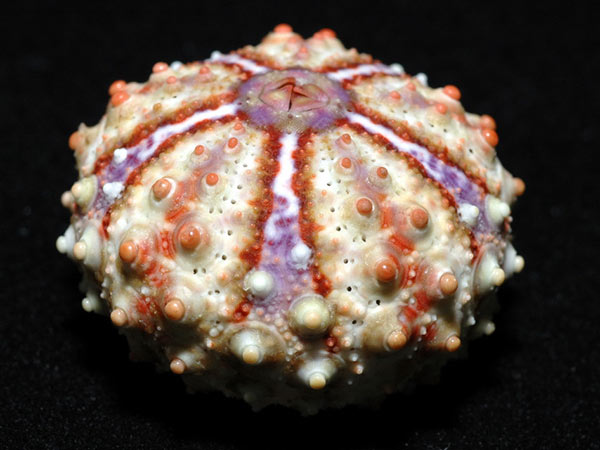
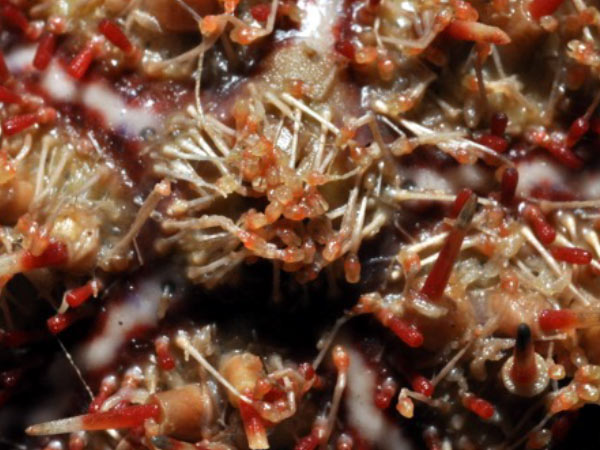
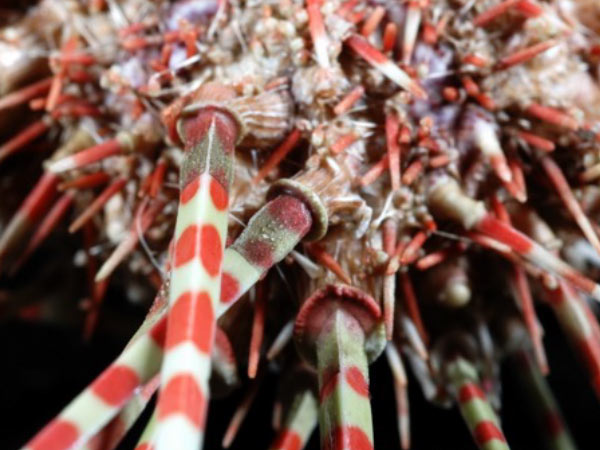
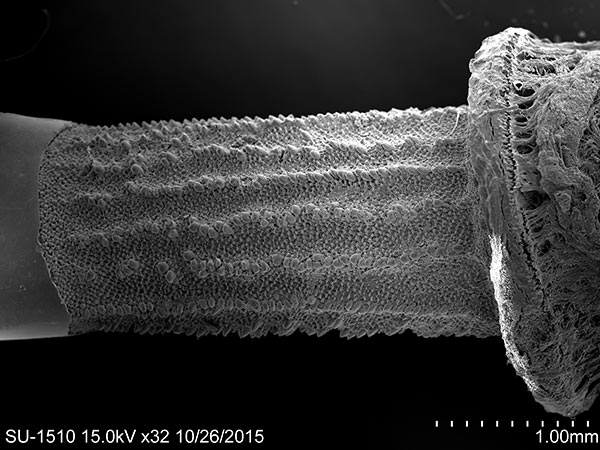
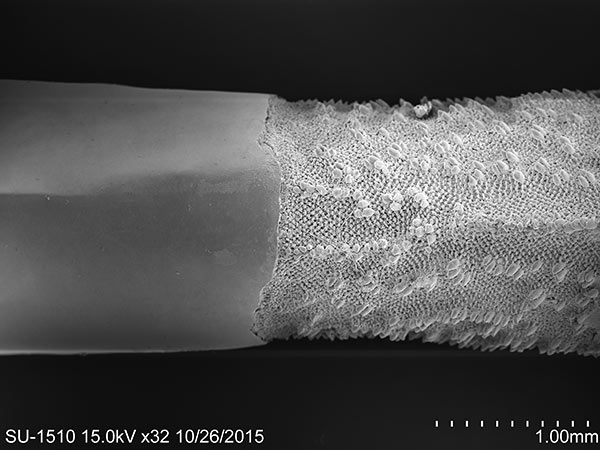
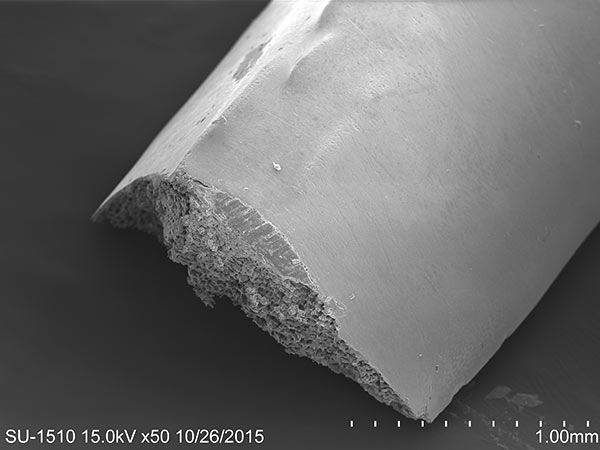
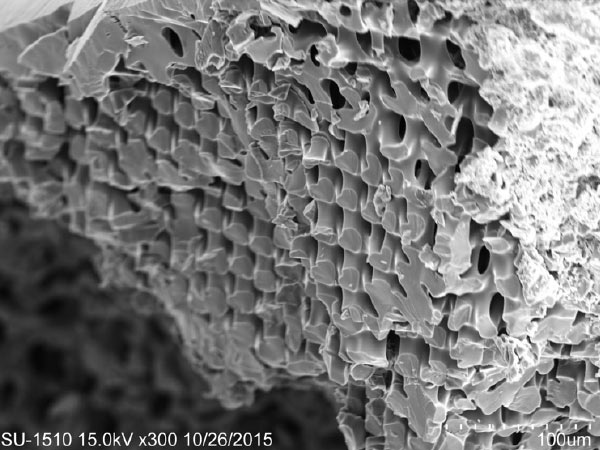
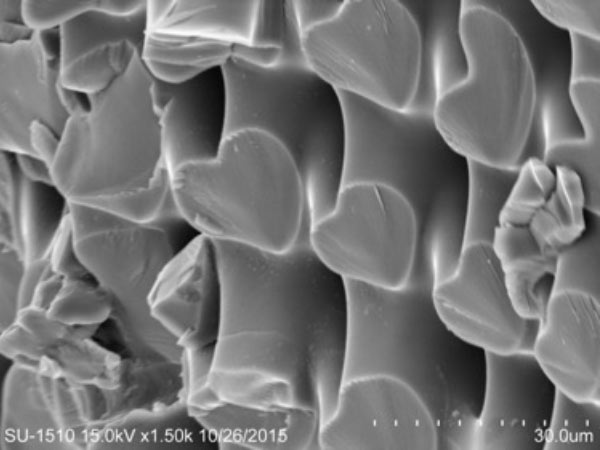
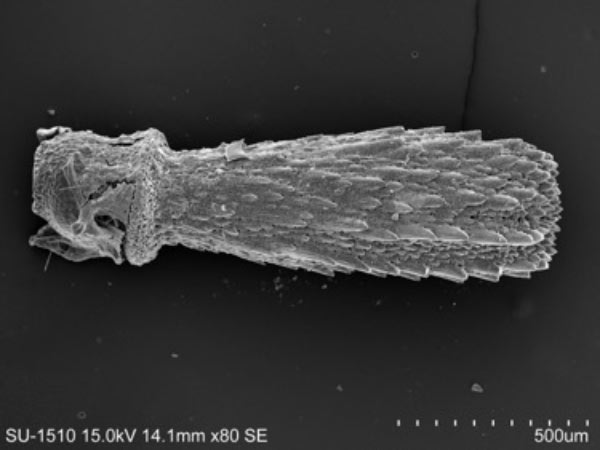
The primary spines are very long and thin and are completely to slightly curved. At the base of the spines is a short collar-like section. The bottom part of the primary spines is in a somewhat horizontal direction. The top part is straight and nearly perpendicular to the test surface. On cross section, the spines appear triangular in shape. The spines are yellowish green or white with bright red sections. The tips are consistently white. The secondary spines on the aboral surface are short and rod-like. Along the exposed areas, the secondary spines are very short and coarse at the tips. The relatively flat part in the center of the interambulacral zones is purple or white and the sides are deep red. The exposed test is usually white or light yellowish green. The exposed interambulacral zones are the same color as the living body. The top of the periproct plates is pink. As the test has beautiful patterns and colors, once cleaned it is sometimes sold in shell novelty shops and referred to as the "medal of honor sea urchin" or "royal crown sea urchin".
The distribution of this sea urchin species is in the waters off of Japan from Sagami Bay to Kyushu and the Korea Strait. In Taiwan, this species is mostly found in sea bottom silt at 100-300 meters in depth. It has also been recorded in Donggang of Pingtung County and in the forage fish heap below the Daxi Fish Market in Yilan County, along the northeastern cape.