01 Prionocidaris baculosa annulifera (A. Agassiz, 1873)
Prinocidaris baculosa annulifera is in the Phylum Echinodermata, Class Echinoidea, Order Cidaroida and Family Cidaridae. The Cidaridae family is a relatively primitive family of sea urchins.
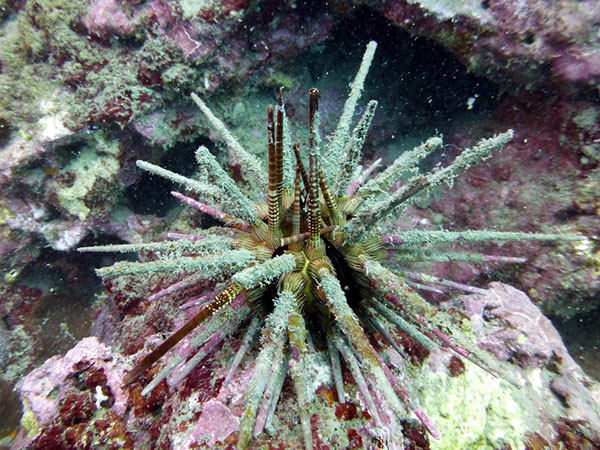
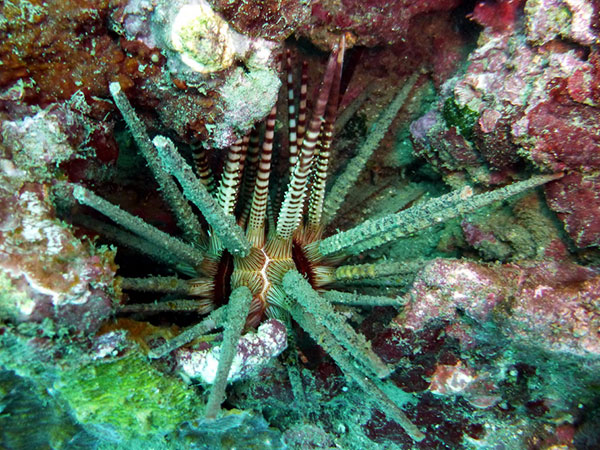
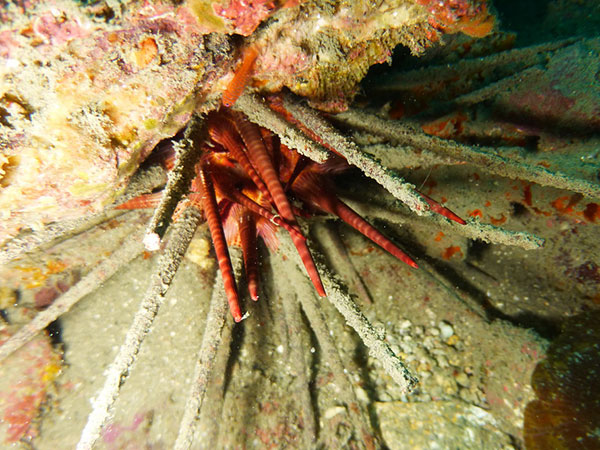
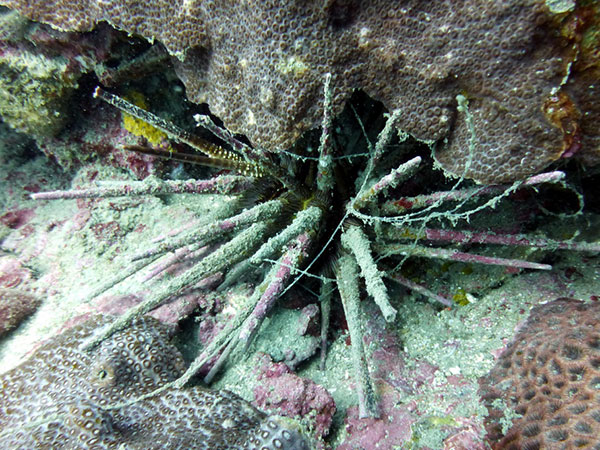
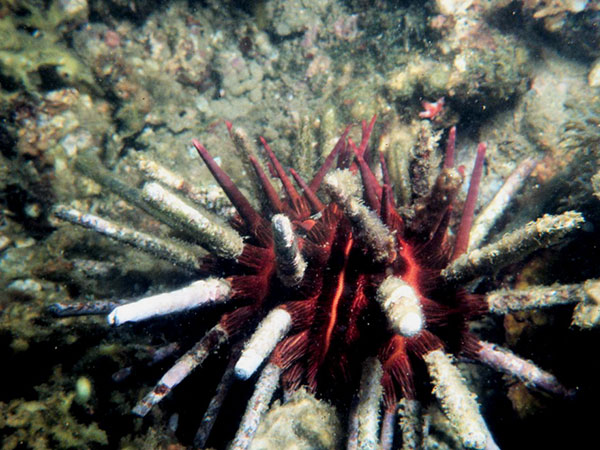
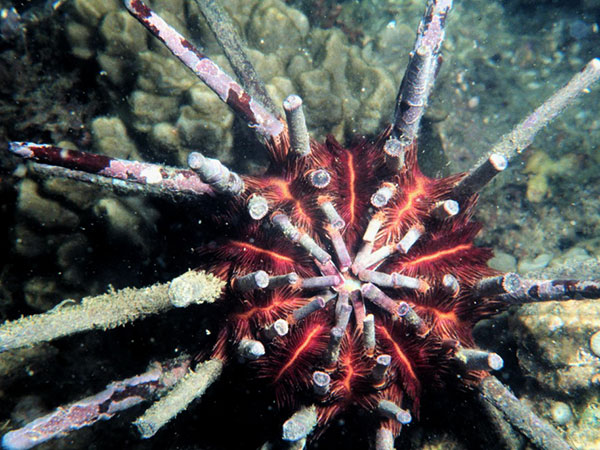
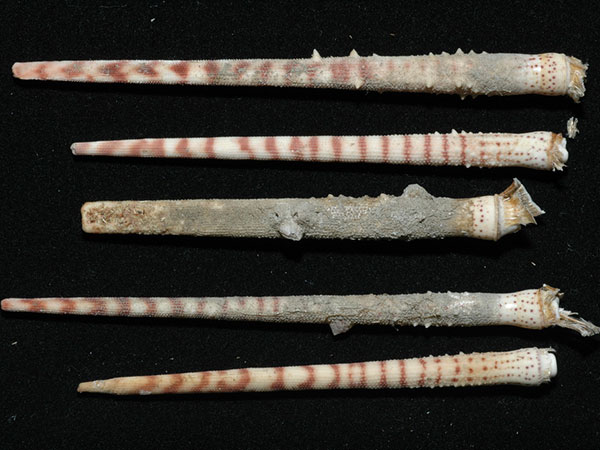
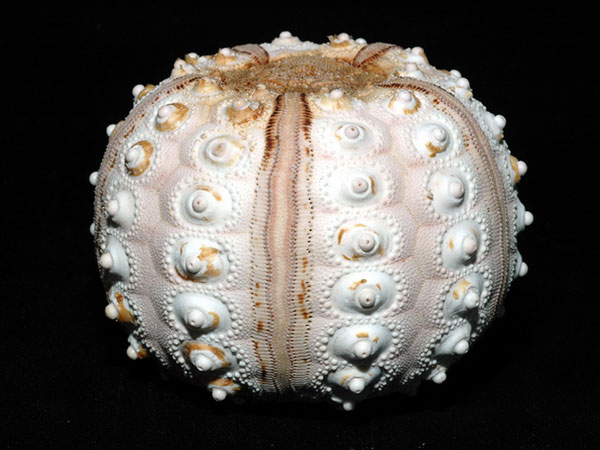
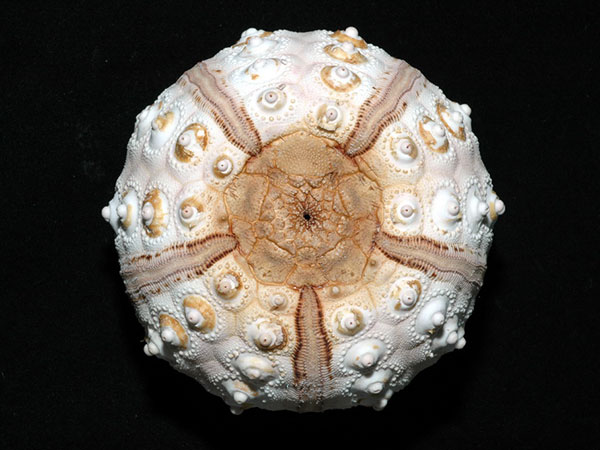
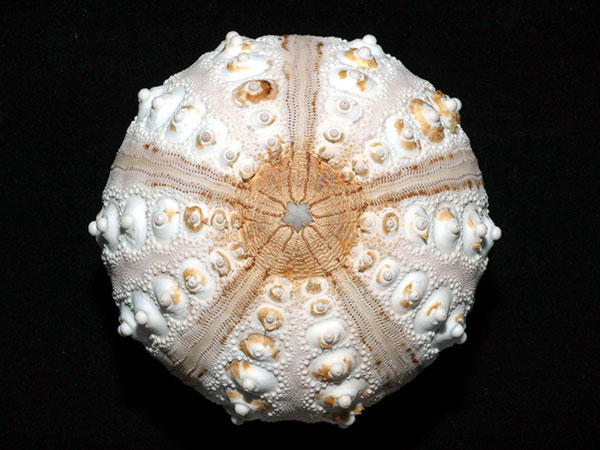
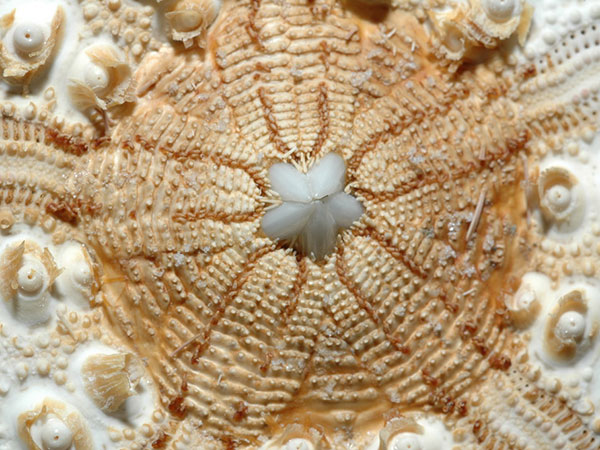
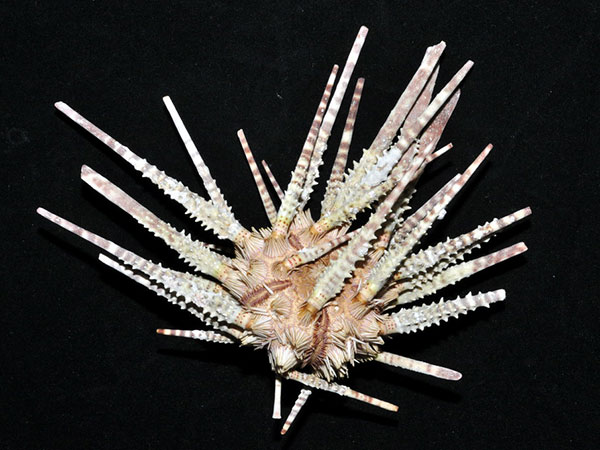
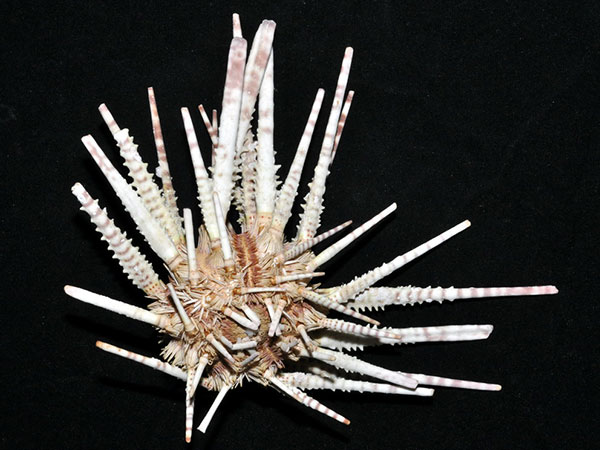
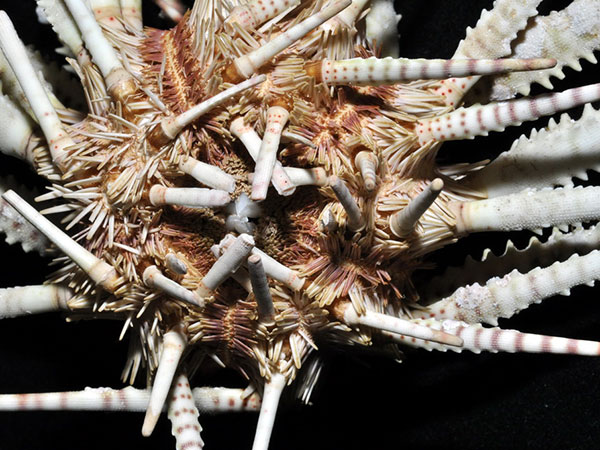
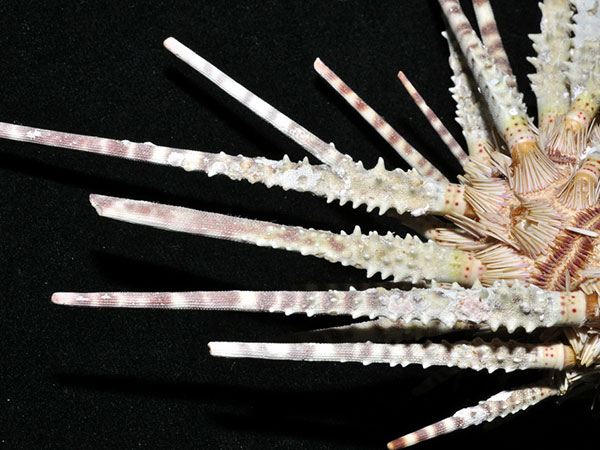
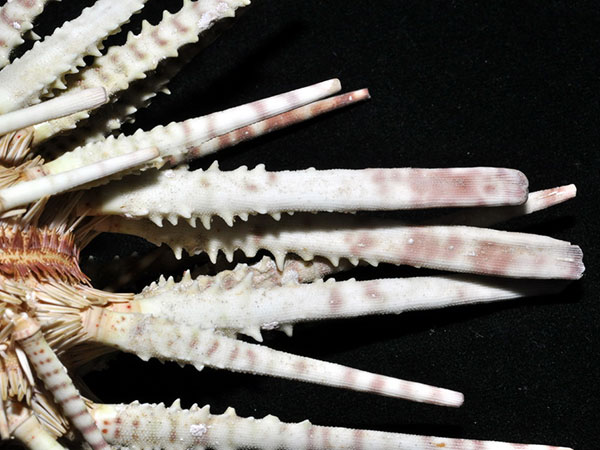
These are large sea urchins of the Cidaridae family most often seen along the northeastern cape. The diameter of the test can surpass eight centimeters. There is large variation in the length of the primary spines, from about equal to the test diameter to almost more than twice the test diameter. In terms of shape, some are almost cylindrical and some are spindle-shaped. Some gradually end in a sharp point, while others are somewhat flat at the tip. Some of the primary spines have alternating bands of light and dark and some do not. On the surface of the primary spines are tiny, dense bumps. At about one-third of the distance from the base of the spindle-shaped primary spines is an area facing upward on which there are obvious saw-toothed spines. The shapes of the primary spines on the oral surface are simpler and consistent and the ends are almost flat. The test possesses dark purple, brown or olive green apical system and ambulacral ossicles. The interambulacral zones are green with large white tubercles. The primary spines on the aboral surface are purplish brown or bright brown. Some possess irregular bands. Along the collar near the base is a section of reddish brown spots. Most of the secondary spines are purplish brown. Some have dark brown streaks.
This sea urchin is an omnivore. It is large in size and a ferocious feeder. Strong, hard teeth are used to bite through the spines and tests of other sea urchins. From laboratory observations, these sea urchins attack and eat sea urchins, even of the same species. In coral reef areas, they forage for food during the day. They have few natural enemies. This is the most commonly seen species of the Cidaridae family in the deeper water coral reefs of the northeastern cape. Its primary spines are long and complete and its test is large.
Distribution is widespread in the Indo-Pacific region, from the Red Sea to the Philippines, Indonesia, and from Japan to the western coast of Australia. It inhabits depths from tidal zone to 200 meters. It is often seen in the waters near Aodi in northeastern Taiwan, and has also been recorded in Nanfangao. It has been discovered during bottom trawling in the waters near Hsinchu and Kaohisung along the western coast.