09 Toxopneustes pileolus (Lamarck, 1816)
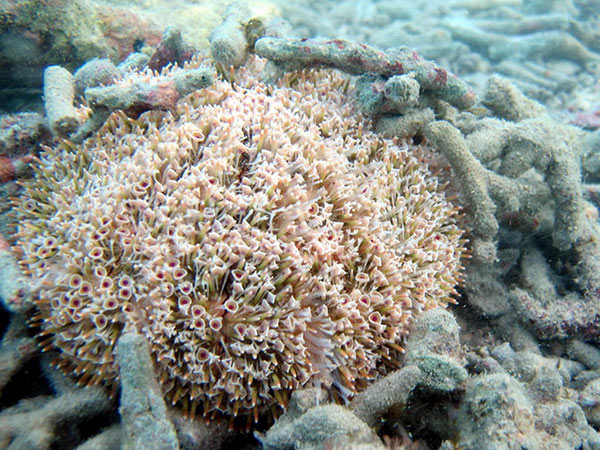
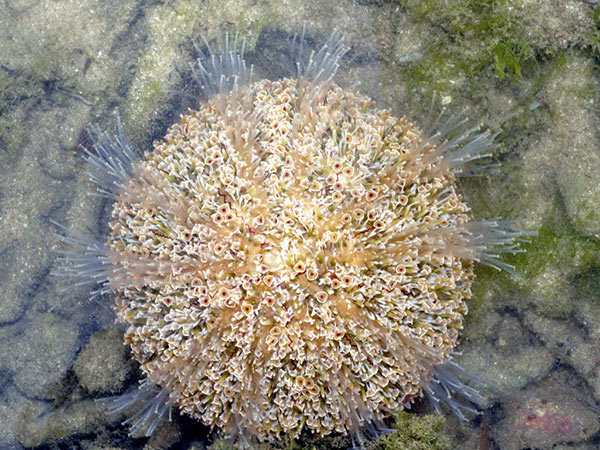
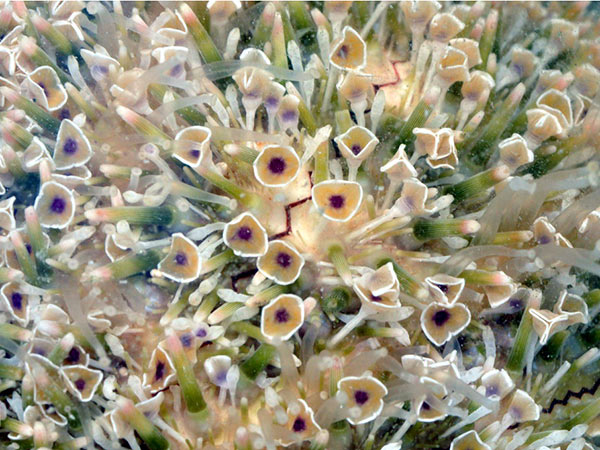
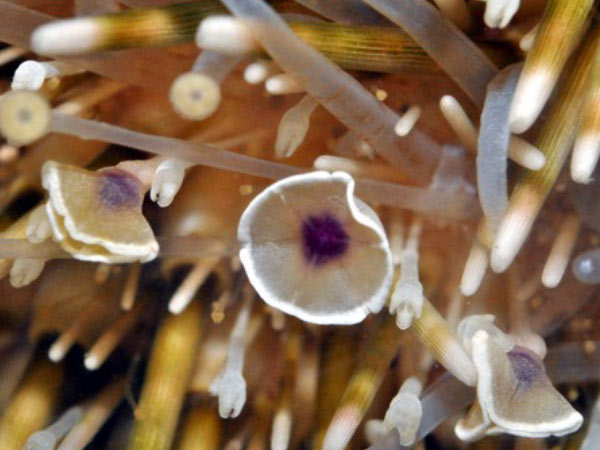
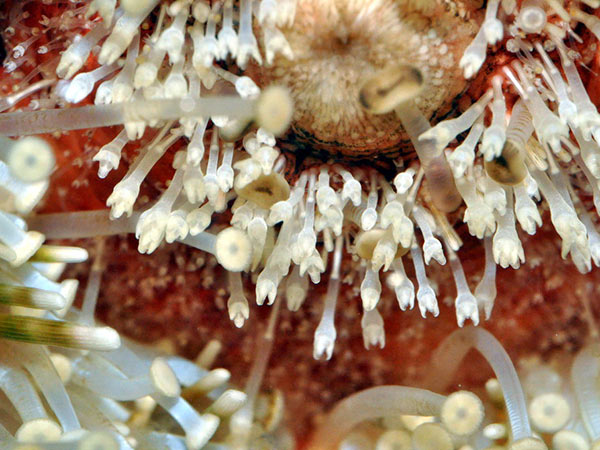
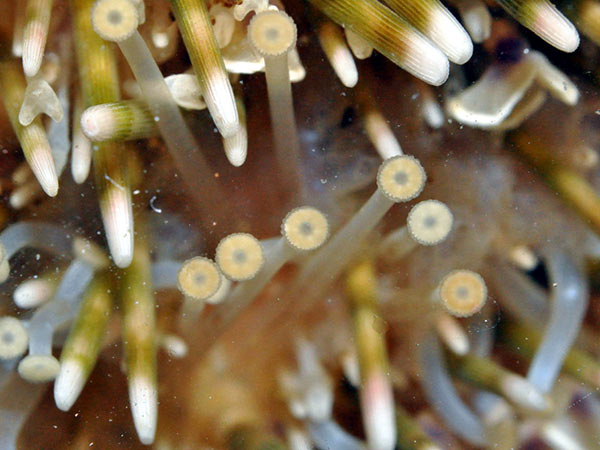
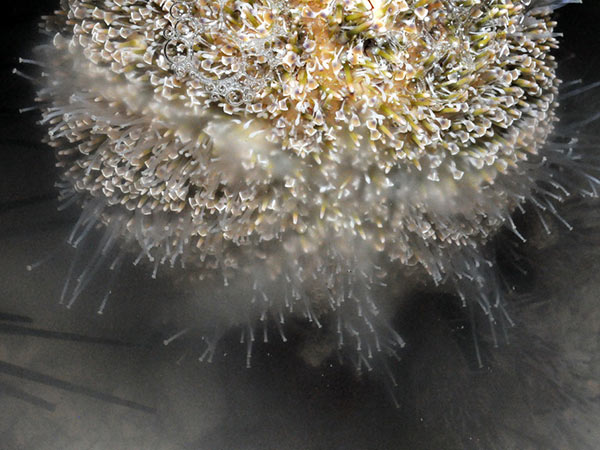
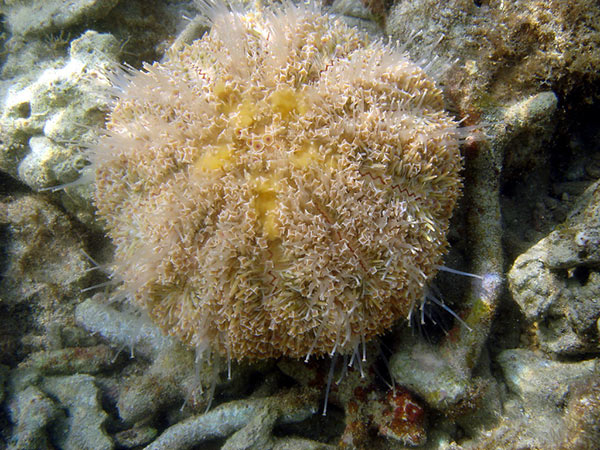
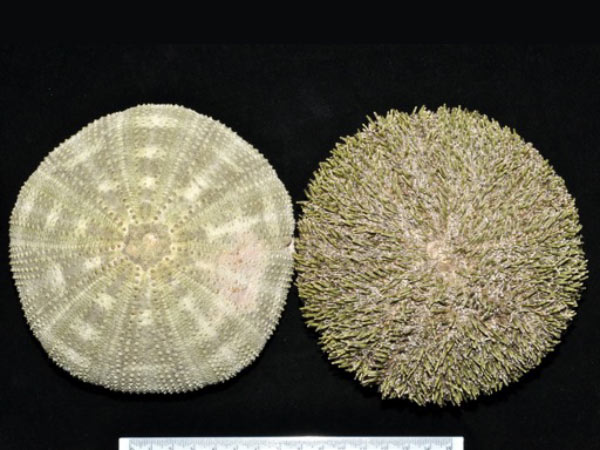
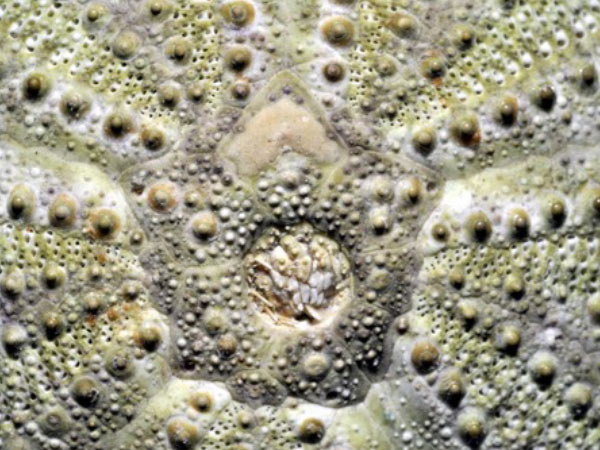
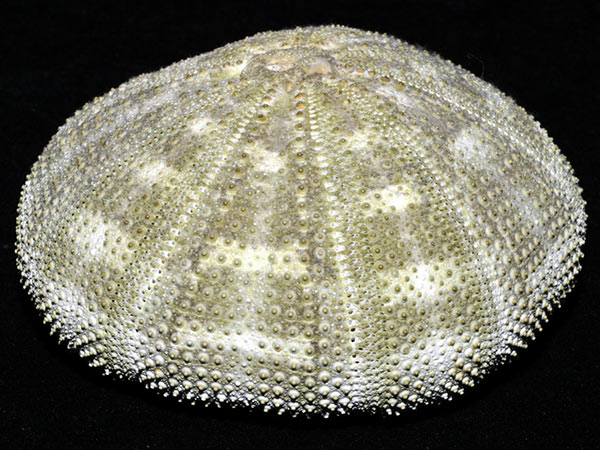
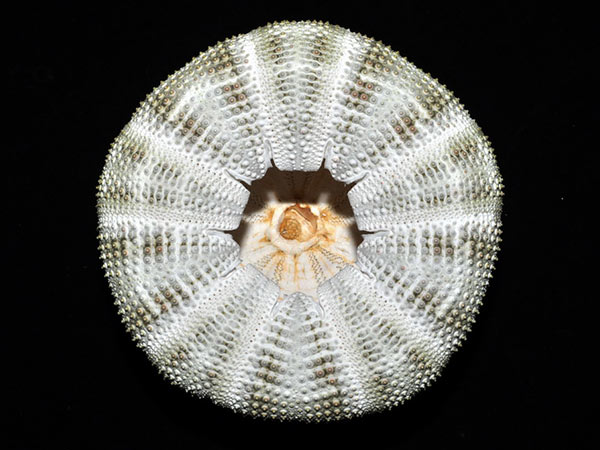
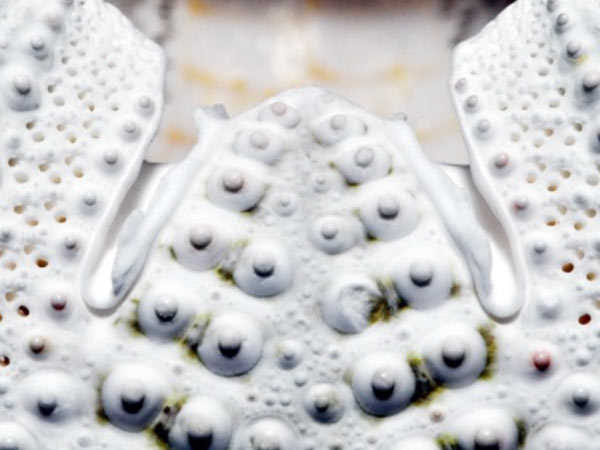
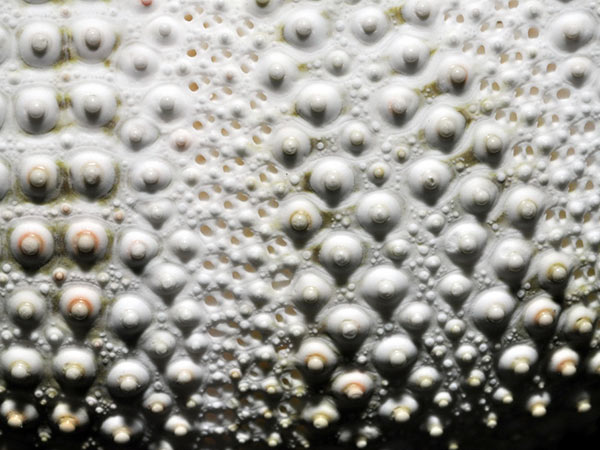
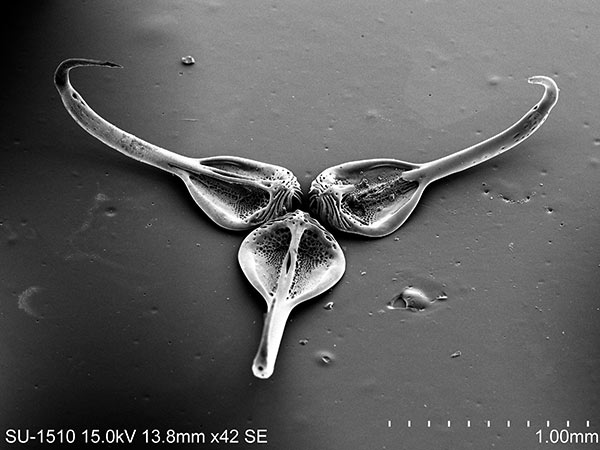
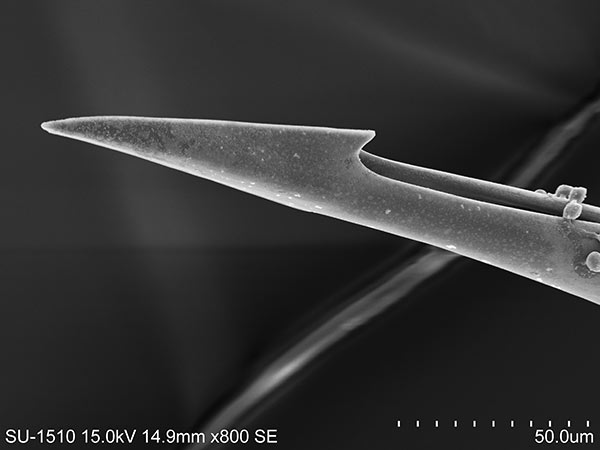
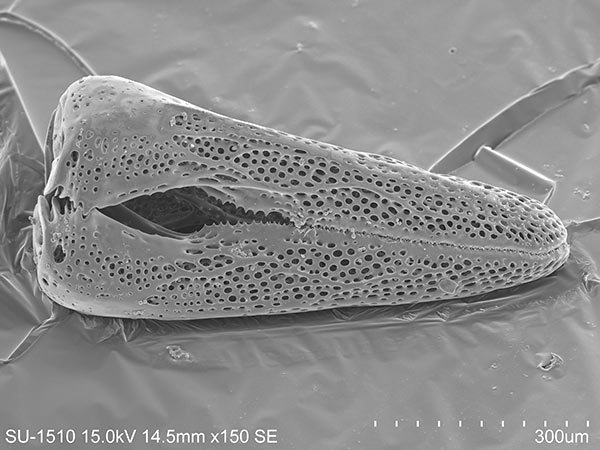
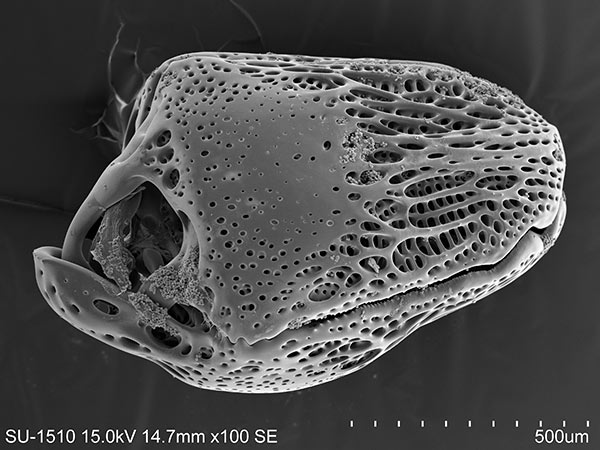
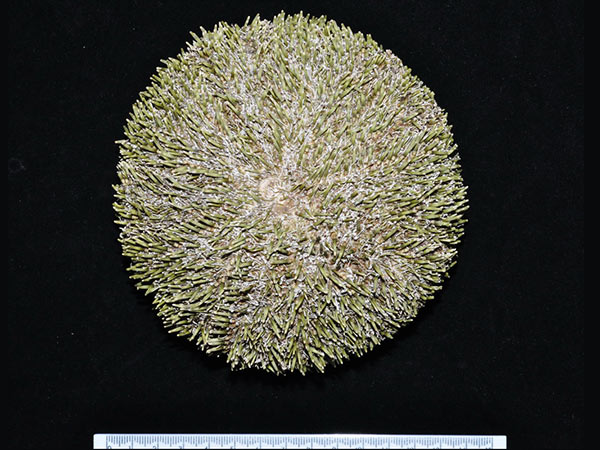
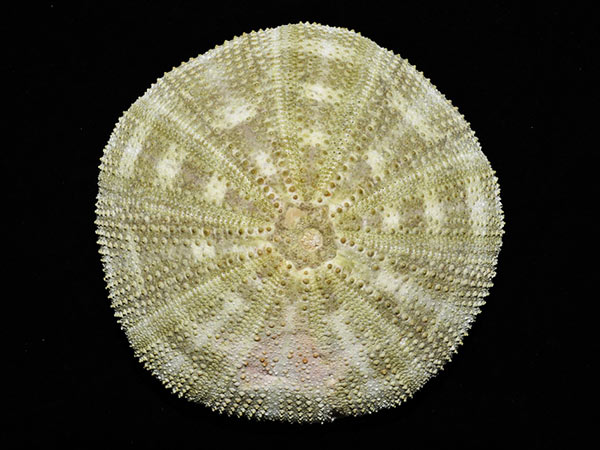
Toxopneustes pileolus is classified in the Order Camarodonta and Family Toxopneustidae. The test of this species is large with short spines. The spines are green with purple rings at the tip, becoming white at the point. There are venomous trumpet-shaped spherical pedicellariae, the centers of which are purplish red and the surrounding edges white. The primary spines on the oral surface are about one centimeter in length. On the surface are white and green alternating horizontal bands. The primary spines on the aboral surface are shorter, and are green at the base. The test is olive green with numerous irregular white and purple rings, creating concentric circles along horizontal bands. The width of the ambulacral zones is approximately two-thirds that of the interambulacral zones. The primary tubercles of the ambulacral plates are almost the same size as those of the interambulacral plates. Three pairs of tube feet pores are arranged in an arc shape. Along the equator, the interambulacral zones have four to six primary tubercles, all almost the same size, arranged in a horizontal line. The diameter of the test can reach 13 centimeters or more. This is an extremely large sea urchin.
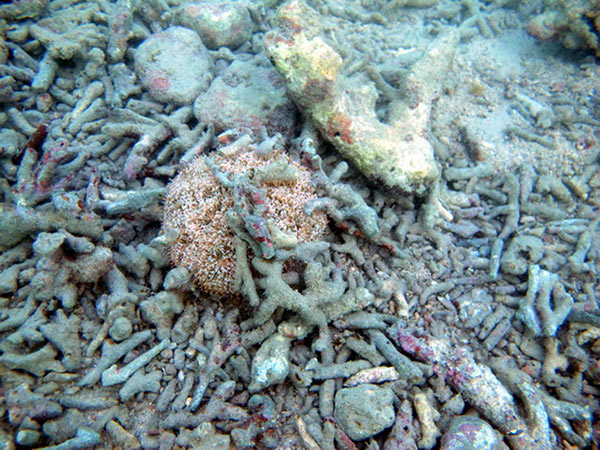
This species is distributed in shallow water rocky areas in the subtidal zone at 0-30 meters in depth. It feeds mainly on calcareous algae that grows on the surface of coral skeleton fragments. Its discharged waste is yellow and shaped into small balls, which is very unique. It uses its tube feet and pedicellariae to grasp algae or to cover itself in gravel.
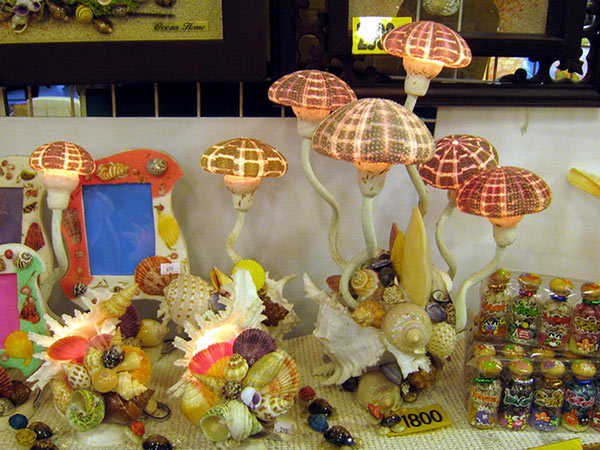
This sea urchin species is distributed in the Indo-Pacific region except in northern Australia and Hawaii. It is also found in various areas around Taiwan and in coral reef areas of its offshore islands. However, it is not commonly sighted. It prefers to stay on the sea floor on heaps of coral fragments. The largest cluster of this species is in the sea urchin reserve of Houbihu in Kenting. This sea urchin is large in size but not often seen. Therefore, it is not often caught and sold as food. However, as its test is beautiful, it is sold in novelty stores or processed into lamps or nightlights.