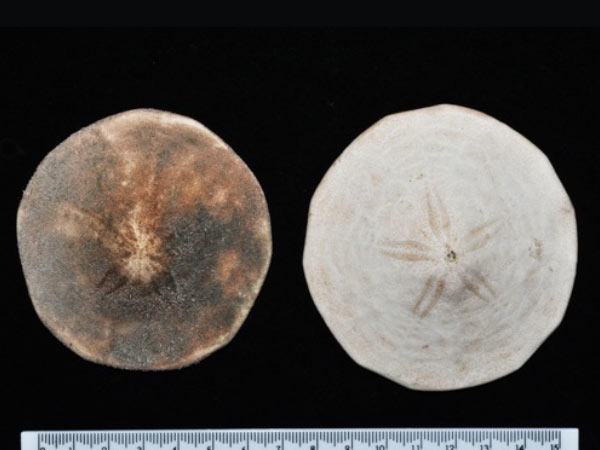
12-1 Laganum fudsiyama Döderlein, 1885
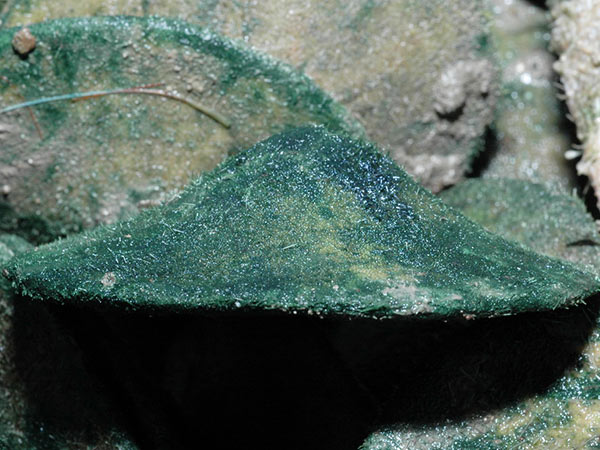
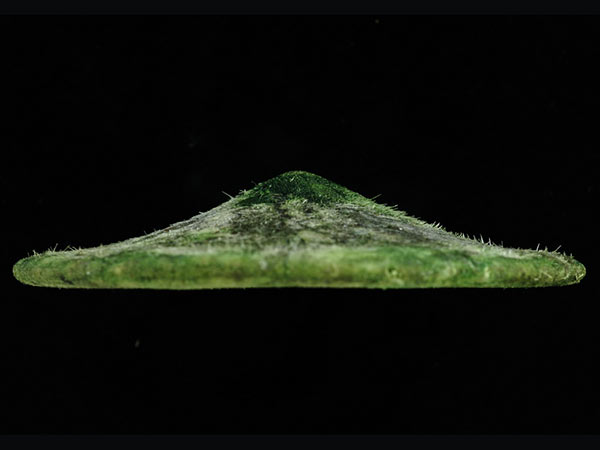
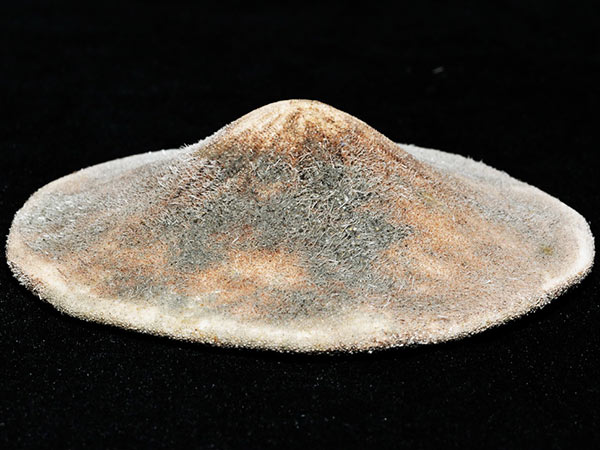
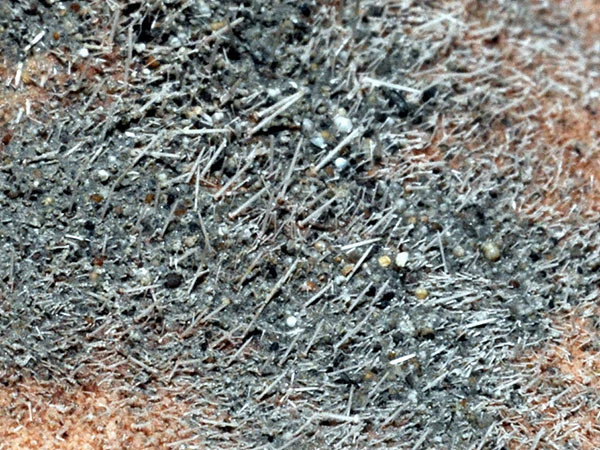
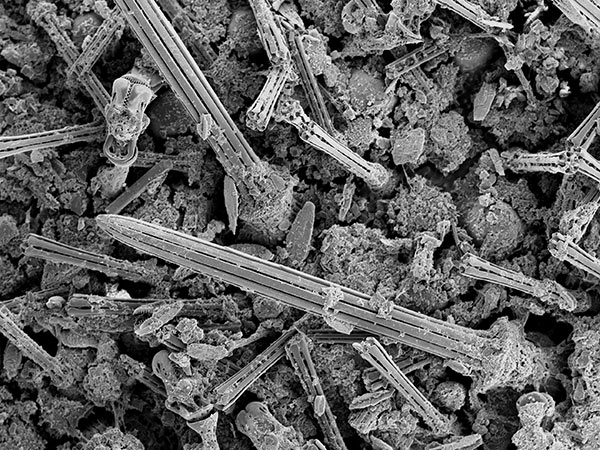
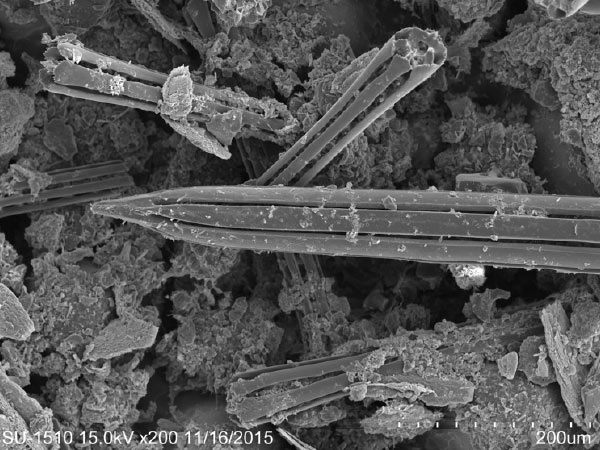
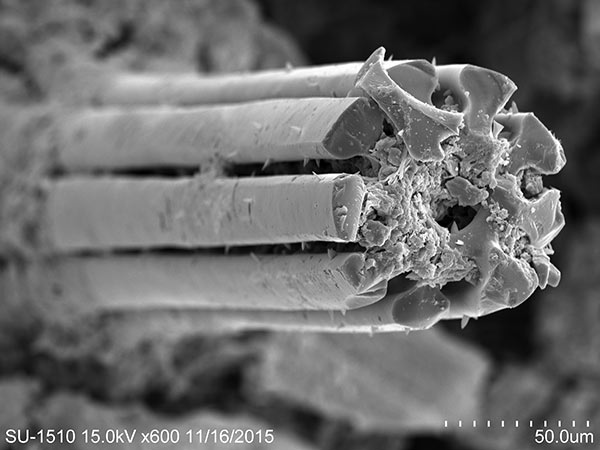
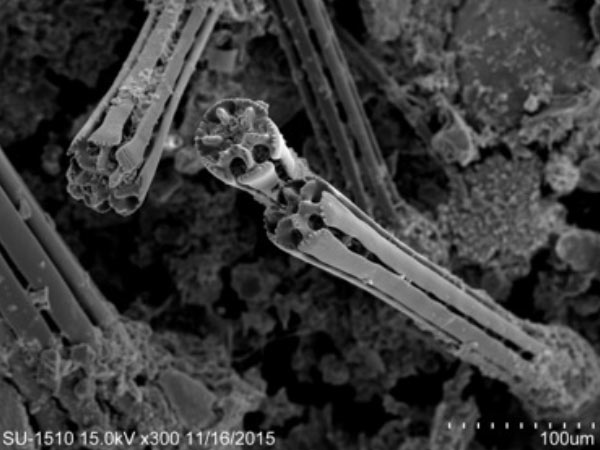
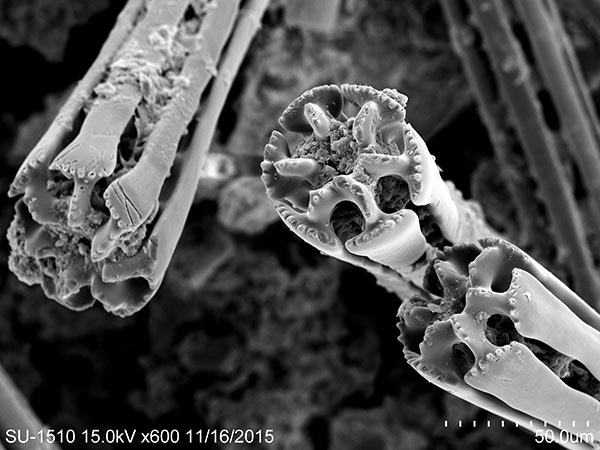
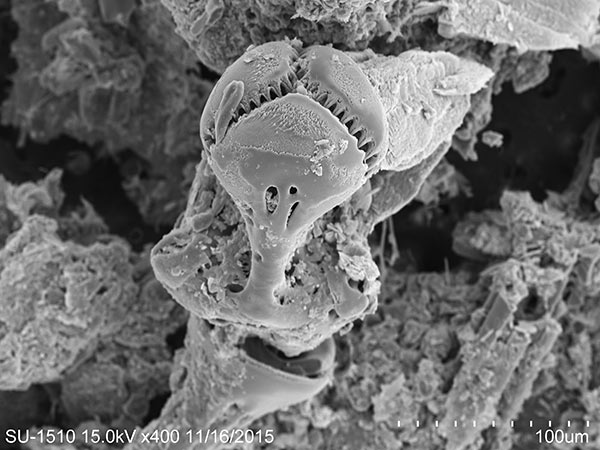
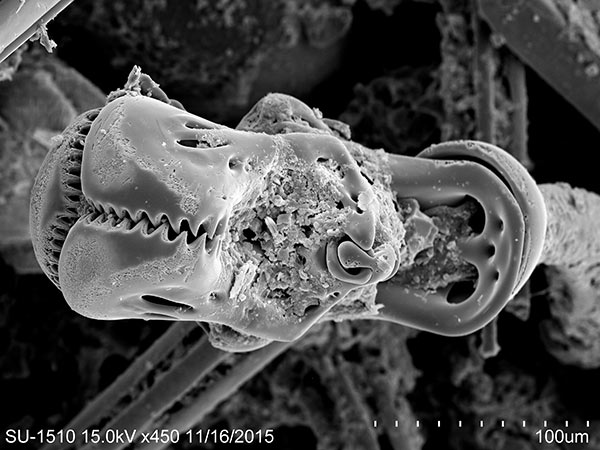
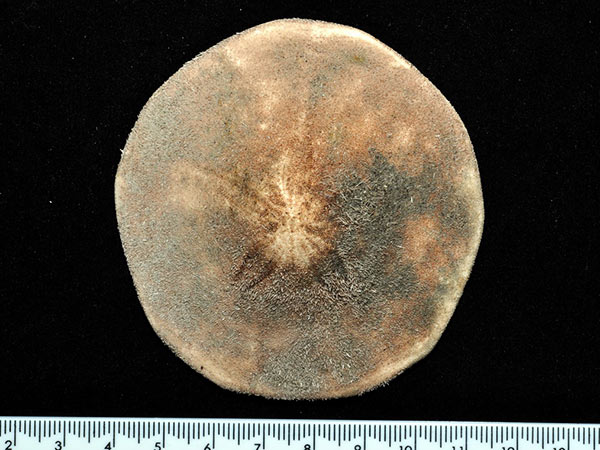
Laganum fudsiyama belongs to the Order Clypeasterodea and Family Laganidae. It is a lopsided echinoderm. Fresh specimens are green and covered in fine hair-like primary spines. There are two types of primary spines: long and short. The tips of the longer spines are pointed and can pierce the skin. The tips of the shorter spines are flat, branching into six spoke-like symmetrical circles. This structure is very unique.
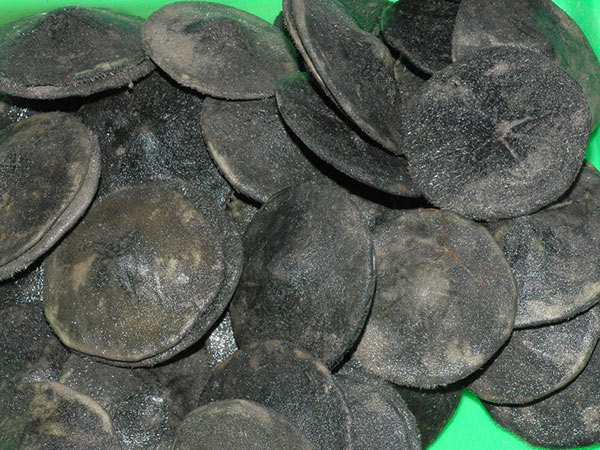
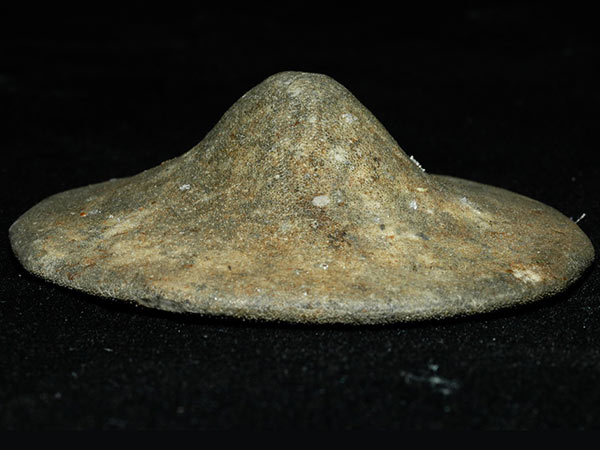
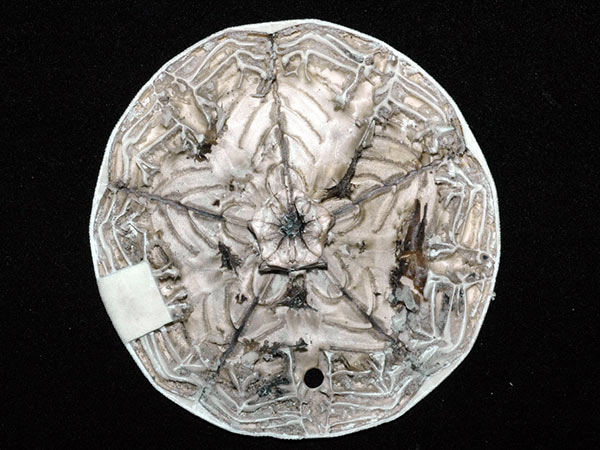
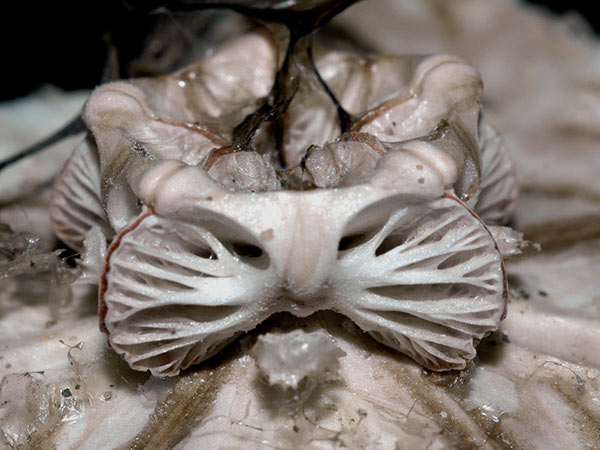
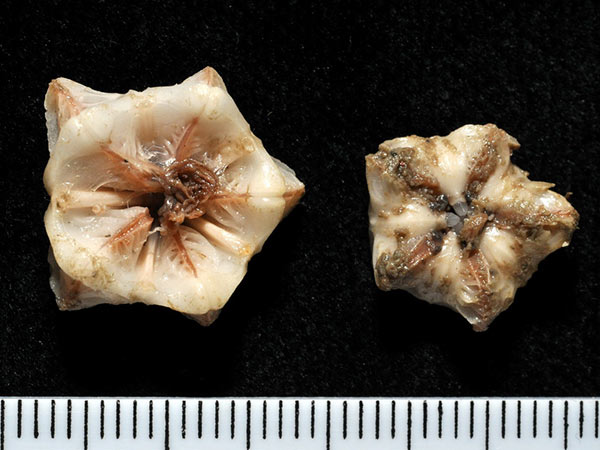
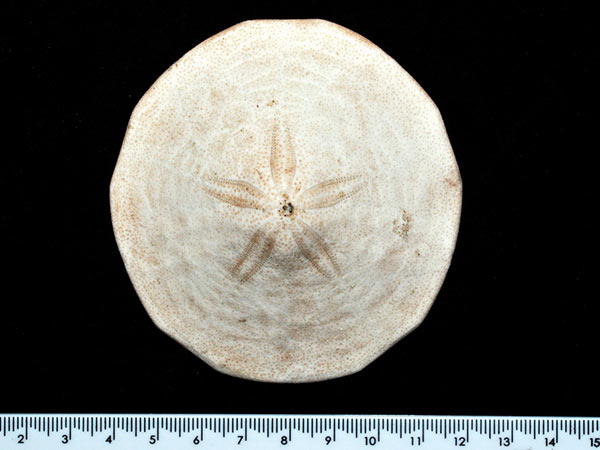
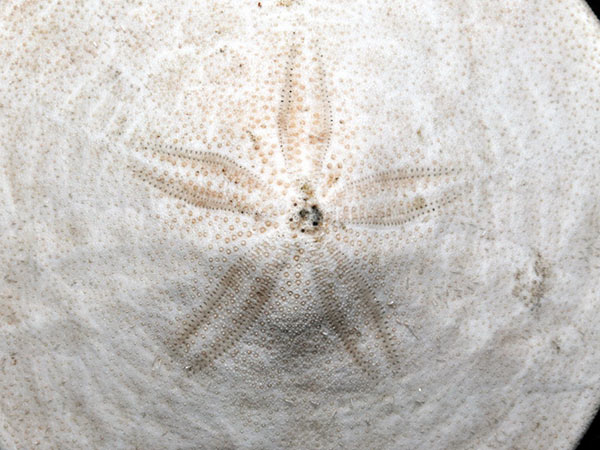
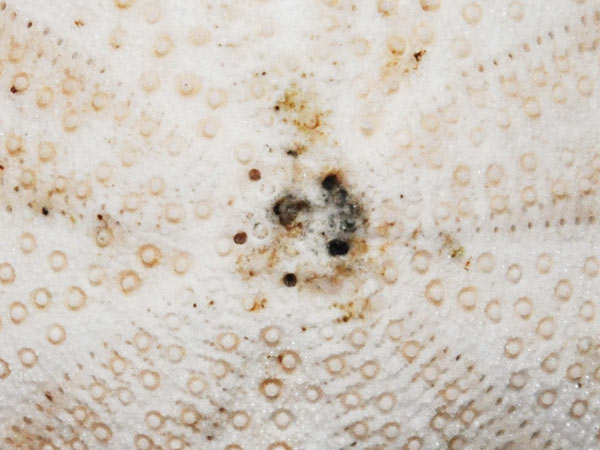
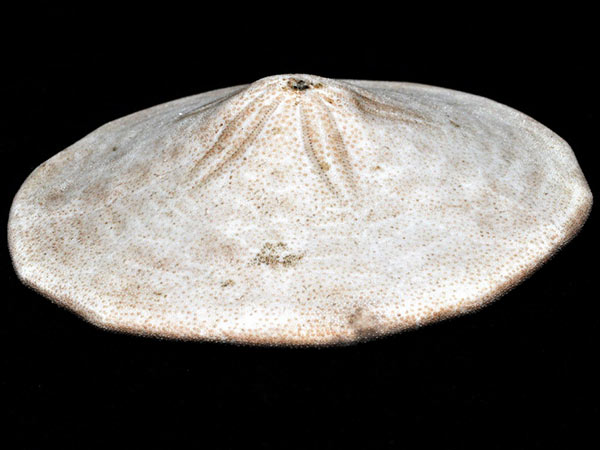
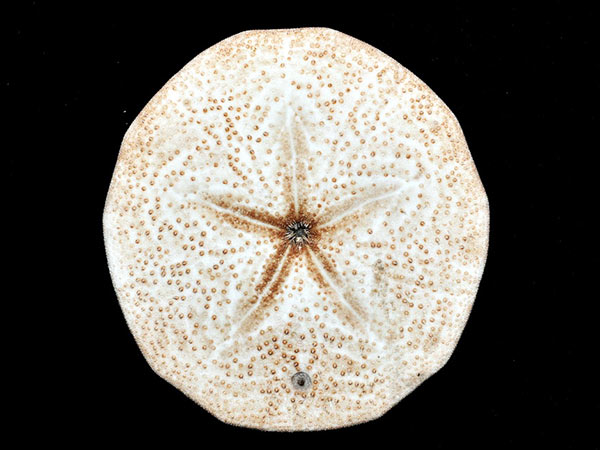
Looking at the test from the aboral surface, it appears round to slightly decagonal in shape. On side view, it is shaped like a mountain peak with a central bulge. Some individuals are taller and some are even conical in shape. On side view, fresh specimens appear like bright green mountain peaks, and this species was named after Mount Fuji in Japan. The exposed test is off-white in color. On the aboral surface, the edges are flat and gradually rise to form a peak. In the center are five gonopores and curved groove-shaped madreporite of the apical system. Radiating outward are five pairs of narrow, long tube foot pores in a petal-like arrangement. The mouth is in the center of the oral surface. Radiating out from the mouth are five long, narrow grooves. The anus is located along the posterior edge of the oral surface at about 1/4 radius. Round in shape, there are many plates that make up the periproct. Specimens obtained from deeper waters are usually larger in size with great variation in height.
Laganum fudsiyama is a deep water sand dollar. It has a broad distribution in the Indo-Pacific region. It inhabits the silt on the sea floor off of northeastern Taiwan at depths of 200-600 meters.