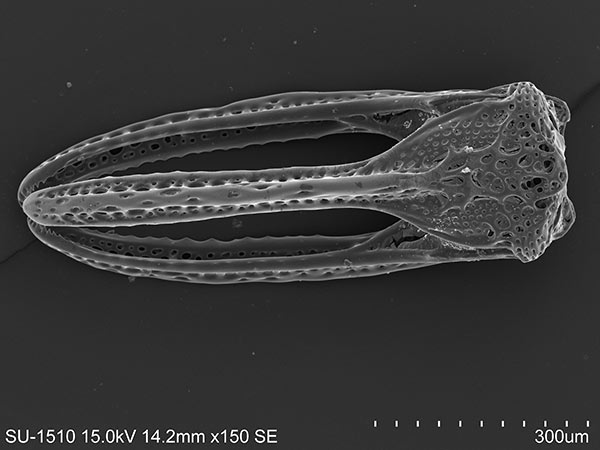
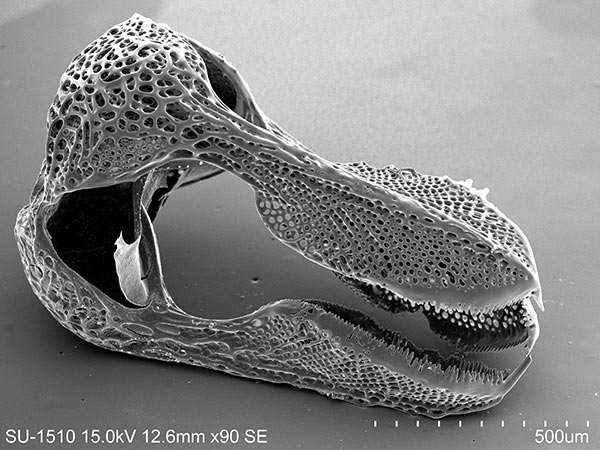
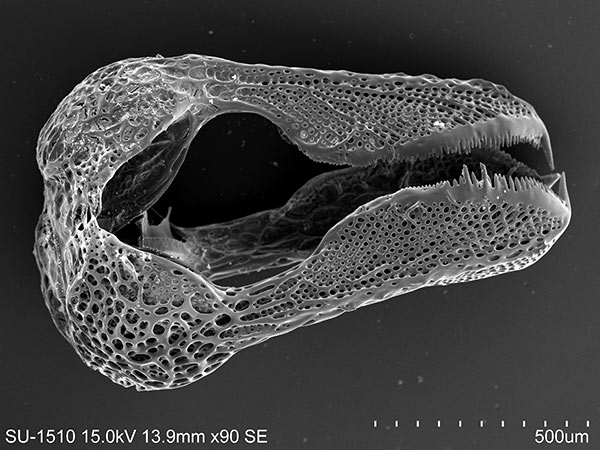
12-3 Linopneustes fragilis (de Meijere, 1902)
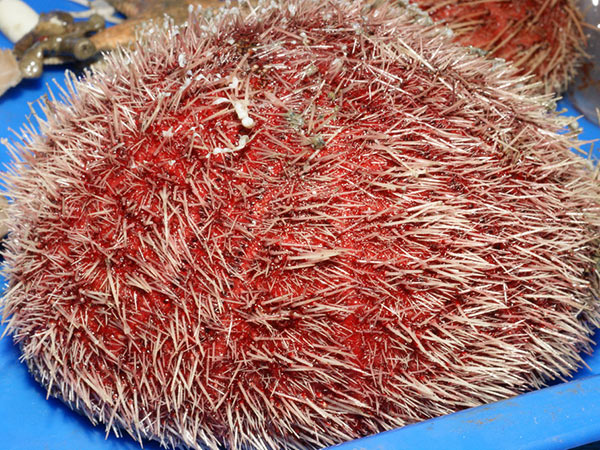
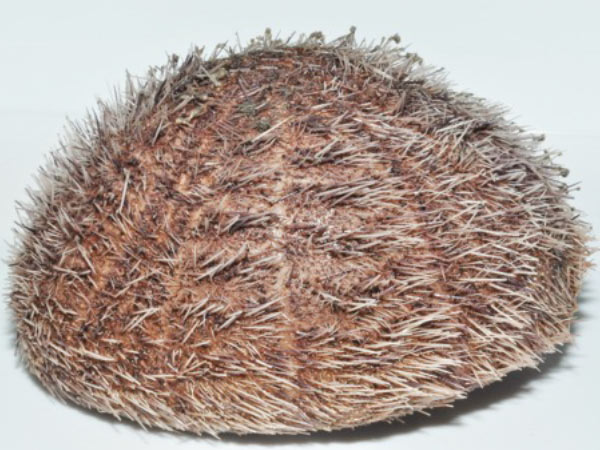
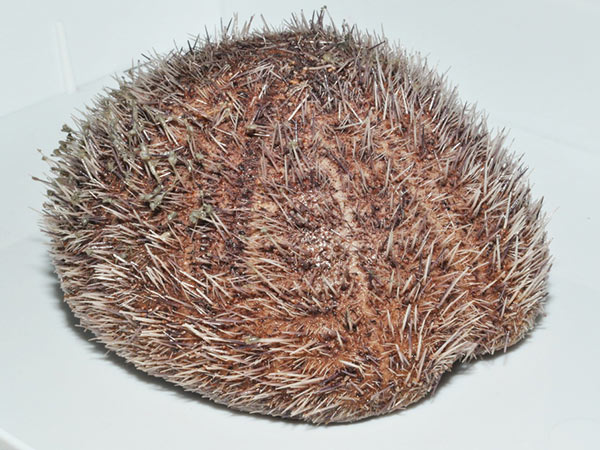
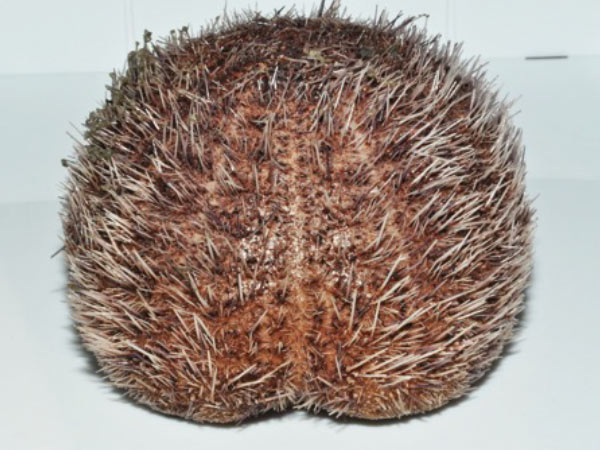
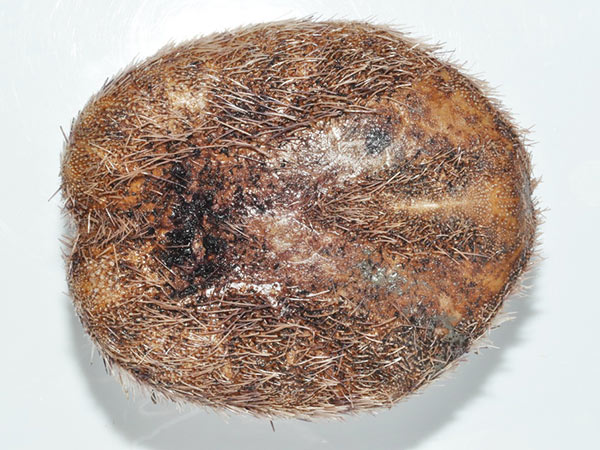
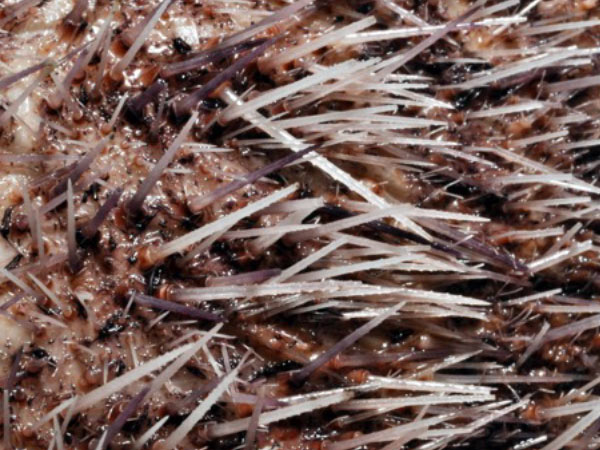
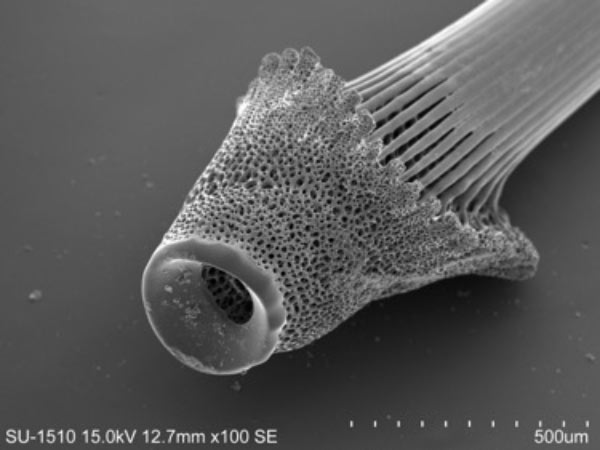
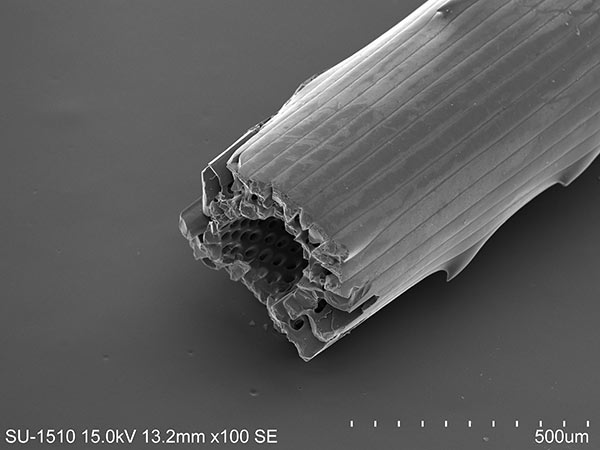
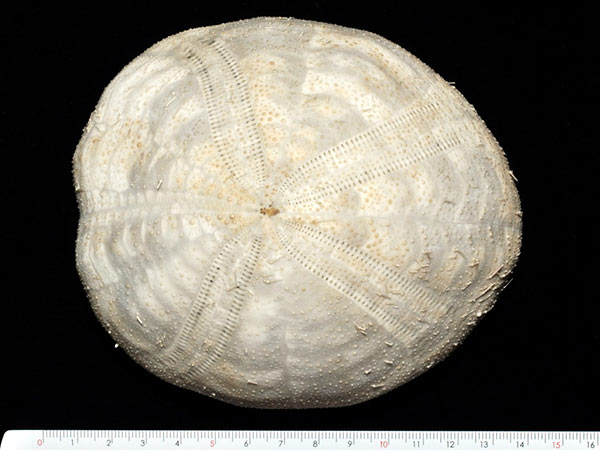
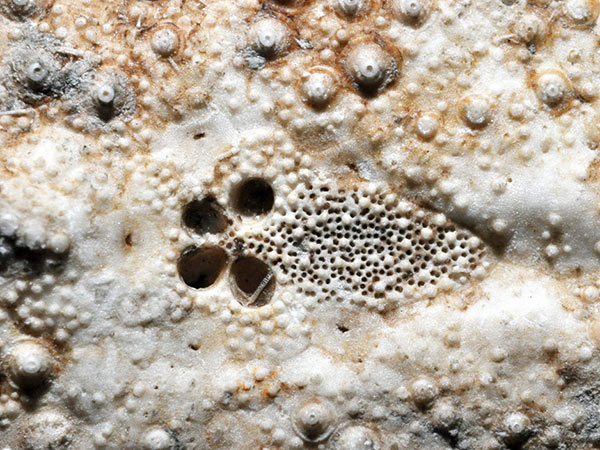
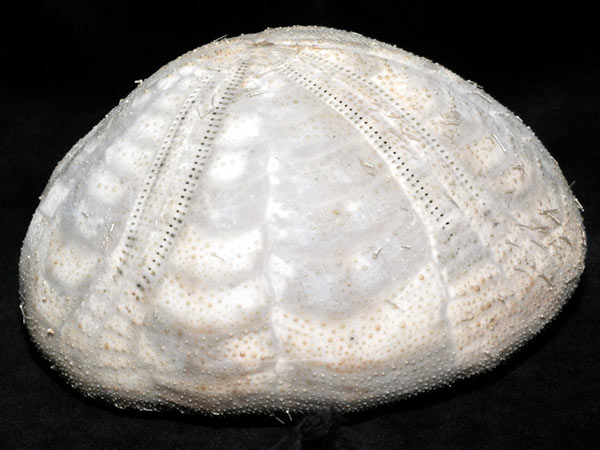
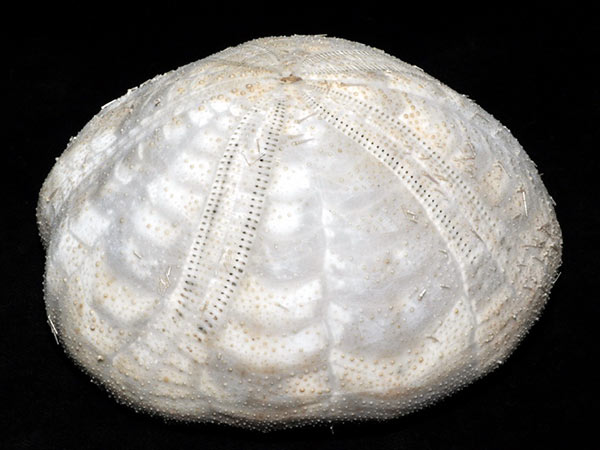
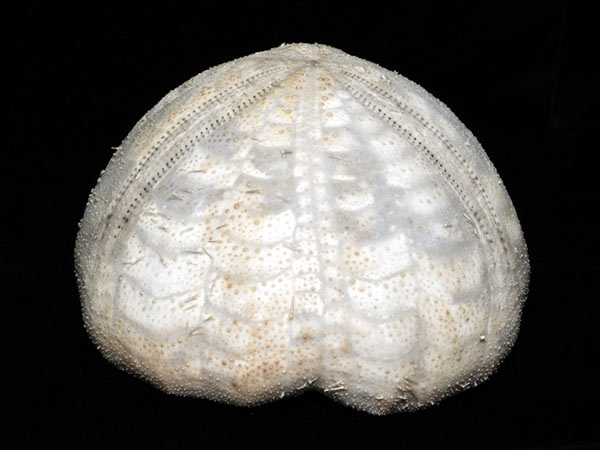
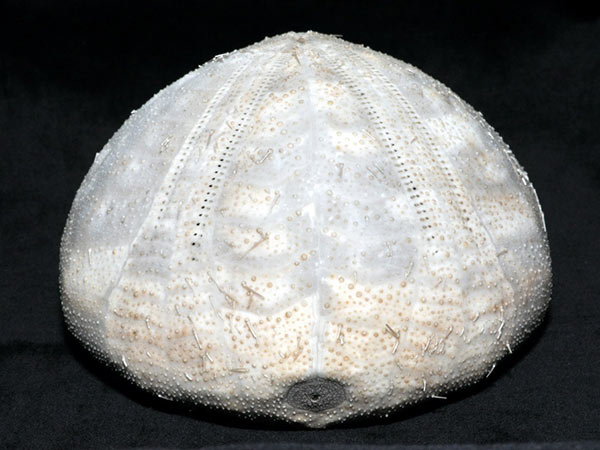
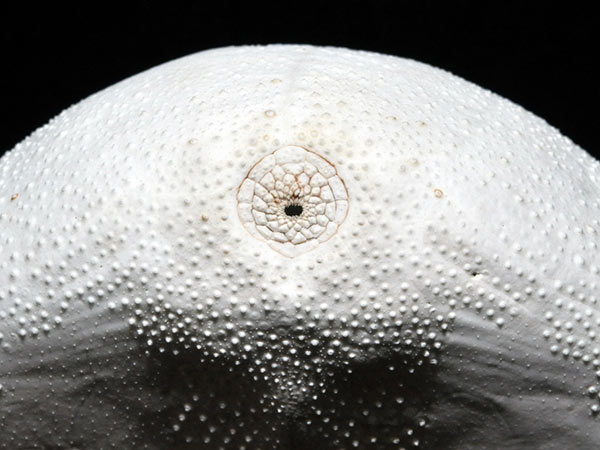
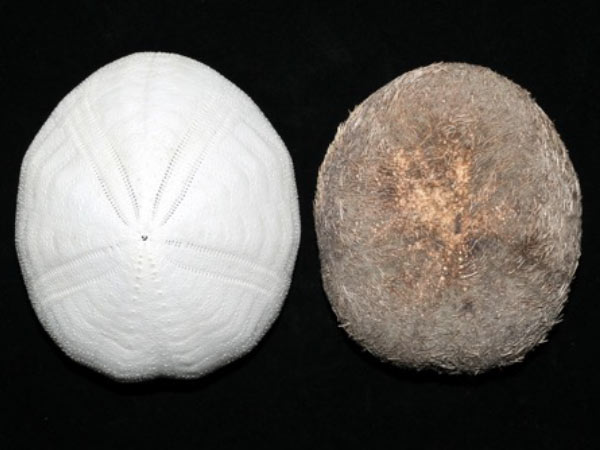
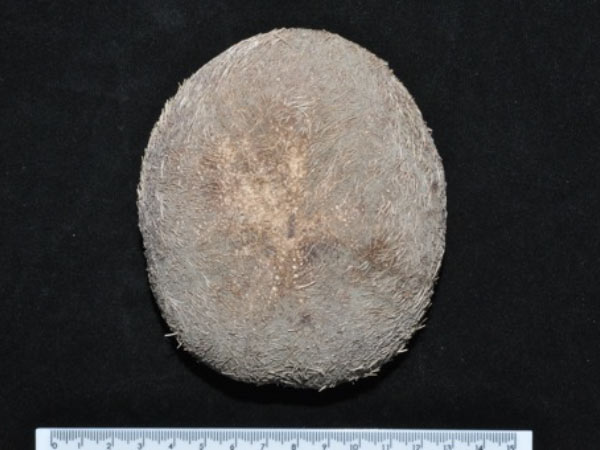
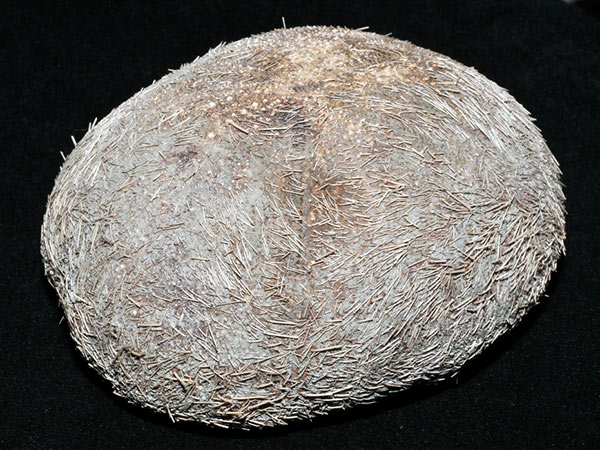
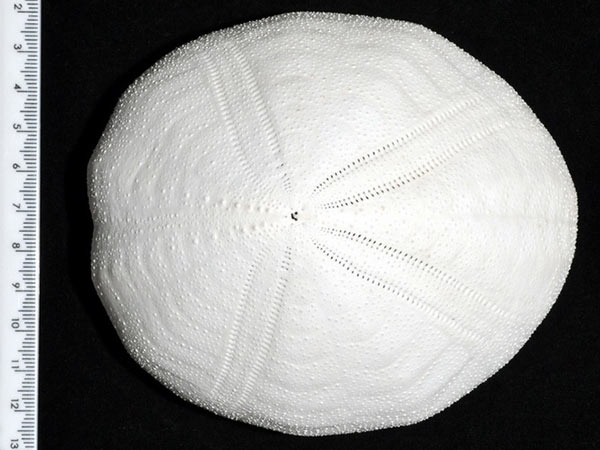
Linopneustes fragilis is a member of the Order Spatangoida and Family Eurypatagidae. Fresh specimens are reddish brown in color. The body surface is covered in fine, white, pointed spines. The length of the test can reach around 13 centimeters. This is a lopsided sand dollar. Looking down on the aboral surface it appears oblong oval in shape. The anterior end is blunt and slightly indented. The posterior end is slightly pointed. On side view, the aboral surface resembles a circular arch with high bulge. The center is slightly flat and highest in front. The apical system is located here and possesses four gonopores. In the back is an oblong oval-shaped madreporite.
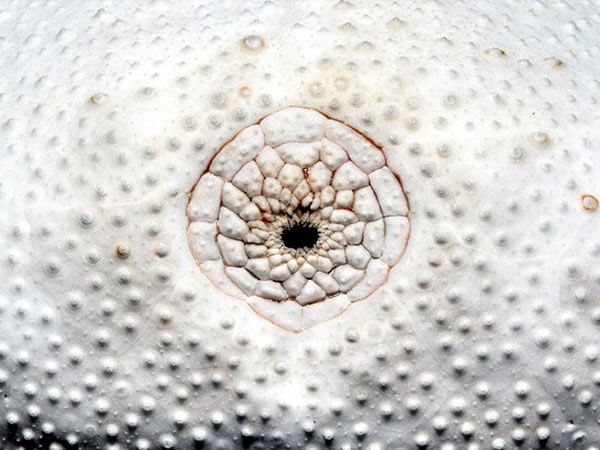
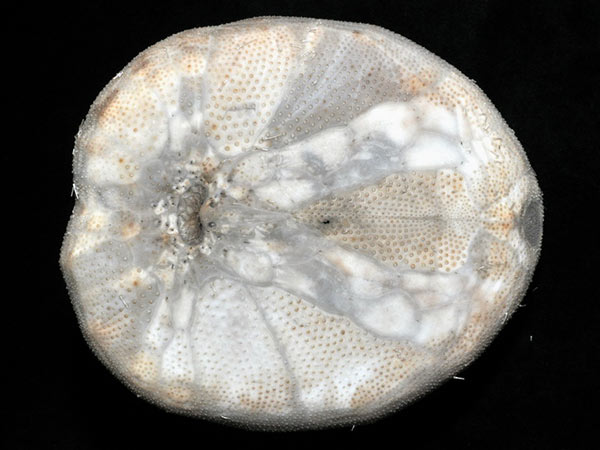
The test of this species is off white. The ambulacral zones on the aboral surface are narrow, while the interambulacral zones are very wide. On the anterior section the petal-shaped tube feet pore pairs have degenerated and almost disappeared. The posterior four tube feet pore pairs are well developed and arranged in straight, long parallel lines, extending out to the edge of the test. The tips of the petals are open. The surface of the test does not have any fascioles. The oral surface is flat and the mouth is located at about one-fourth the distance from the anterior end of the test. The mouth faces forward. In the front is a narrow half moon-shaped adoral zone. There is no subanal fasciole at the back of the oral surface. Although the test is large, it is thin and brittle, thus an intact specimen is difficult to obtain.
This species has a broad distribution in the Western Pacific region from Japan to the Philippines and Malaysia. It is found in deep seas at depths of 500-1200 meters in the eastern, southwestern and northeastern parts of the South China Sea. It has been collected and recorded on silted sea floor at depths of 675-1170 meters. It occurs in large numbers in deep seas off of southwestern Taiwan. As it prefers to inhabit deeper waters, it is not easily collected by fishing boats.