12-2 Breynia elegans Mortensen, 1948
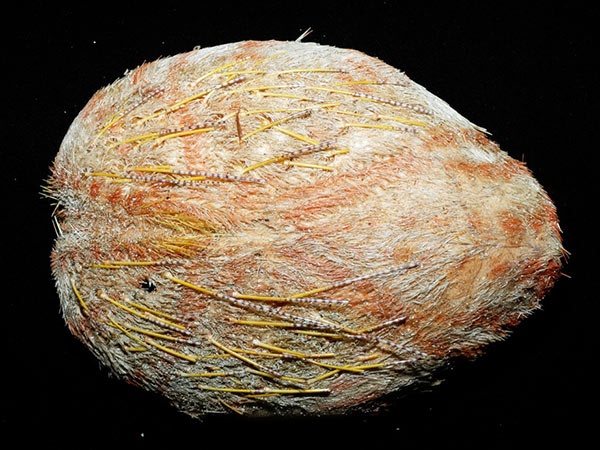
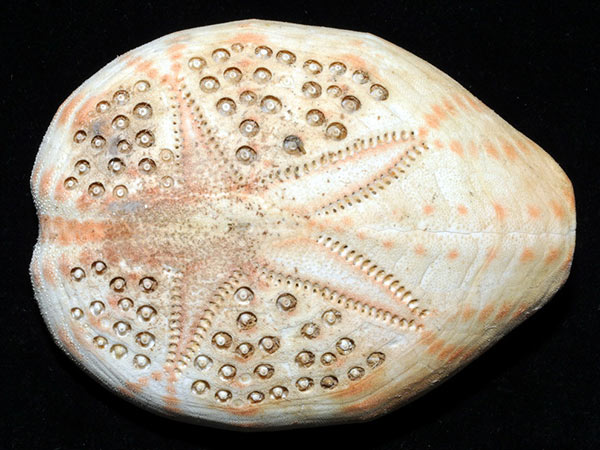
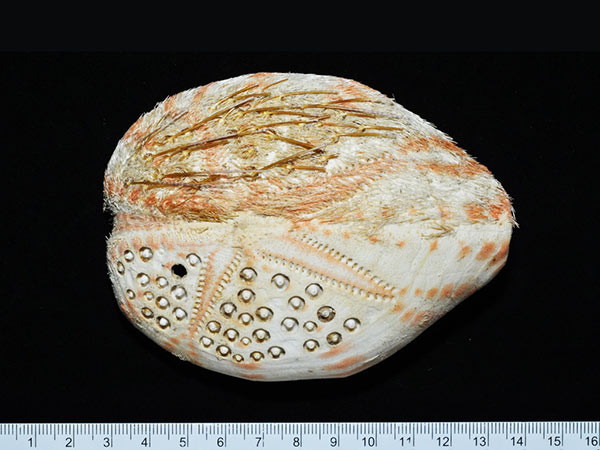
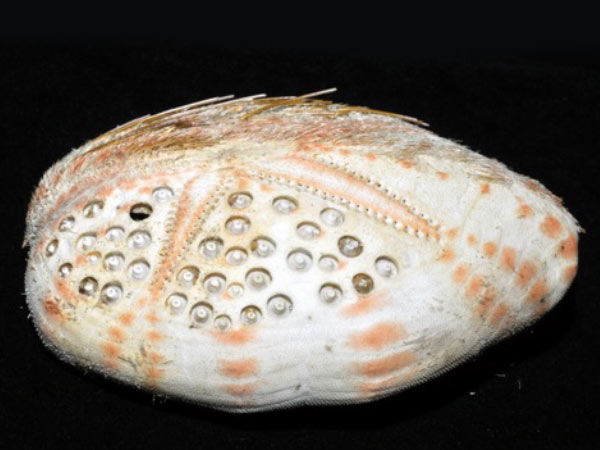
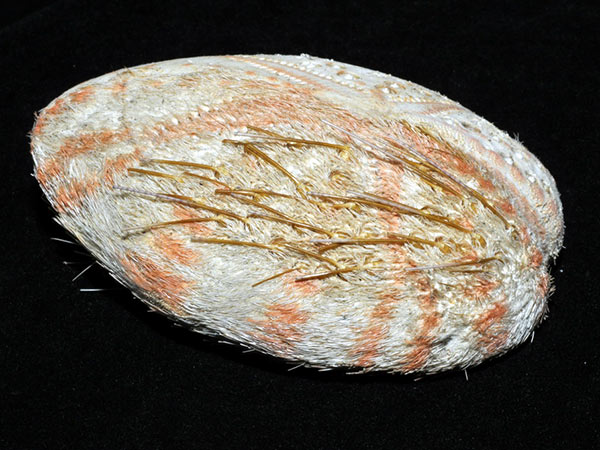
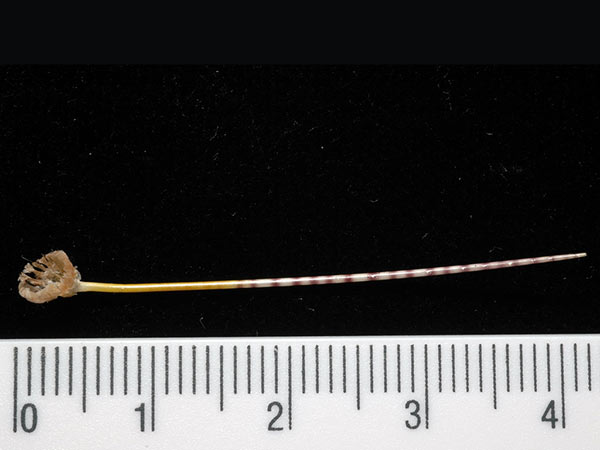
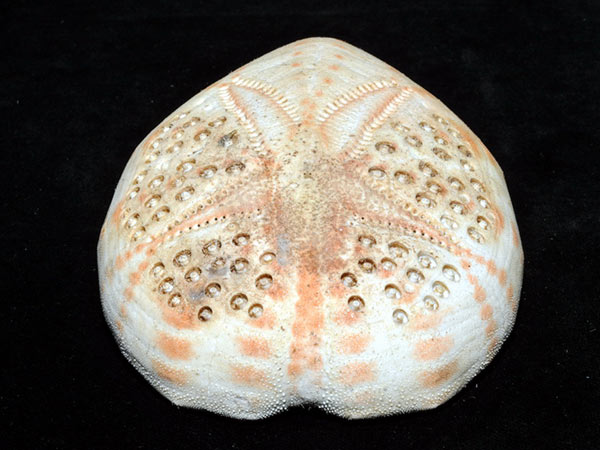
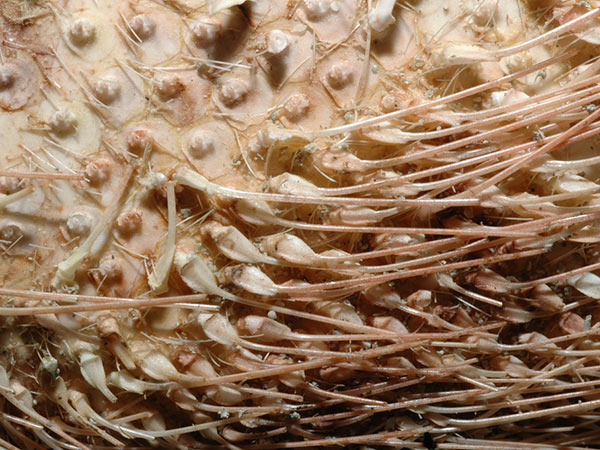
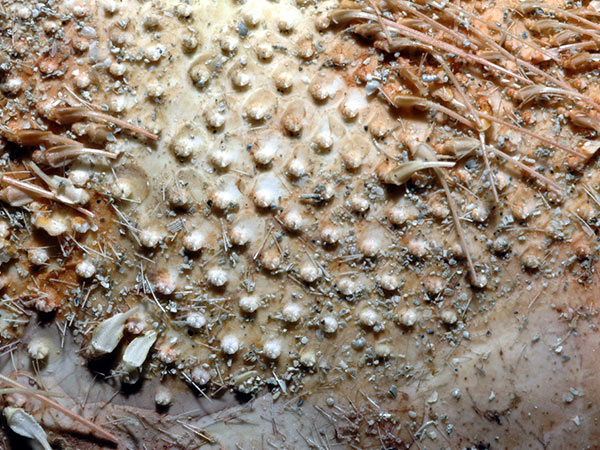
Breynia elgans is a member of the Order Spatangoida and Family Loveniidae. It is a large Lovenia sea urchin. The test can reach a length of 13 centimeters or more. The surface of the test is covered in orange and white fine hair-like spines. In the center of the ambulacral and interambulacral zones are clusters of orange spines. On the anterior half of the aboral surface, four intrambulacral zones each possess 10-20 coarse, thin and long primary spines with posterior extension. The base of these spines is yellowish orange. The upper half to two-thirds possesses alternating brown and white bands. These primary spines are surrounded by large tubercles with deep indentations in the test. This is one of the characteristics of Lovenia sea urchins. On the sides of the oral surface, the primary spines are long and thin. They are specialized at the base and flat. Below, the connecting large tubercles protrude and possess a specialized spiral shape, which is unique.
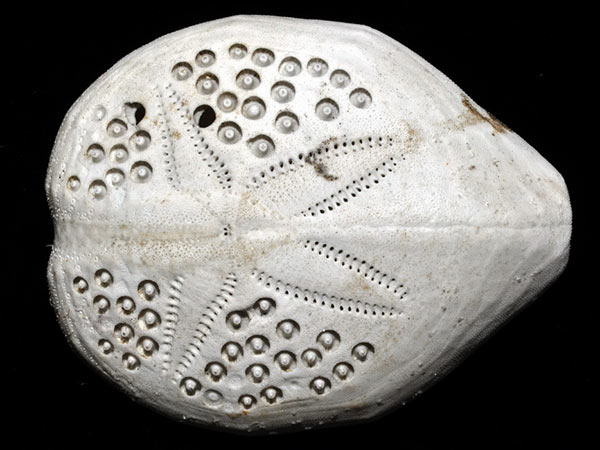
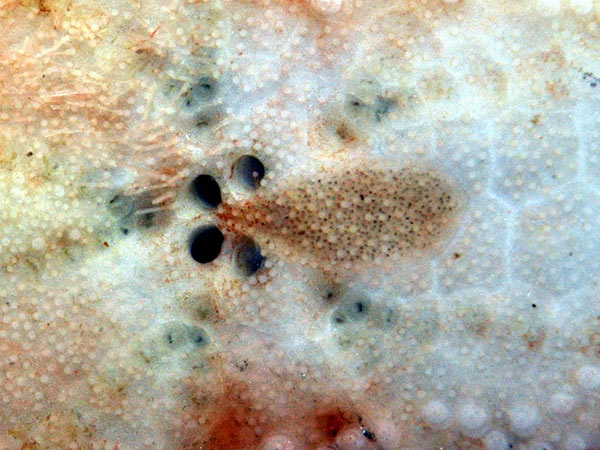
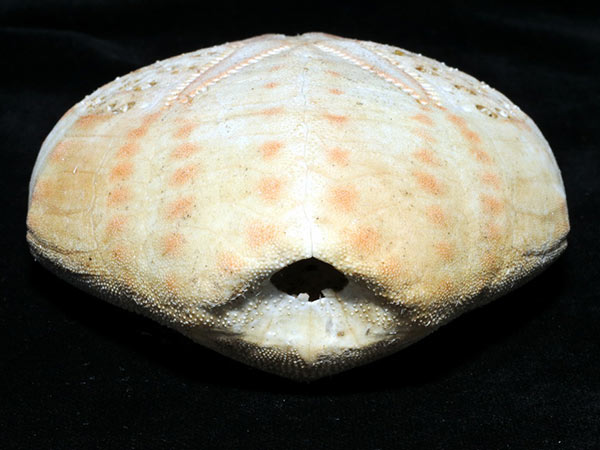
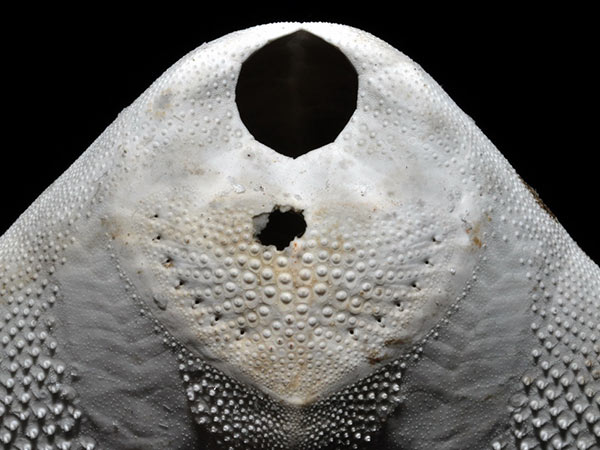
The anterior end of the test is slightly indented. The midsection is the most inflated. The test becomes gradually pointed as it extends toward the posterior end. On side view it resembles a flattened droplet. The anterior end is blunt and the posterior end is slightly pointed. The upper part of the aboral surface and the oral surface are equally flat. In fresh specimens, the test is white. In the centers of the ambulacral and interambulacral zones are clusters of orange spotted plaques corresponding to the locations of orange spines. If rinsed thoroughly or in an older individual that has died, the test is white. The anterior end of the aboral surface is slightly indented. There is degeneration of the ambulacral tube feet pores toward the anterior end. There are four pairs of ambulacral zone tube feet that are obvious on the posterior section, arranged in narrow four-petal formation. The apical system possesses four gonopores. The madreporite is oblong oval in shape and located behind the gonopores. Next to that is a circle of peripetalous fascioles. The ends of the test are indented and include the periproct and anus.
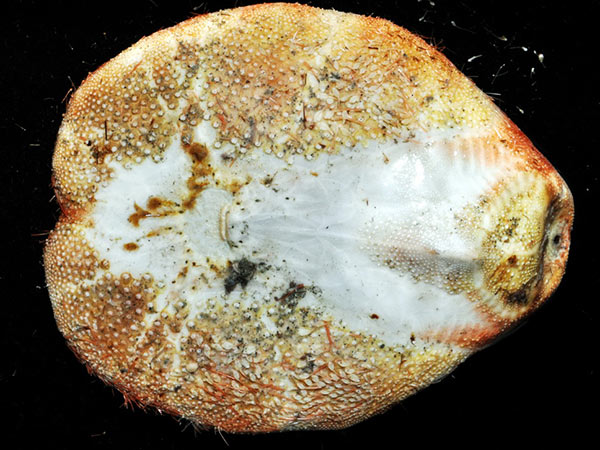
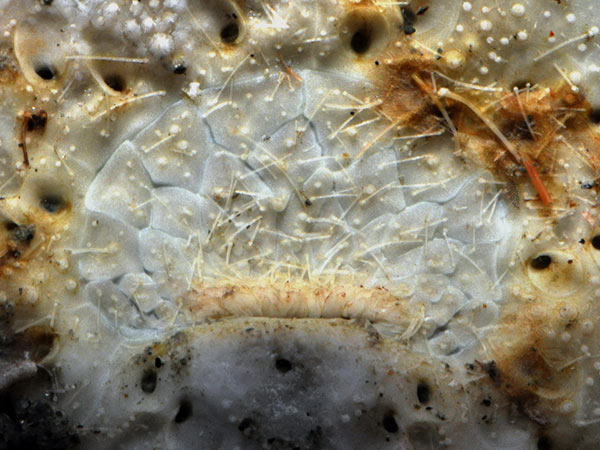
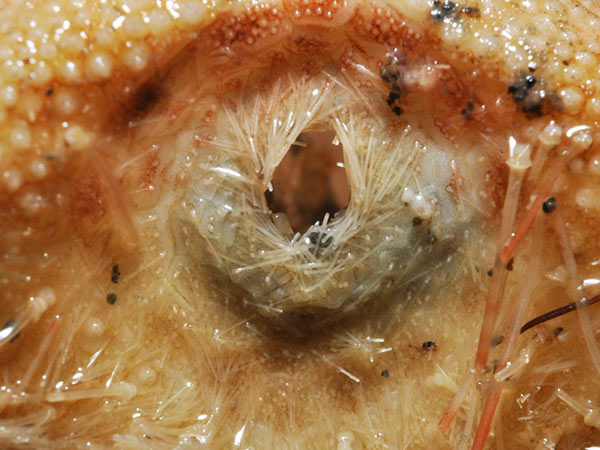
The oral surface of the test is flat. The mouth is located at about one-third the distance from the anterior end. The mouth faces forward. In front is a well-developed half-moon-shaped adoral zone. On the posterior end of the oral surface is peltate subanal fasciole with six pairs of tube feet pores.
This species is mostly collected during trawling. Therefore, there is no exact distribution information. The currently known distribution is in the East China Sea and in the waters near Penghu in the Taiwan Strait. It is found at depths of 100-150 meters. Although this species is not rare, no records of it have been found in China's formal marine organism directory or species research surveys and no papers have been published. As the test is large and has an unusual shape and due to the beautiful orange streaks and spines, it is often on collectors' wish lists and can be spotted for sale on online auction sites.