04-1 Echinothrix calamaris (Pallas, 1774)
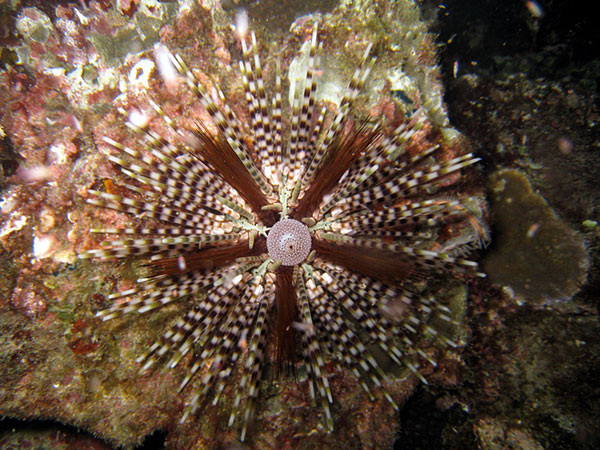
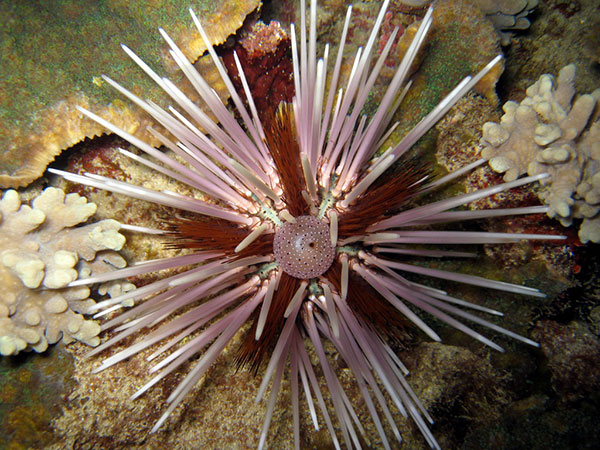
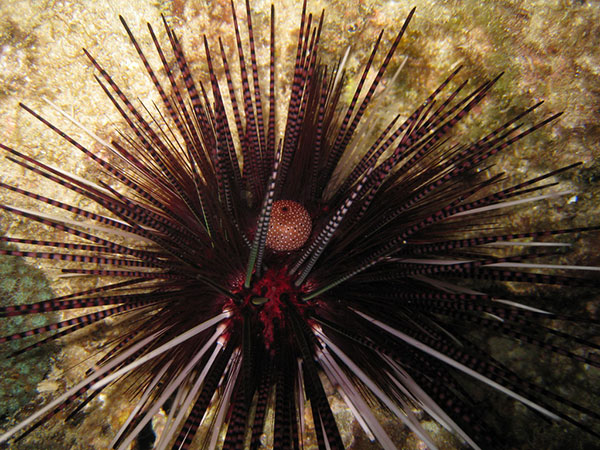
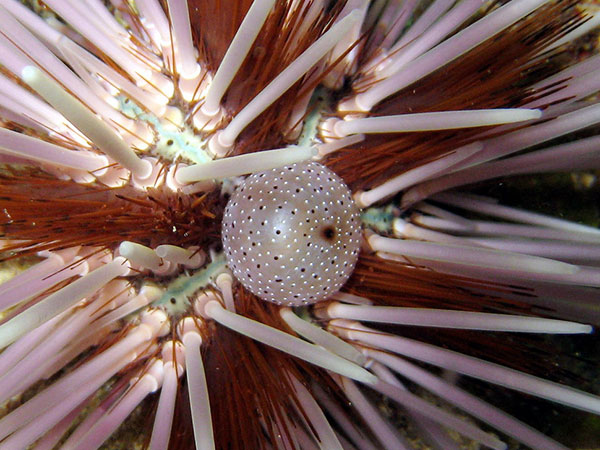
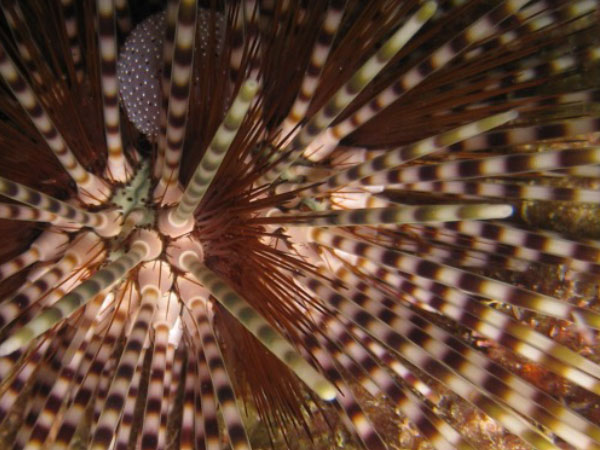
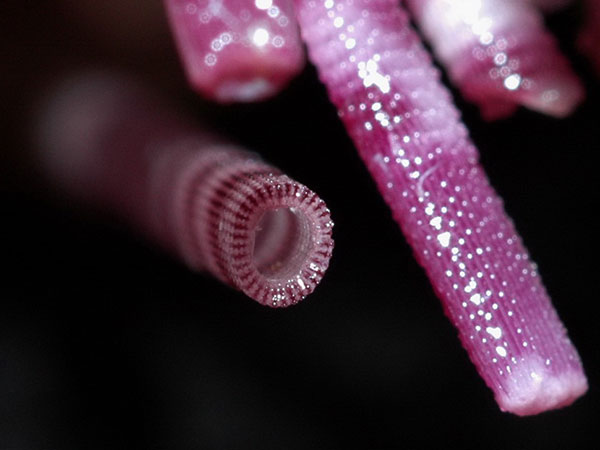
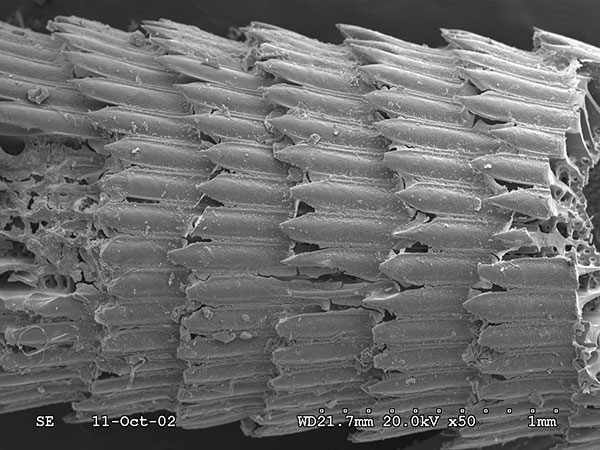
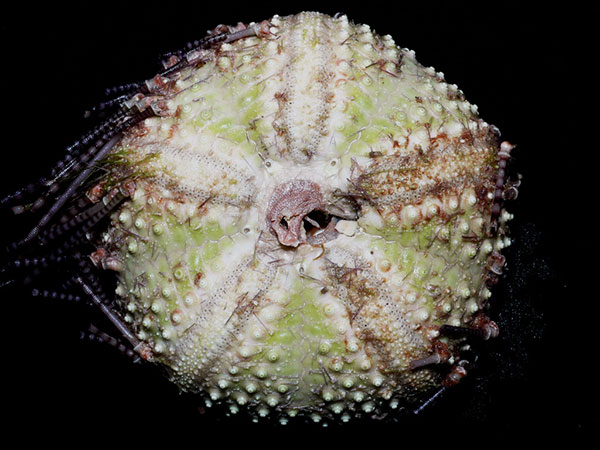
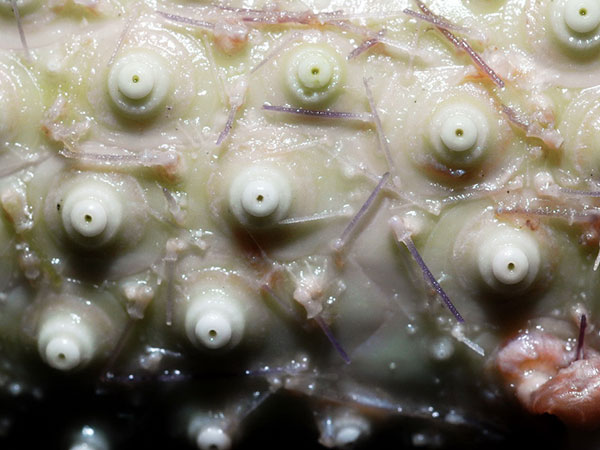
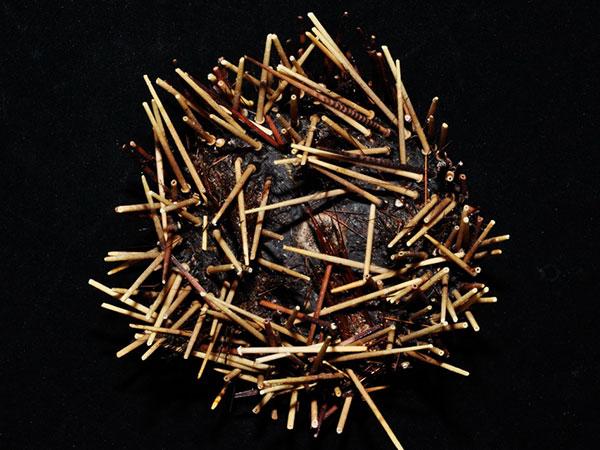
Echinothrix calamaris is a member of the Family Diadematidae of the Order Diadematoida. It inhabits rocky ocean bed at 0-70 meters in depth. It has two types of primary spines: thick and thin. In the interambulacral zones the spines are thick and longer and the tips are flat. They are white or with alternating black and white bands. The primary spines in the ambulacral zones are thinner and shorter. The tips are pointed and contain venom. They are dark brown in color. In the center of the aboral surface, the background color of the periproctal cone is orange with alternating blue and white spots, appearing like a bundle of colored ribbons. It is very eye catching. The diameter of the test is 8-10 centimeters. With its spines included it can reach 30 centimeters. In terms of tube feet pores, for every three pairs there is one that is arc shaped. In the ambulacral zones are two lines of large tubercles and two to three lines of irregularly arranged medium-sized tubercles. The ambulacral zones are narrow and the interambulacral zones are wide. Along the equator, there are 4-6 large tubercles on the interambulacral plates, arranged in regular horizontal and vertical lines. However, the horizontal lines are oblique. On the interambulacral plates on the aboral surface, the spines are hollow and brittle, and thus are easy to break off. The spines on the interambulacral plates on the oral surface are flat and dull at the tip.
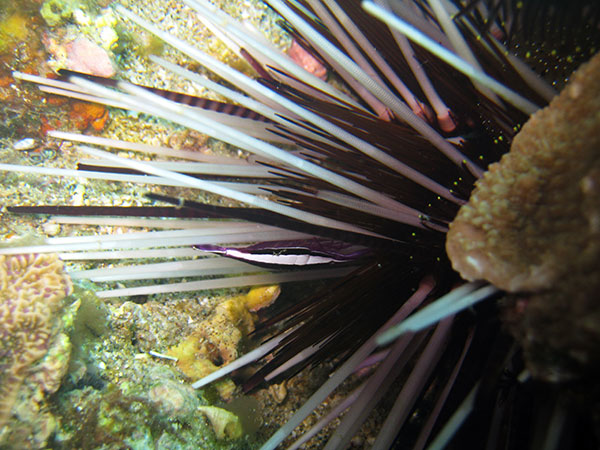
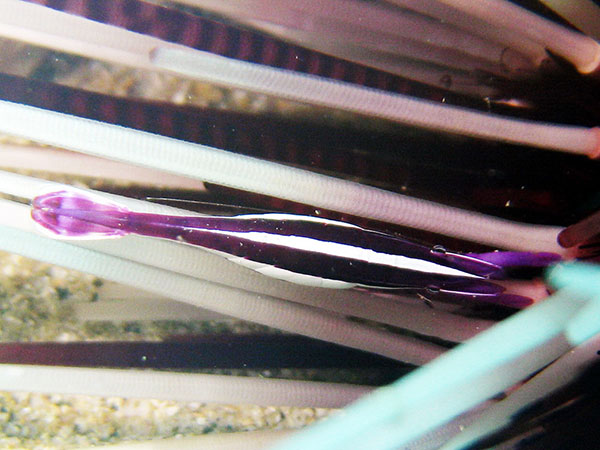
During the day, Echinothrix calamaris generally hides within rock caverns. At night, it scrapes algae off of rocks for food. It often appears on the protruding parts of the rocks. Among the spines it is possible to find purple and white striped needle shrimp Stegopontonia commensalis.
This species possesses a broad distribution in the Indo-Pacific region. It is also found in the intertidal zone to shallow waters in coral reefs and along rocky coasts all around Taiwan and its offshore islands.