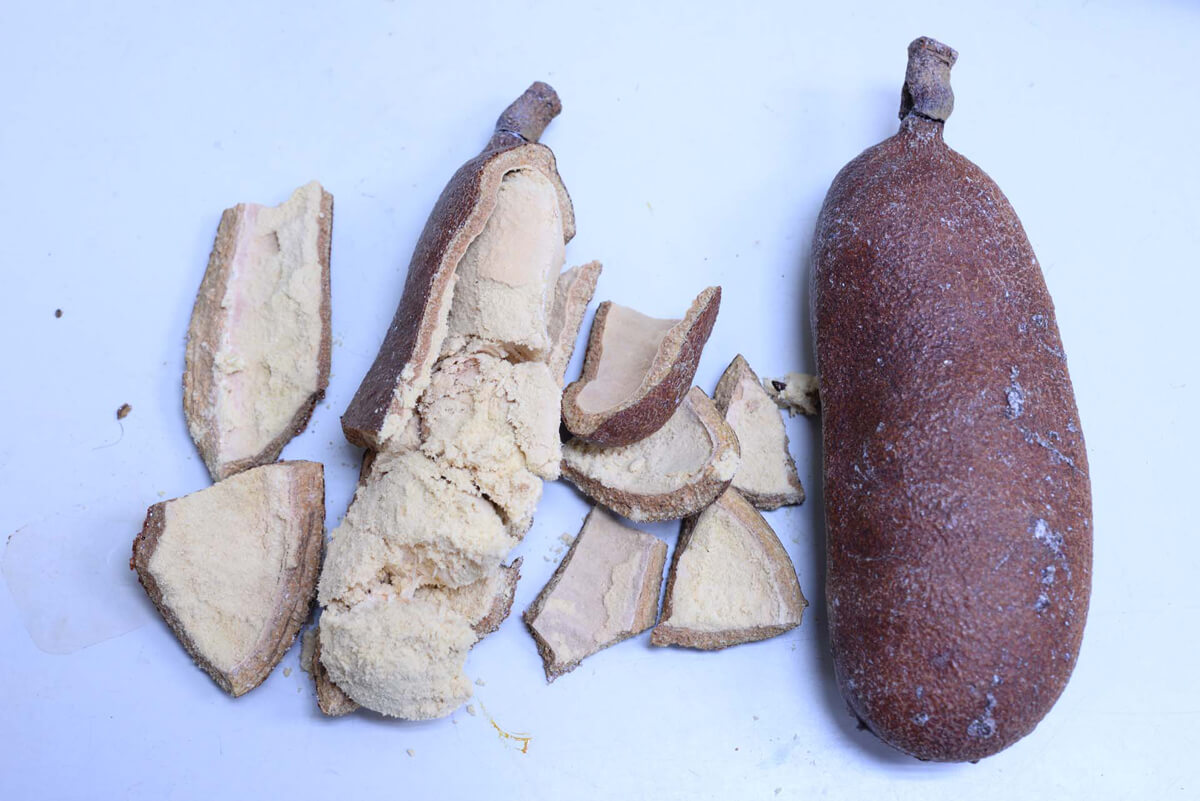
Hymenaea courbaril
Distribution: Native to Tropical America, it was introduced to Taiwan in 1916 where it is cultivated sporadically.
Morphology: Large evergreen tree. Bifoliate compound leaves; the leaflets are oblong-lanceolate, 4-9 cm, with narrow or acute apex, green shiny surface, oil-filled glands on the back, leathery texture. The flowers are yellow, gradually turning light yellow or white, sometimes with red or pink stripes, in terminal racemes or panicles. Petals are oblong or ovoid, with blunt apex, 10 stamens. The pods are ovoid oblong, rough, and woody, 6-10 cm, dark brown, pulpy, indehiscent. There are several seeds, oblong. Epigeal germination type. The primary leaves have two leaflets that are opposite.
Uses: As the wood is heavy and hard, it is used in the building of structures, furniture, and machinery. The pulp is edible and mixed with water to make atole liquor and beverages. It is a raw material in the making of Resina de Cuapinole, Brazil copal. It is also used as a medicine, insecticide, and spice. Ornamental.