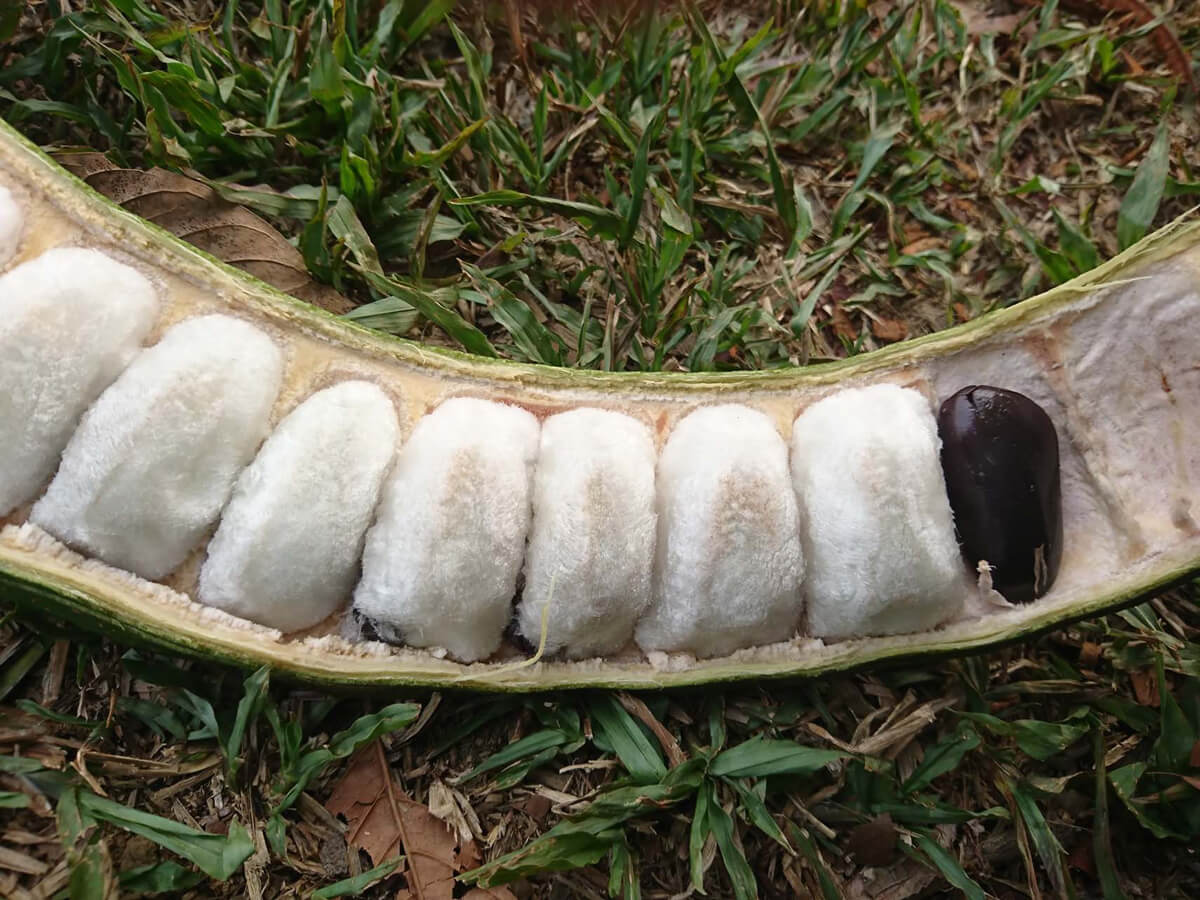
Inga edulis
Distribution: Native to Mexico and areas south of Panama. In Taiwan, it was introduced as a horticultural fruit tree.
Morphology: Large evergreen tree. The leaves are even-numbered and pinnately compound; 2-6 pairs of leaflets, with wing-like rachises, shiny, and around 15 cm long. The flowers are small, white, fragrant, and borne on spikes that are 10-20 cm long. The pods are slender, quadrangular, up to 20 cm long, with white sap. They dehisce when mature. The seeds are oblong, black, covered in white pulp (aril), and have a sweet taste.
Uses: The flesh of the fruit is sweet and eaten by indigenous peoples. It is often sold in local markets. The roots have nodules that fix nitrogen and increase soil fertility. They are the best shade trees for coffee and tea plantations.