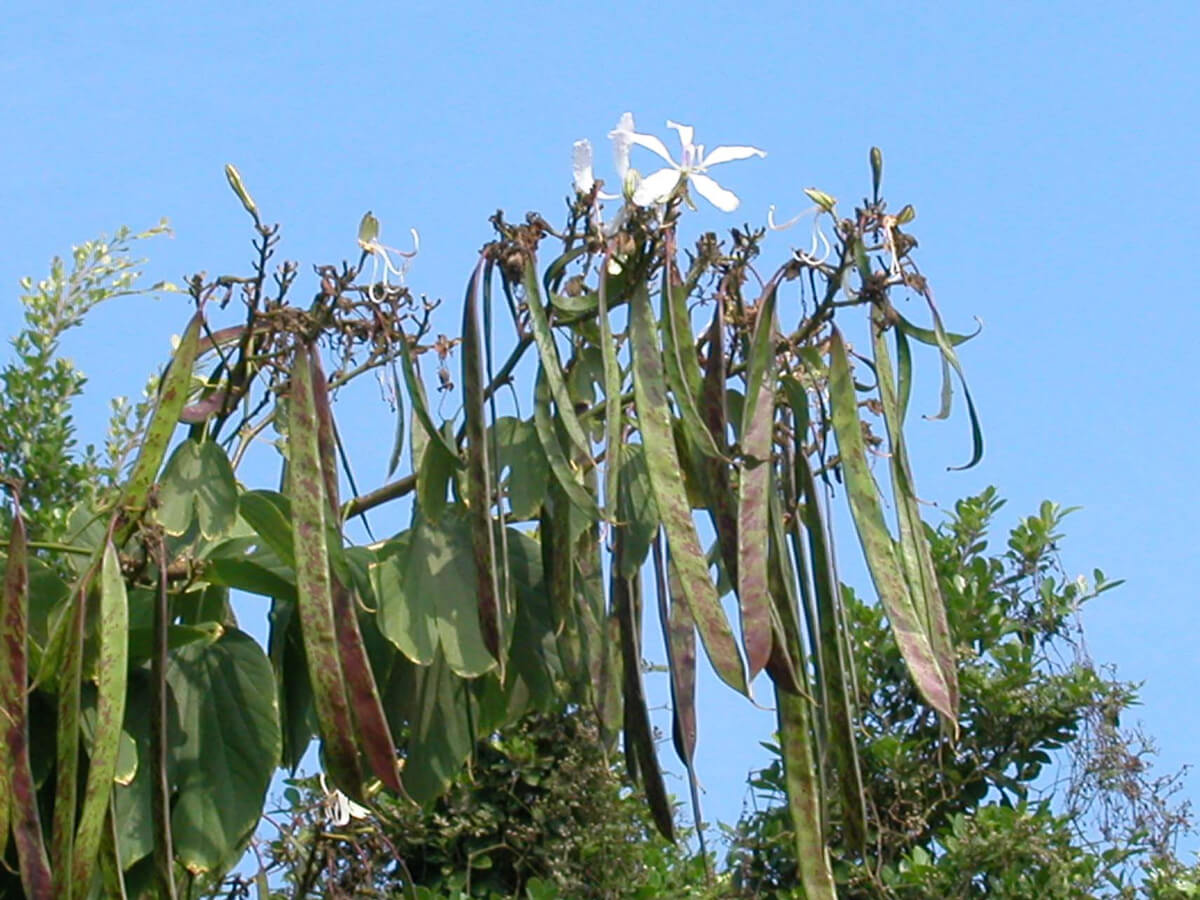
Phanera purpurea
Distribution: Native to India, Sri Lanka, and southern China. It was introduced to Taiwan in 1903 and is widely cultivated here.
Morphology: Small, deciduous tree. The leaves are simple, ovate, oval, or oblong, 7-10 cm, bilobed at the apex, lobed for 1/3-1/2 of the total length, round at the base. The flowers are conspicuous to light pink in terminal or axillary racemes, 6-12 cm long. The flowering period is from August to September. There are 3-4 stamens. The pod is band-shaped, 10-30 cm, flat, dehiscent when mature, and contains 12-15 seeds. The seeds are nearly round, flat, 0.8-1 cm, brown. Semi-epigeal germination type, primary leaves are simple and alternate.
Uses: The wood is used in crafts making, farm tool making, and construction. The bark contains tannins and natural rubber. The young leaves and bark are used medicinally. The leaves are used as fodder. The flowers and flower buds are eaten by indigenous peoples. The root bark is very toxic and should not be eaten. The trunk is used as raw material for rubber. The leaves are unique in shape and the flowers are large and beautiful. It is an ornamental garden or shade tree.