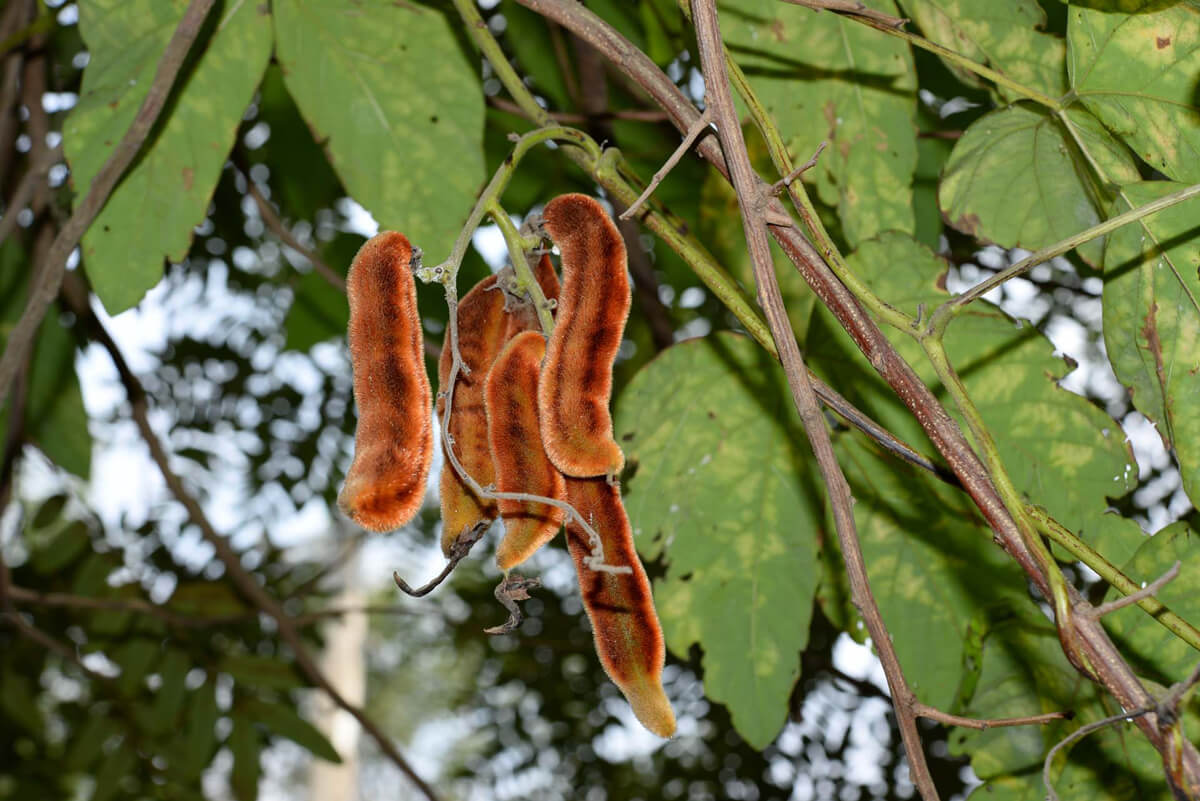
Stizolobium pruriens
Distribution: Native to tropical Asia. It was introduced to Taiwan where it is cultivated as an edible legume crop.
Morphology: Large, semi-lignified, climbing, herbaceous plant, annual or perennial. The branches are slender and densely covered in hairs. The leaves are tripinnate and compound. The leaflets are oval, with acute apex, 7.5-10 cm long. The terminal leaflet is slightly smaller, the lateral leaflets are unequal in shape and covered in silvery hairs on the dorsal side. The flowers are dark purple, slightly large, borne on drooping rachises, forming racemes. The pods are S-shaped, 5-7.5 cm long, densely covered with bristles that can cause itching if they come in contact with the skin, and contain 4-6 seeds. The seeds are oval, flat, purple with black spots. The hilum is raised, white, and less than 1/2 the length of the seed.
Uses: Once the toxic hairs are removed from the young pods, they can be finely chopped, boiled, and eaten. The mature seeds are toxic but can be eaten after being peeled and cooked thoroughly by boiling to remove the toxins. The pod hairs are used medicinally to expel roundworms and tapeworms. The roots, pods, and seeds are used medicinally. The stems and leaves are used as livestock forage, green manure, and mulch.