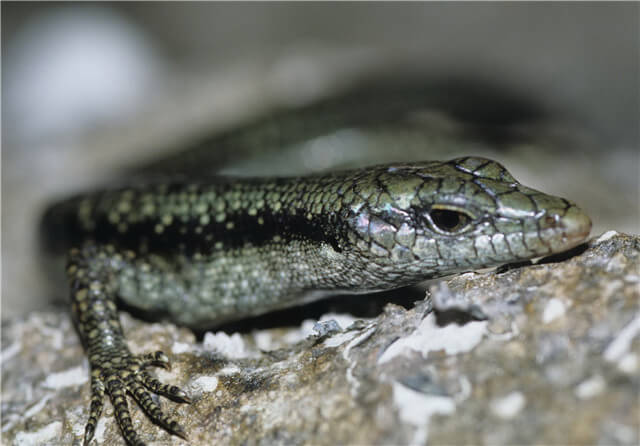
Coastal skink
Diet: The coastal skink (Emoia atrocostata) feeds on cicadas, ants, crabs and some invertebrate animals that inhabit coral reefs. As they are active in coral reef areas, they also eat the remains of fish and shrimp.
Characteristics: This is a typical tropical skink. The body is black with scattered, small, white dots along the back. The eyelid is a transparent "window" scale. The body is slender and long, well suited to climbing through cavities in coral reefs. This species does not hibernate in winter and can be seen year round. It is not active when the sun is strong, but rather in the morning and evening.
Habitat: The habitat of the coastal skink is mainly coral reef areas along the coast. It is possible to spot this species all around the island. This skink prefers areas of coral reef that are not submerged under rising tide.
Movement: This species of skink can move quickly and well, especially on sharp coral reef, without being injured.
Reproduction: The reproductive season of the coastal skink is from March to August. Two to three eggs can be laid at one time, but the usual number of eggs in a clutch is two. A female can lay eggs at least twice per year. As this species lays its eggs in coral reef cavities, they are not likely to be eaten by Mabuya longicaudata or Oligodon formosanus, especially as these species are not active in coral reef areas. Their fat bodies are used during reproduction. Following reproduction, they consume large amounts of food to store up energy for the next reproductive season.