10 Tripneustes gratilla (Linneus, 1758)
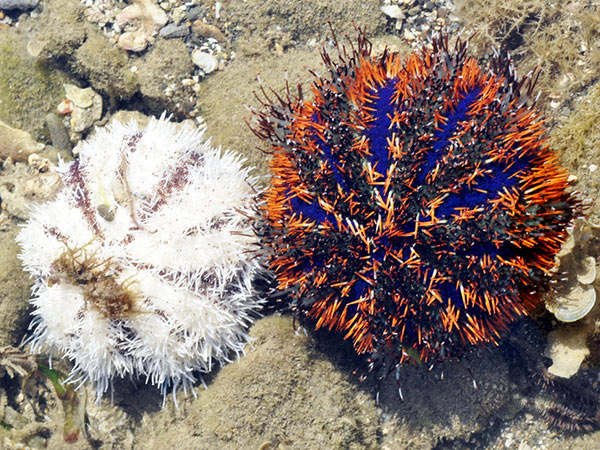
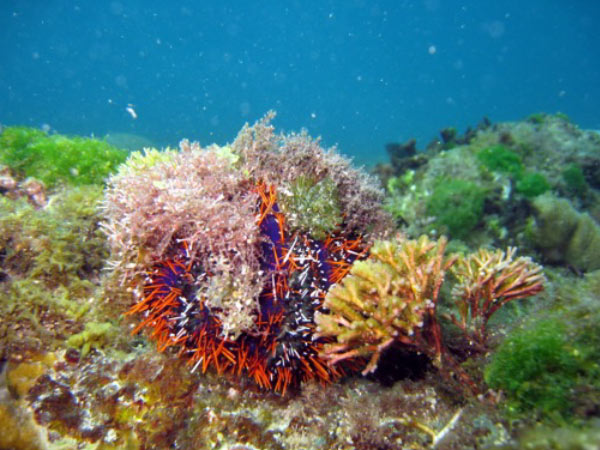
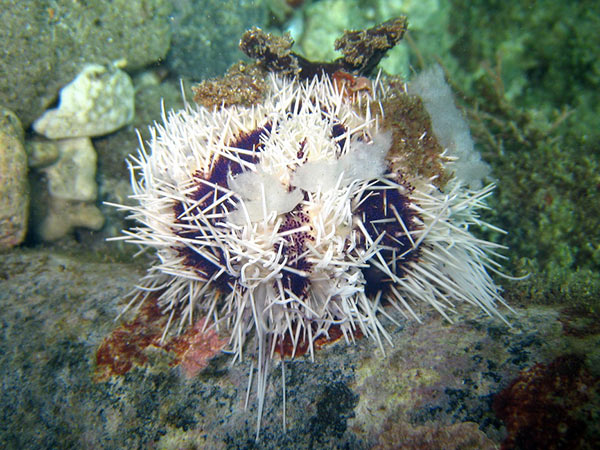
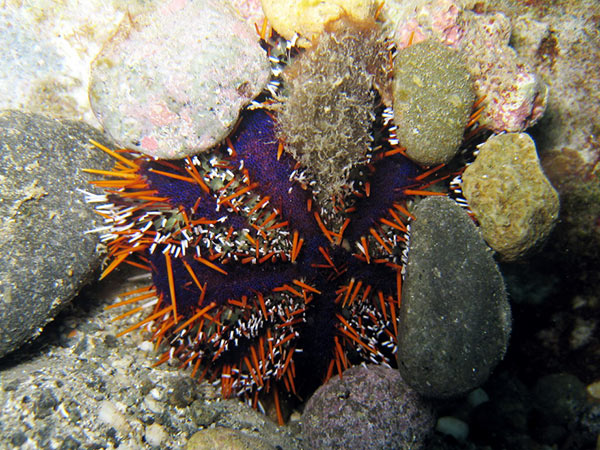
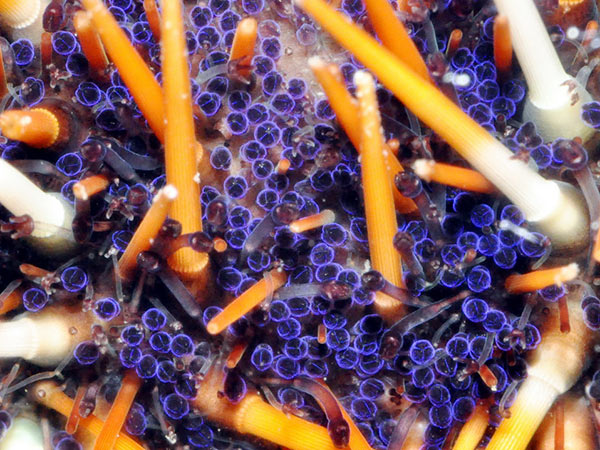
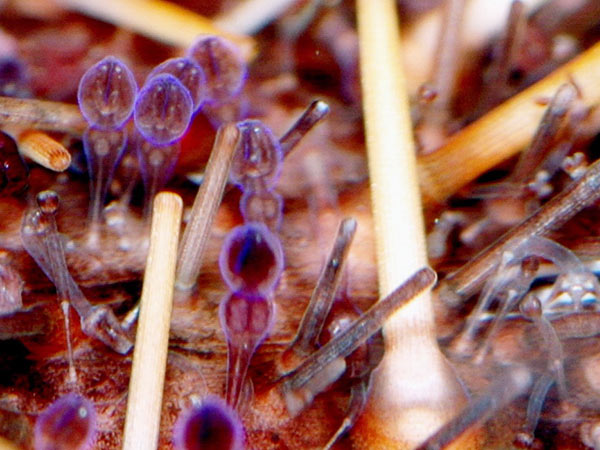
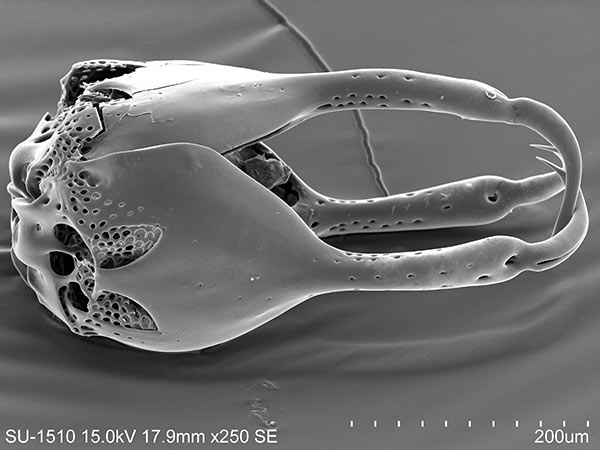
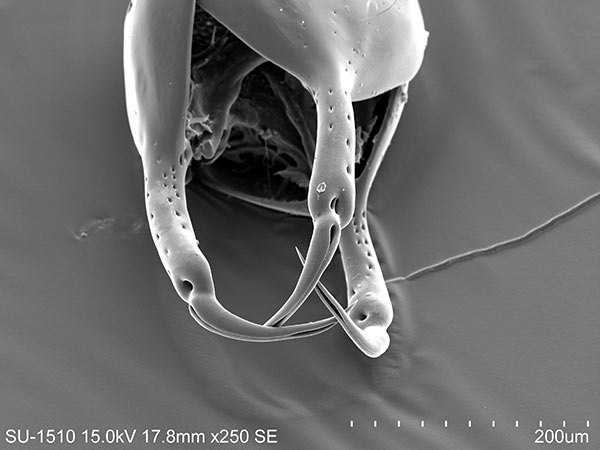
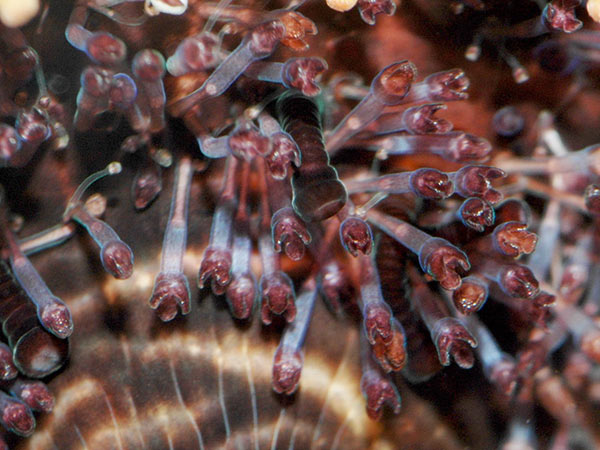
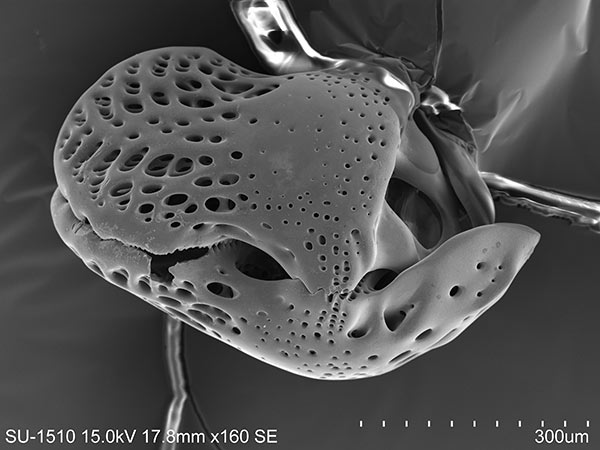
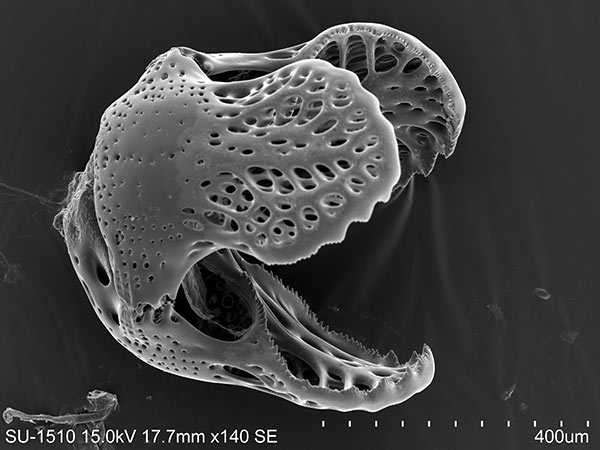
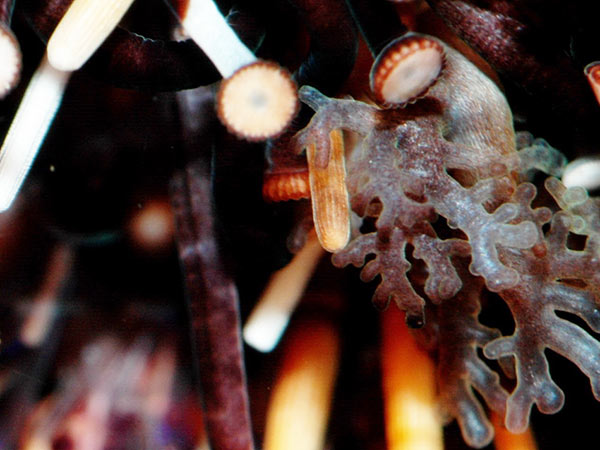
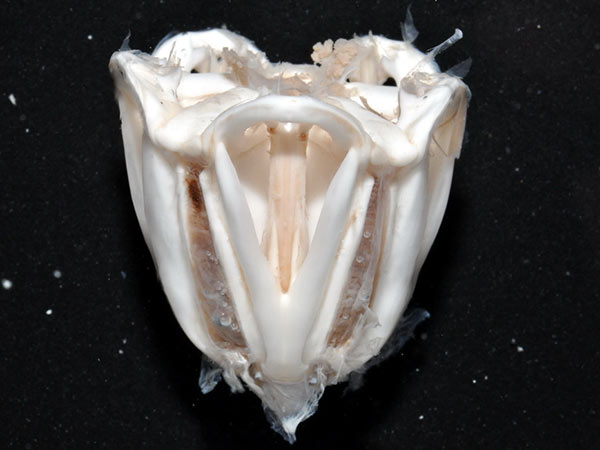
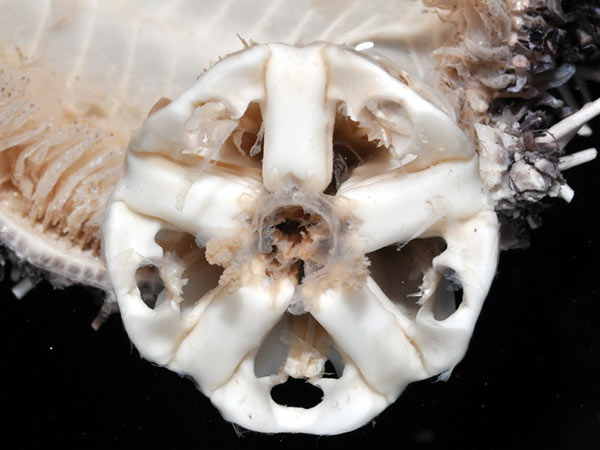
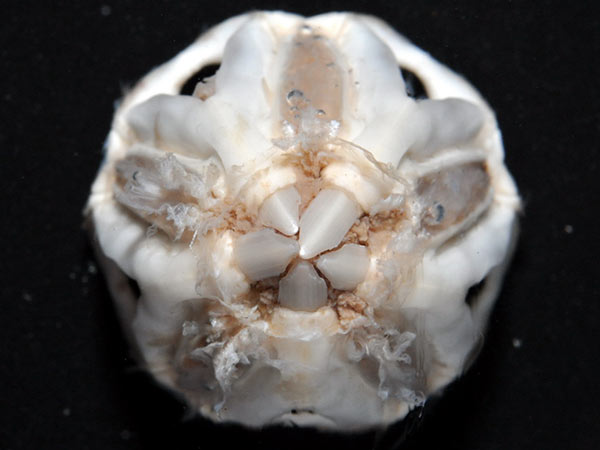
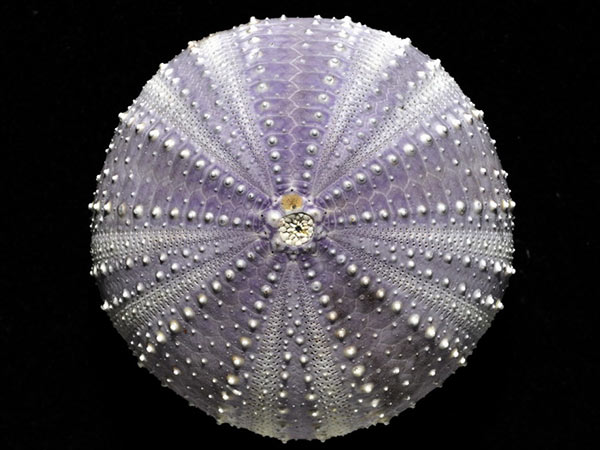
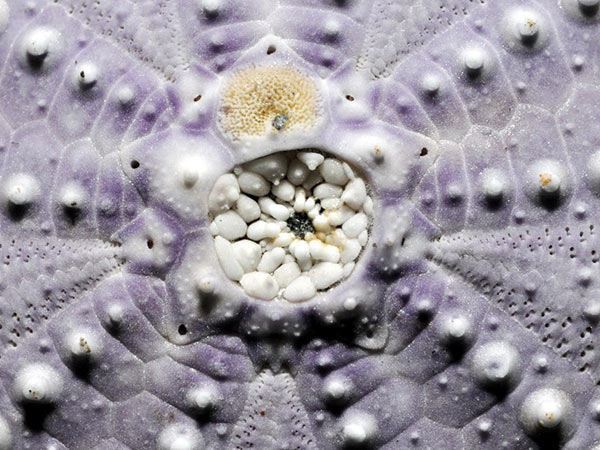
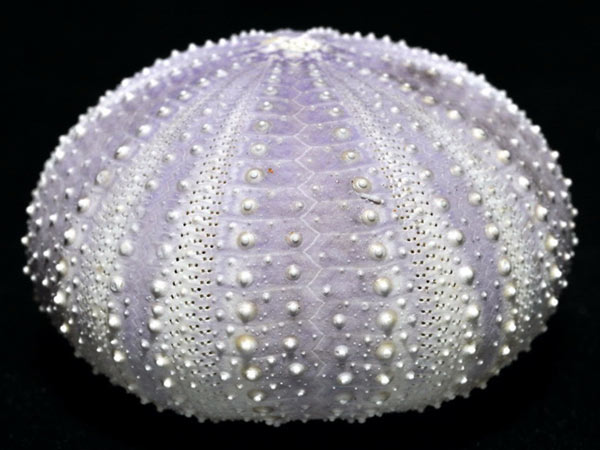
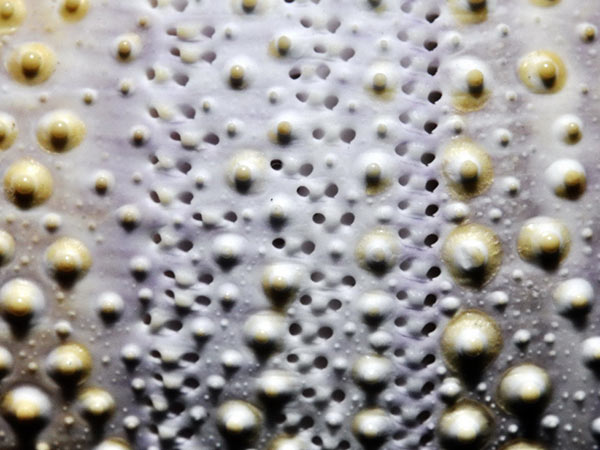
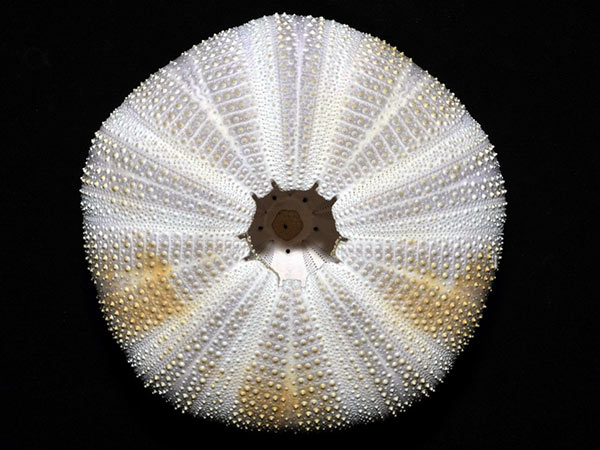
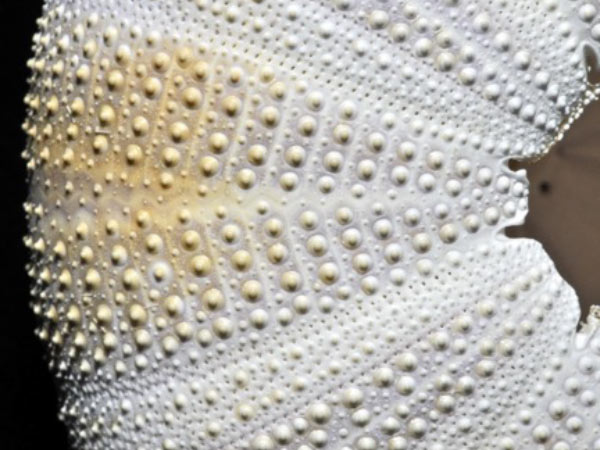
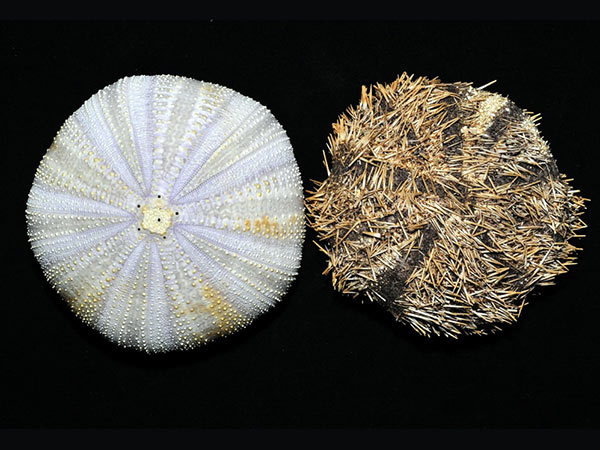
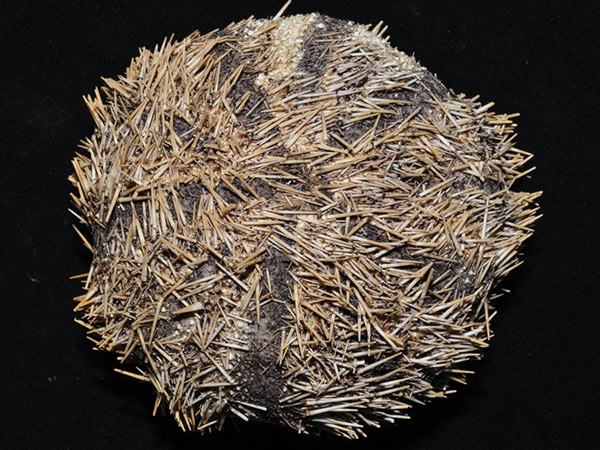
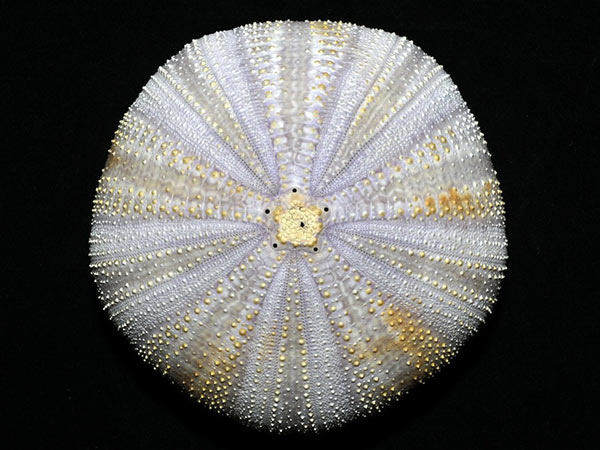
Tripneustes gratilla is a member of the Order Camarodonta and Family Toxopneustidae. It was once known as the horse dung sea urchin. This is a large sea urchin. In adults, the test can reach a diameter of around 12 centimeters and a height of five to six centimeters. In the interambulacral zones, there are six to eight irregular lines of primary tubercles along the equator. The primary spines are short and thin, with relatively blunt tips, thus they are not much of a threat to humans. They are generally white or reddish orange in color. The primary spines on the aboral surface are short and pointed, measuring about one centimeter in length. There are fine lines on the surface. The primary spines on the oral surface are slightly blunt. The surface of the test is purple, but there can be large variation. In smaller individuals, the color of the test is deeper. There are wide areas of the interambulacral zones that are exposed. These are filled with purple, venomous, spherical pedicellariae.
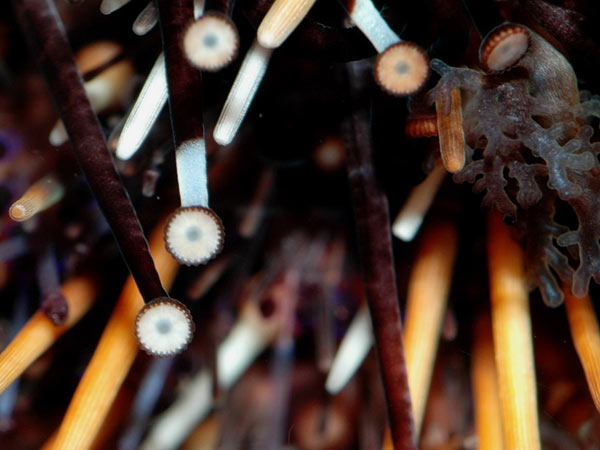
This sea urchin species inhabits coral reef and rocky areas and is often seen in tide pools and in shallow waters along the shore at depths of within 10 meters. (On Xiaoliuquiu, it is present in clusters of seaweed). It mainly feeds on large algae and can take in food very quickly. Its tube feet have strong suction. This sea urchin often covers itself in algae and debris. In Taiwan, its reproductive season is August to September (Chen, 1989). The gonads can be eaten, as when mature they are plump and flavorful. In Japan, this is referred to as sea urchin roe paste.
The distribution of Tripneustes gratilla is the Indo-Pacific region. In Taiwan, it is found along the northeastern cape and in the waters off of Kenting, as well as along the offshore islands such as Penghu, Xiaoliuqiu, Green Island and Lanyu (Orchid Island).