作品賞
春天的腳步近了
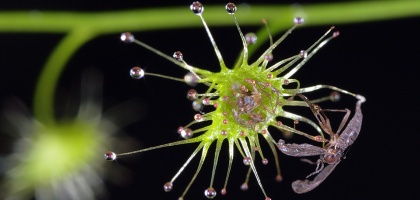
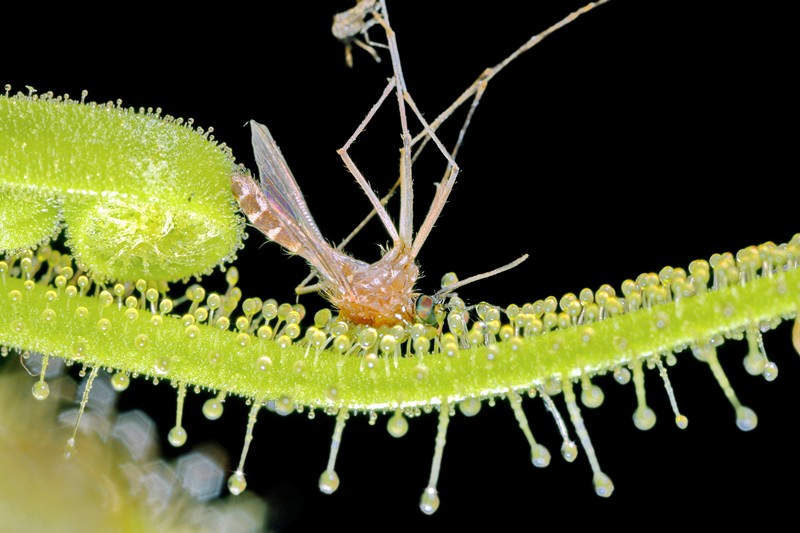
大自然總是充滿著驚奇!食肉植物常生長在沼澤地,演化出捕食動物的機制以補充土壤缺乏的元素。不會移動的植物是如何捕捉會跑的動物呢?長葉茅膏菜為臺灣最大型且稀有的食肉植物,在葉片上密布著細小的腺毛,腺毛的頂端會分泌出像露珠的黏液,同時放出甜美的氣味誘引小動物前來。這隻被吸引飛來的蚊子被黏液黏附淹死後,腺毛會分泌消化酵素將蚊子分解吸收。實驗發現新竹地區長葉茅膏菜體內的氮素超過一半是由捕獲的動物身上獲得。
Nature is always full of surprises! Carnivorous plants in swamps evolved to prey on animals to obtain nutrients missing from the soil. How do plants that cannot move catch animals that can? The Indian sundew is Taiwan’s largest and rarest carnivorous plant. Its leaves are densely covered in fine glandular hairs. From the tops of these hairs, a dew-like sticky substance is secreted. Meanwhile, it releases a sweet fragrance to entice small animals. This mosquito, attracted by the scent, became trapped and drowned in this sticky substance. The glandular hairs then secreted digestive enzymes to break down and absorb nutrients from the mosquito. Experiments have shown that over half of the nitrogen in Indian sundews in the Hsinchu area is from animals that they have captured.
攝影日期:2017年04月14日
攝影地點:新竹縣蓮花寺濕地
設備:相機型號: Canon EOS-1D X Mark II
設定:曝光時間:1/125 sec、光圈:f/16 ISO 200、閃光燈、鏡頭:MP-E65mm f/2.8 1-5x Macro Photo