作品賞
液體圓舞曲
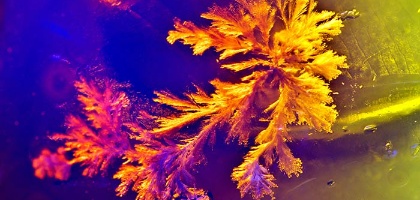
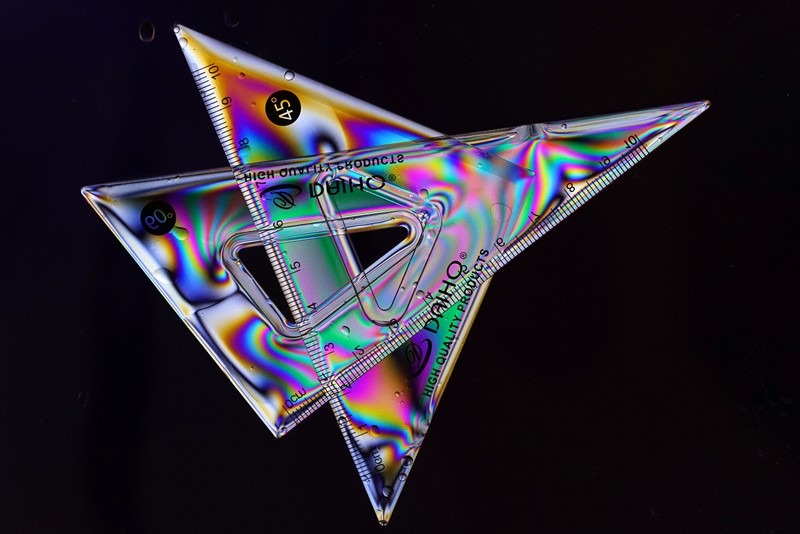
這種現象透過兩片偏光片與一把塑膠三角尺來呈現。第一片偏光片僅允許特定平面振動的光波通過,使入射光產生偏振。偏振光進入塑膠材質後,因其雙折射特性而分裂為兩束光,並隨材質厚薄與內部結構的差異逐漸累積相位差。當光線抵達第二片偏光片時,兩束光重新結合並發生干涉,選擇性地抵消或強化特定波長,從而形成五彩斑斕的紋樣。塑膠在製造過程中常因應力分布不均而產生雙折射特性;若對三角尺施壓使其彎曲變形,這種特性便會更加顯著,使偏振干涉所產生的色彩更為奪目。
This phenomenon is produced using two polarizing filters (polarizers) and a plastic set square. The first polarizer allows only light waves oscillating in a specific plane to pass through, polarizing the incoming light. As this polarized light enters the plastic material, its birefringent properties split the light, introducing phase differences that depend on the material’s varying thickness and internal structure. When the light reaches the second polarizer, the split waves recombine and interfere, selectively canceling or reinforcing specific wavelengths and giving rise to vivid, colorful patterns. Birefringence in plastic commonly develops during manufacturing due to uneven internal stress; when the set square is pressed or bent, this property becomes more pronounced, rendering the polarization interference colors even more striking.
攝影日期:2023年11月20日
攝影地點:新北市永和區
設備:使用Sony單眼相機,鏡頭是Tampom 90mm F2.8 Macro微距鏡
設定:焦距90mm,光圈F8,快門1/80,使用人工光源拍攝,相片檔案為相機直接輸出JPG檔案。手持中長焦段鏡頭拍攝,須注意快門及手持穩定度,須注意對焦平面準度,並啟動相機的防手震功能,按下快門時須暫停呼吸,以防止產生微震動的相片。